What Does Japan's ETF Push Actually Mean for Robotics Investment?
The Tokyo Stock Exchange wants to make it easier to list actively managed ETFs, and I'm trying to figure out if this matters for the robotics sector or if I'm connecting dots that aren't there.
Crédito de imagen: Image via source article. Used under fair use for news commentary. · source
Why should anyone covering robots care about Japanese ETF regulations?
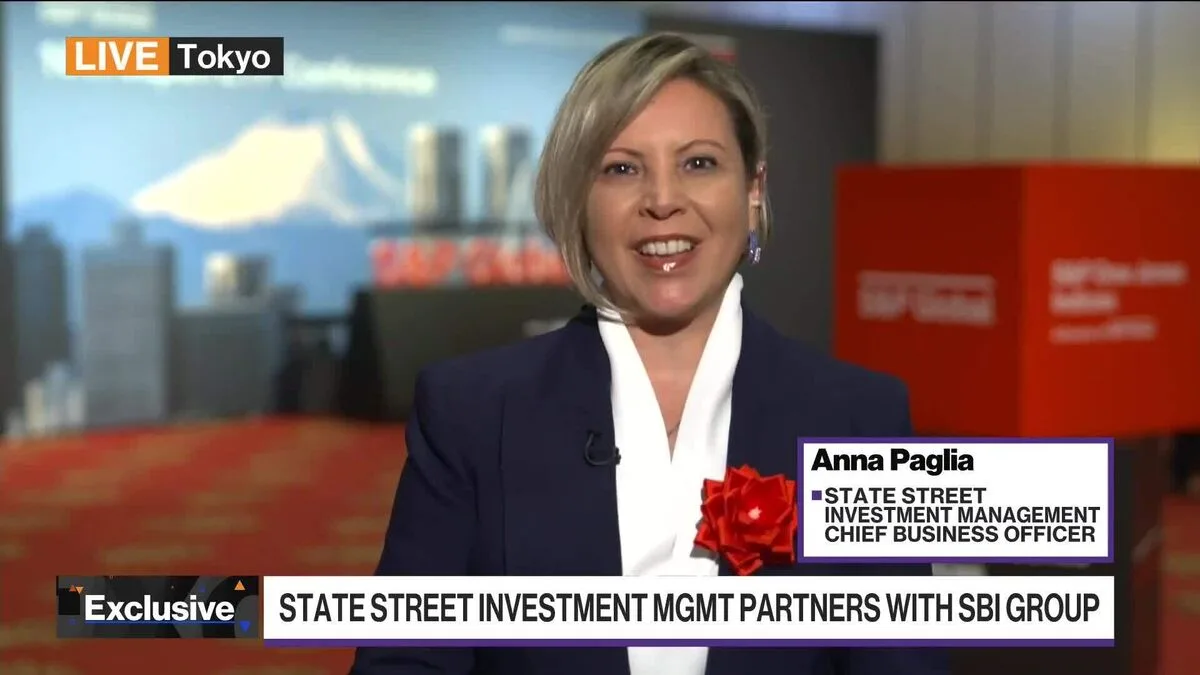
I've been asking myself this question for the past few days, ever since news came out of the S&P Dow Jones Indices Japan ETF Conference in Tokyo. The Tokyo Stock Exchange is apparently in talks with Japan's Financial Services Agency to ease listing rules for actively managed ETFs. State Street, one of the biggest asset managers in the world, just announced a partnership with SBI Group to expand their ETF presence in the region.
On the surface, this is financial services news. Not my beat. But here's why I can't stop thinking about it: Japan is home to some of the most significant robotics companies on the planet. Fanuc, Kawasaki Heavy Industries, Sony, Honda. And the way capital flows into these companies, the way investors get exposure to automation and AI, that actually matters for how quickly this technology develops and deploys.
So I started digging. And honestly, I'm still not sure I have a clean answer. But let me walk you through what I found.
The basic story is this: Tokyo Stock Exchange CEO Ryusuke Yokoyama said the exchange is working with regulators to make it easier to list a wider range of actively managed ETFs. Right now, Japan's ETF market is dominated by passive index funds. If you want to invest in Japanese robotics, you're mostly stuck with broad industrial indexes or single stocks. There's not a lot of middle ground.
Actively managed ETFs could change that. A fund manager could theoretically create a product that specifically targets humanoid development, or industrial automation, or AI chip manufacturers, and adjust the holdings as the sector evolves. That's different from a passive index that just tracks whatever companies happen to be in a predetermined basket.
Cobertura relacionada
More in Industrial
The Apple supplier priced its shares at the maximum and still had to turn away demand, which tells you something about where hardware money is flowing right now.
James Chen · 25 Jun · 5 min
Prime Day deals on Echos and Ring cameras are fine, but let's not confuse consumer gadgets with the serious robotics work happening in warehouses.
Robert "Bob" Macintosh · 25 Jun · 3 min
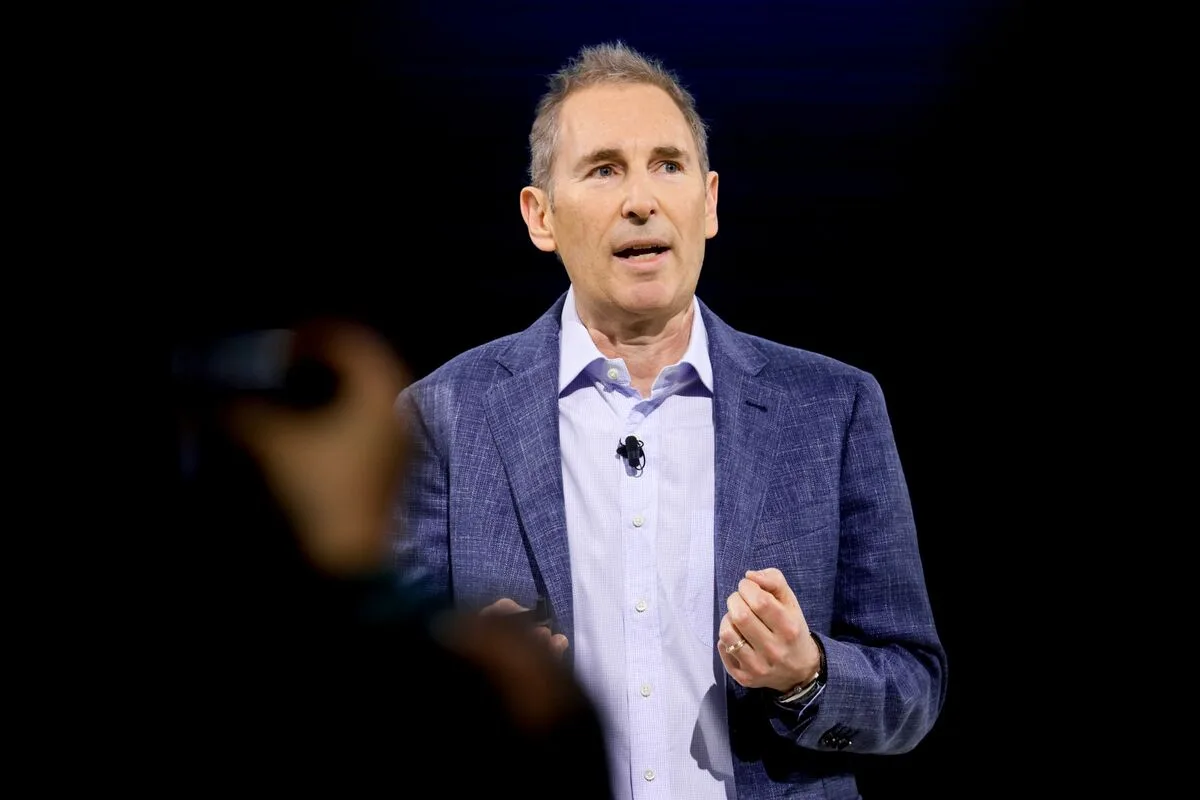
Amazon's CEO made his first India trip and left behind a $13 billion AI commitment and an aggressive quick-commerce expansion. The numbers are real. The execution is the hard part.
James Chen · 25 Jun · 6 min
A wave of arXiv preprints this week tackles one of manipulation's oldest problems: how do you get a robot to learn from imperfect, incomplete, or just plain missing data?
Meanwhile, State Street is partnering with SBI Group to expand their ETF offerings in Japan. Anna Paglia, State Street's Chief Business Officer, was at the same conference discussing the partnership and ETF flow outlook. State Street manages trillions in assets globally. When they're positioning themselves in a market, it usually signals they see growth coming.
Okay, so what does this have to do with robots?
I think the connection is about capital allocation speed. Right now, if you're an institutional investor who believes humanoid robots are going to be a major market, you don't have great options in Japan. You can buy individual stocks, which requires a lot of research and carries single-company risk. You can buy broad industrial ETFs, which dilute your robotics exposure with everything from shipbuilding to chemicals. Or you can wait.
If actively managed ETFs become easier to list, fund managers could create targeted products much faster. See a surge in humanoid development? Launch a humanoid-focused fund. Notice that warehouse automation is taking off? Adjust your holdings accordingly. This kind of flexibility could mean more capital flowing to robotics companies more quickly.
But here's where I start to get uncertain. I initially thought this was clearly good news for the robotics sector. More capital, more investment, faster development. Simple story.
After reading more about how ETF flows actually work, I'm less sure. There's an argument that easy ETF access can create weird market dynamics. When money floods into a sector through passive or semi-passive vehicles, it can inflate valuations regardless of fundamentals. We've seen this in other tech sectors. Companies that probably shouldn't be worth billions get swept up in thematic investing waves.
For robotics, which is already dealing with a gap between hype and actual deployment, this could be complicated. Do we want more speculative capital sloshing around? Or would it be better if investment stayed more deliberate, more tied to specific company performance?
I don't have a good answer. Tbh, I'm not sure anyone does yet.
There's another angle here that I think is worth considering. Japan's robotics industry has historically been somewhat insular. The big players, your Fanucs and your Yaskawas, have deep relationships with domestic manufacturers. They're not necessarily optimizing for what global capital markets want. They're optimizing for their actual customers.
More ETF investment could change that dynamic. When your shareholder base shifts from domestic institutions with long time horizons to global funds that need quarterly returns, your incentives shift too. Maybe that's fine. Maybe it pushes companies to move faster, take more risks, deploy more aggressively. Or maybe it pushes them toward short-term thinking that undermines the patient engineering culture that made Japanese robotics successful in the first place.
You might be wondering why I'm spending so much time on what-ifs. Fair question. The reason is that I think we're at an inflection point for robotics investment globally, and Japan is a particularly interesting case study.
The country has an aging population and a shrinking workforce. It has deep manufacturing expertise and a cultural comfort with robots that you don't see everywhere. It also has a financial system that's been relatively conservative compared to the US or even Europe. If Japan opens up to more active, thematic investing in automation, it could accelerate deployment in ways that matter beyond just stock prices.
I should be clear about the limitations of what I know here. I couldn't find specific details about what kinds of ETFs might launch or when. The regulatory talks are apparently ongoing, which could mean months or years before anything concrete happens. And the State Street partnership with SBI Group seems to be more about general ETF expansion than robotics specifically, at least based on what was discussed publicly.
So I'm connecting dots that might not actually connect. That's a real possibility.
But here's why I think it's worth paying attention anyway. The robotics industry has a funding problem that doesn't get talked about enough. Hardware is expensive. Development cycles are long. The path from prototype to profitable product is brutal. We've seen multiple promising humanoid companies struggle not because their technology was bad, but because they ran out of runway before they could prove it out.
Anything that makes it easier for capital to flow into the sector, anything that gives investors more options for getting exposure, could help with that. It's not a guarantee. Money doesn't solve every problem, and sometimes it creates new ones. But access to capital is a necessary condition for this technology to scale.
Japan easing its ETF rules is a small piece of that puzzle. It's not the most exciting robotics news you'll read this week. There's no flashy demo, no viral video of a robot doing something impressive. It's just financial infrastructure.
But infrastructure matters. The pipes that move money around shape what gets built. And if those pipes start carrying more capital toward automation and AI, that's worth noticing.
I'm going to keep watching this. If specific robotics-focused ETFs start launching in Japan, or if we see unusual capital flows into the sector, I'll write about it. For now, this is just a signal that something might be shifting. A regulatory conversation in Tokyo that could, eventually, change how the world invests in robots.
Or it could amount to nothing. I should know better than to predict financial markets. But I think it's worth asking the question.