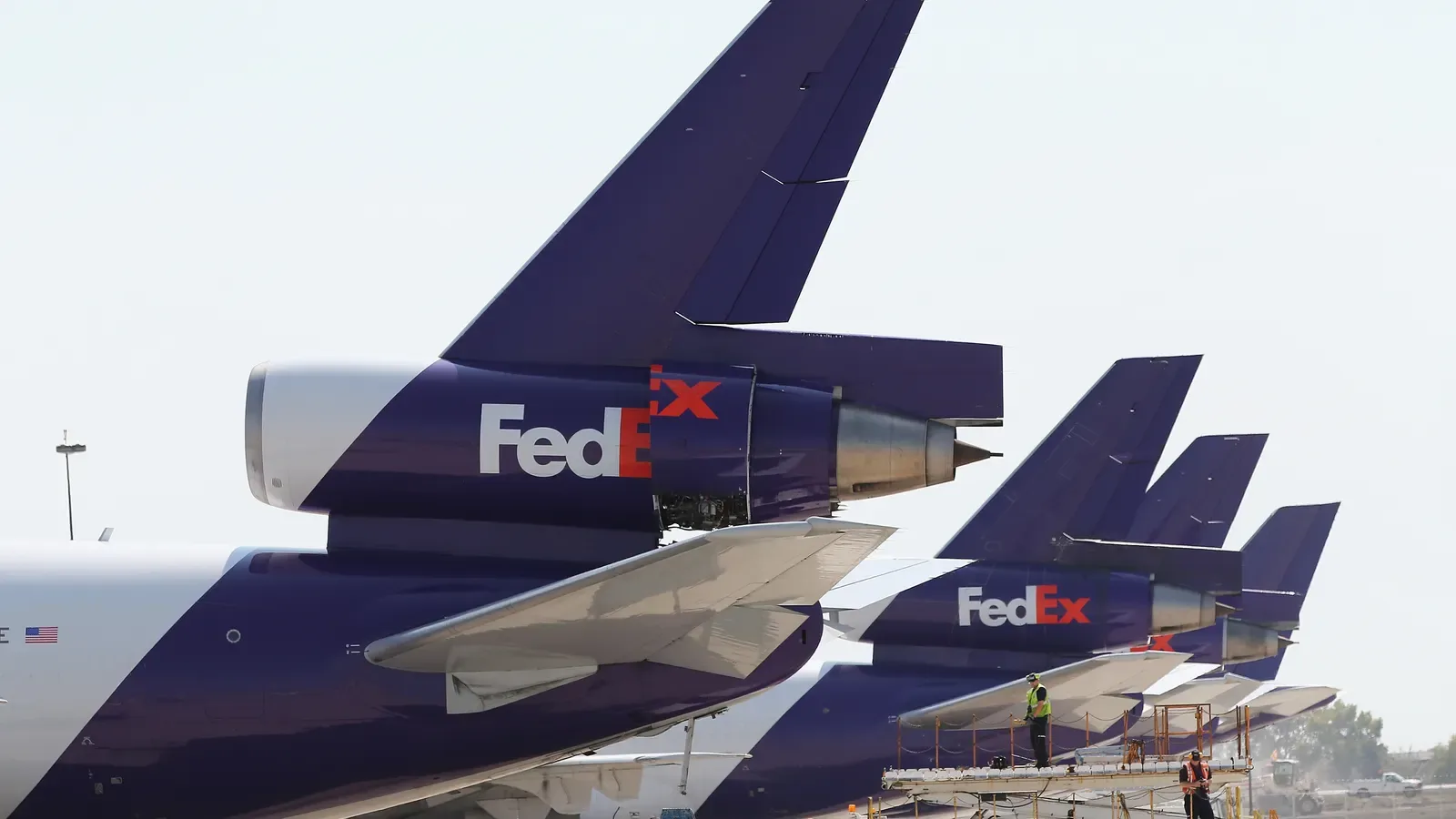
FedEx Fuel Surcharge Shift Hits Exporters Harder Starting June 22
A quiet change to FedEx's fuel surcharge structure will push export shipping costs up while easing the burden on imports, and the timing matters for anyone moving industrial hardware overseas.
Crédito de imagen: Image via Supply Chain Dive. Used under fair use for news commentary. · source
Export shippers are about to pay more. That's the short version of a FedEx fuel surcharge adjustment taking effect June 22, one that restructures how fuel fees are applied depending on which direction your freight is moving.
The change isn't dramatic in isolation. But for manufacturers and distributors who move heavy industrial equipment, automation components, or robotics hardware internationally, fuel surcharges compound fast. A percentage point or two in the wrong direction, applied across hundreds of shipments a month, adds up to real money.
According to Supply Chain Dive, FedEx is adjusting the fuel surcharge percentages applied to international shipments in a directional split: export shipments will face higher fuel fee percentages, while import shipments will see lower rates. The adjustment takes effect June 22.
FedEx has not publicly disclosed the exact new percentage figures in detail, which is frustrating for anyone trying to model costs right now. What we know is the directional intent: exports get more expensive to ship, imports get cheaper. The company didn't disclose how large the spread between the two rates will be, at least not in any public-facing communication I've been able to find.
I've seen enough spec sheets and cost breakdowns to know that "fuel surcharge adjustment" is the kind of phrase that sounds minor until you run the numbers against your actual freight volume. For a company shipping, say, 500 pallets of industrial components overseas per month, even a 1.5 percentage point increase in fuel surcharge translates to a meaningful quarterly hit.
Cobertura relacionada
More in Industrial
The Apple supplier priced its shares at the maximum and still had to turn away demand, which tells you something about where hardware money is flowing right now.
James Chen · 25 Jun · 5 min
Prime Day deals on Echos and Ring cameras are fine, but let's not confuse consumer gadgets with the serious robotics work happening in warehouses.
Robert "Bob" Macintosh · 25 Jun · 3 min
Amazon's CEO made his first India trip and left behind a $13 billion AI commitment and an aggressive quick-commerce expansion. The numbers are real. The execution is the hard part.
James Chen · 25 Jun · 6 min
A wave of arXiv preprints this week tackles one of manipulation's oldest problems: how do you get a robot to learn from imperfect, incomplete, or just plain missing data?
This is the part that's worth slowing down on, because it's not immediately obvious why a carrier would differentiate fuel surcharges by direction.
The logic, generally speaking, is that fuel costs for carriers aren't symmetric. Aircraft and freight networks operate on fixed routes with varying load factors depending on trade flows. When export lanes are heavily utilized and import lanes run partially empty (or vice versa), the cost structure per unit of freight differs. Carriers adjust surcharges to reflect the economics of each direction.
Right now, U.S. export volumes are under pressure from a combination of factors: tariff uncertainty, a strong dollar in certain markets, and softening demand in some key overseas manufacturing hubs. Whether FedEx's internal load data is driving this specific adjustment, or whether it's a broader revenue management decision, remains unclear. The company hasn't offered a detailed public rationale.
What it means practically is this: if you're a U.S.-based manufacturer exporting finished goods, automation systems, or robotics components to Europe or Asia, your fuel surcharge line item goes up on June 22. If you're importing parts or finished products into the U.S., your surcharge goes down. That's a straightforward directional shift with asymmetric effects depending on where you sit in the supply chain.
The industrial automation and robotics sector has some specific exposure here that's worth calling out.
A significant portion of the robotics supply chain runs in both directions simultaneously. U.S. integrators import servo motors, sensors, and control components from Japan, Germany, and South Korea. They also export finished automation cells, custom end-of-arm tooling, and complete robotic workcells to overseas facilities. Companies operating on both sides of that trade will see a mixed effect: lower costs on inbound components, higher costs on outbound finished systems.
For pure exporters, the calculus is simpler and less comfortable. Industrial equipment is heavy. Robotics hardware is dense. Fuel surcharges on air freight for a single robotic arm shipment can already run into hundreds of dollars before this adjustment. Post-June 22, that number goes up.
Smaller manufacturers and specialty automation suppliers are probably the most exposed. Large OEMs with negotiated freight contracts may have some insulation, at least in the short term, depending on how their master service agreements handle surcharge pass-throughs. Smaller shippers on standard rates have less cushion.
This is also worth watching in the context of the broader tariff environment. Companies that have already been absorbing higher input costs due to tariffs on imported components are now looking at a second pressure point on the export side. The combination isn't catastrophic, but it's not nothing either.
A few practical considerations, based on how these adjustments typically play out.
First, audit your current fuel surcharge rates on FedEx export shipments. If you don't know your current baseline, you can't quantify the impact of the change. Pull your last 90 days of freight invoices and calculate what percentage of total shipping cost is currently attributable to fuel surcharges on outbound international shipments.
Second, consider whether any export shipments can be accelerated ahead of the June 22 effective date. This is a standard move when rate changes are announced in advance with a hard cutover date. It's not always operationally feasible, but for planned shipments that are already staged, it's worth running the math.
Third, look at carrier alternatives for export lanes. FedEx isn't the only player in international freight, and this adjustment may create a temporary pricing gap relative to UPS, DHL, or freight forwarders using other carriers. That said, I'd be cautious about assuming competitors won't follow suit. Fuel surcharge adjustments in the industry tend to cluster. If FedEx is moving, others may not be far behind.
Fourth, and this is the less obvious one: review your customer contracts. If you have fixed-price agreements with overseas customers that include shipping, a fuel surcharge increase on exports hits your margin directly. If your contracts allow for freight cost pass-throughs, now is the time to notify customers and document the basis for any adjustments.
Look, a single fuel surcharge adjustment from one carrier isn't a macro signal on its own. But it fits into a pattern worth noting.
Freight pricing is under pressure from multiple directions right now. Demand uncertainty from tariff policy is making volume forecasting difficult for carriers. Fuel price volatility, while somewhat moderated compared to 2022 peaks, is still a meaningful variable in carrier cost structures. And trade flow imbalances between the U.S. and major trading partners are creating asymmetric utilization on freight lanes.
Carriers respond to these conditions by adjusting the levers they have: base rates, fuel surcharges, dimensional weight factors, and accessorial fees. The FedEx adjustment is one such lever pull. It's directionally informative about where the carrier sees its cost pressures concentrated right now, specifically on the export side.
For industrial shippers, the broader implication is that freight costs are probably not going to get structurally cheaper in the near term. The combination of uncertain trade policy, carrier capacity management, and ongoing fuel cost variability suggests that logistics budgets for 2025 and into 2026 should be modeled with some upward pressure baked in.
It's too early to say whether this specific FedEx adjustment will have a meaningful ripple effect on how industrial manufacturers price their exported goods or structure their supply chains. But it's a data point worth tracking.
From my time in hardware, one thing I always noticed is that freight costs are treated as a fixed background assumption right up until they aren't. The companies that model logistics costs dynamically, and build flexibility into their shipping decisions, tend to absorb these adjustments better than those who treat freight as a line item they review once a year. The June 22 date is close enough that the time to review is now, not after the first invoice under the new rates lands.