Think of it like a weld that looks fine on the line but fails six months into service. You didn't know it was wrong at the time. That doesn't make it less wrong.
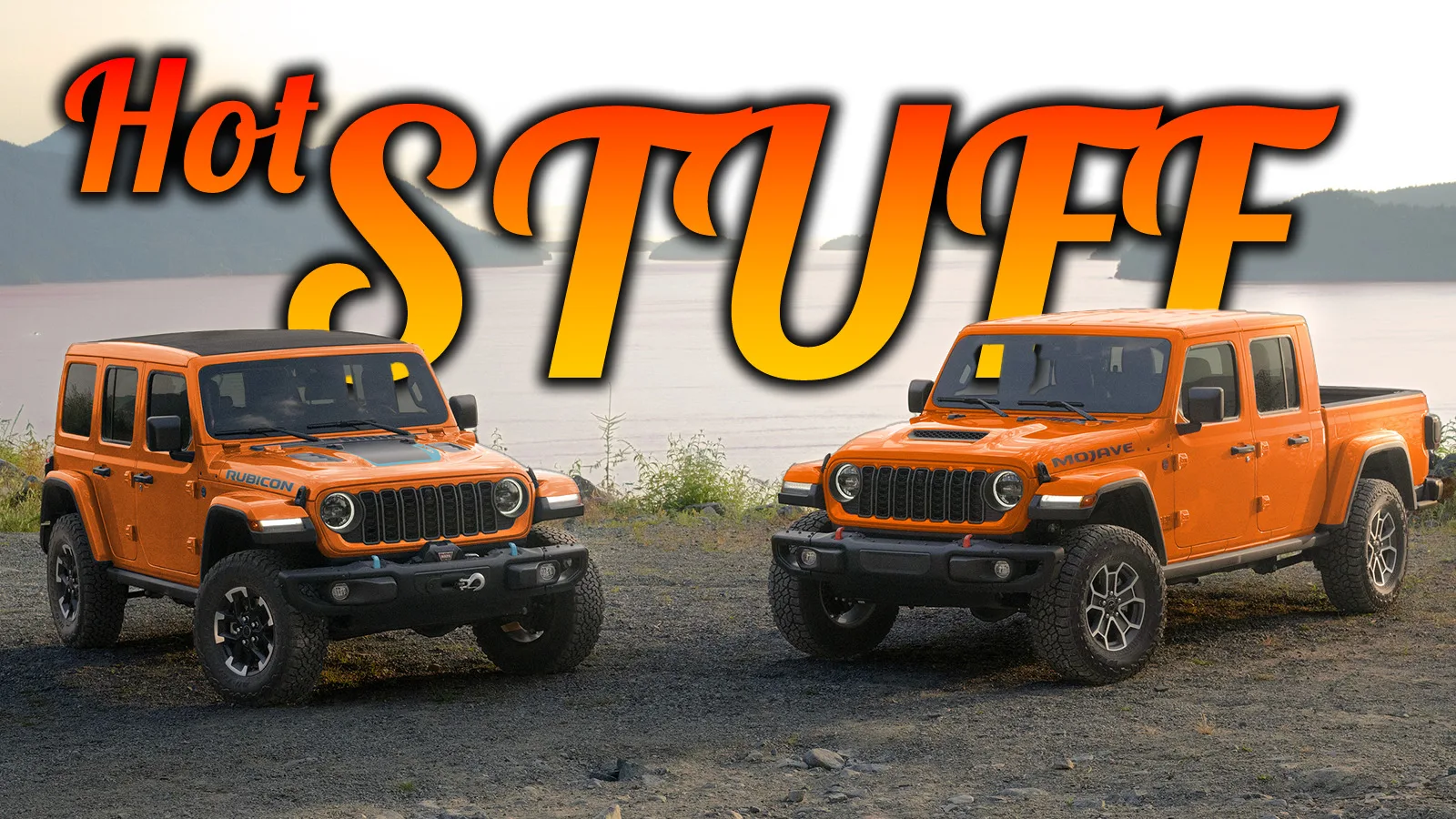
That's roughly the situation Jeep finds itself in right now, after warning owners of approximately one million Wranglers and Gladiators that their vehicles could catch fire and should be parked outside, away from structures. The Autopian ran a piece on this that I found pretty interesting, partly because the author was apparently one of the engineers who worked on the Wrangler JL's cooling system back in 2013. He was 22 at the time. The company he was working for had just clawed its way out of the DaimlerChrysler wreckage with Fiat's help and was operating under what everyone was calling "Fiat Chrysler." Chaotic period. I'll be honest, reading that framing took me right back to some of my own early years at Kuka, when we were putting together systems under timelines that, in hindsight, probably should've had more review cycles built in.
The fire risk itself, as best I can tell from what's been reported, is related to the cooling system. The exact failure mode isn't fully detailed in what I've read, and it remains unclear whether this is a design issue, a manufacturing variance issue, or something that emerged from how the vehicles are actually used in the field. Those are very different problems with very different fixes.
Here's the thing about being a junior engineer at a big manufacturer: you're often handed a scope that's too wide, a timeline that's too short, and a sign-off process that moves faster than your confidence probably should. That's not an excuse. It's just the reality of how a lot of automotive and industrial engineering actually works, especially inside a company going through a major restructuring.
When I was at Kuka, we had a project, I won't say which customer, where the integration schedule got compressed by about four months because of a facility delay on their end. Everything downstream of that got squeezed. The engineers involved were good people. Some of the decisions made under that pressure? Less good. We caught most of it before anything went wrong. Not all engineering teams are that lucky, and not all problems surface during validation.
A cooling system failure that leads to a fire risk in a vehicle that's been on the road for years, that's the kind of thing that can start as a marginal design decision that passes all the tests and then degrades in ways nobody modelled for. Or it's a supplier part that drifted out of spec over a production run. I only found two sources on this story and neither goes deep enough on root cause for me to say which it is here.
I write mostly about industrial robotics and warehouse automation, so you might wonder why I'm covering a Jeep recall. Fair question.
The reason is that the underlying dynamic, rushed development, organisational chaos, junior staff carrying too much, and problems that only emerge at scale, shows up constantly in automated systems too. I've seen it in robotic welding cells, in conveyor control systems, in AMR deployments where the edge cases weren't tested because the go-live date was fixed and the testing window wasn't. The Jeep story is just a very visible, very large-scale example of something that happens quietly in factories and warehouses all the time.
The difference is that when a warehouse robot makes a bad decision, you usually get a damaged pallet or a near-miss incident report. When a vehicle cooling system fails, you get a fire. The stakes vary. The underlying pressures don't.
I don't think the engineer who wrote that piece deserves to carry this alone, and to his credit he's not pretending he does. What he's doing, sort of publicly working through his own culpability while being honest about the context he was operating in, is actually more useful than the usual corporate non-statement. Whether it changes anything for the owners parking their Wranglers in the driveway tonight is another question entirely.