Crédito de imagen: Image via The Autopian — Autonomy. Used under fair use for news commentary. · source
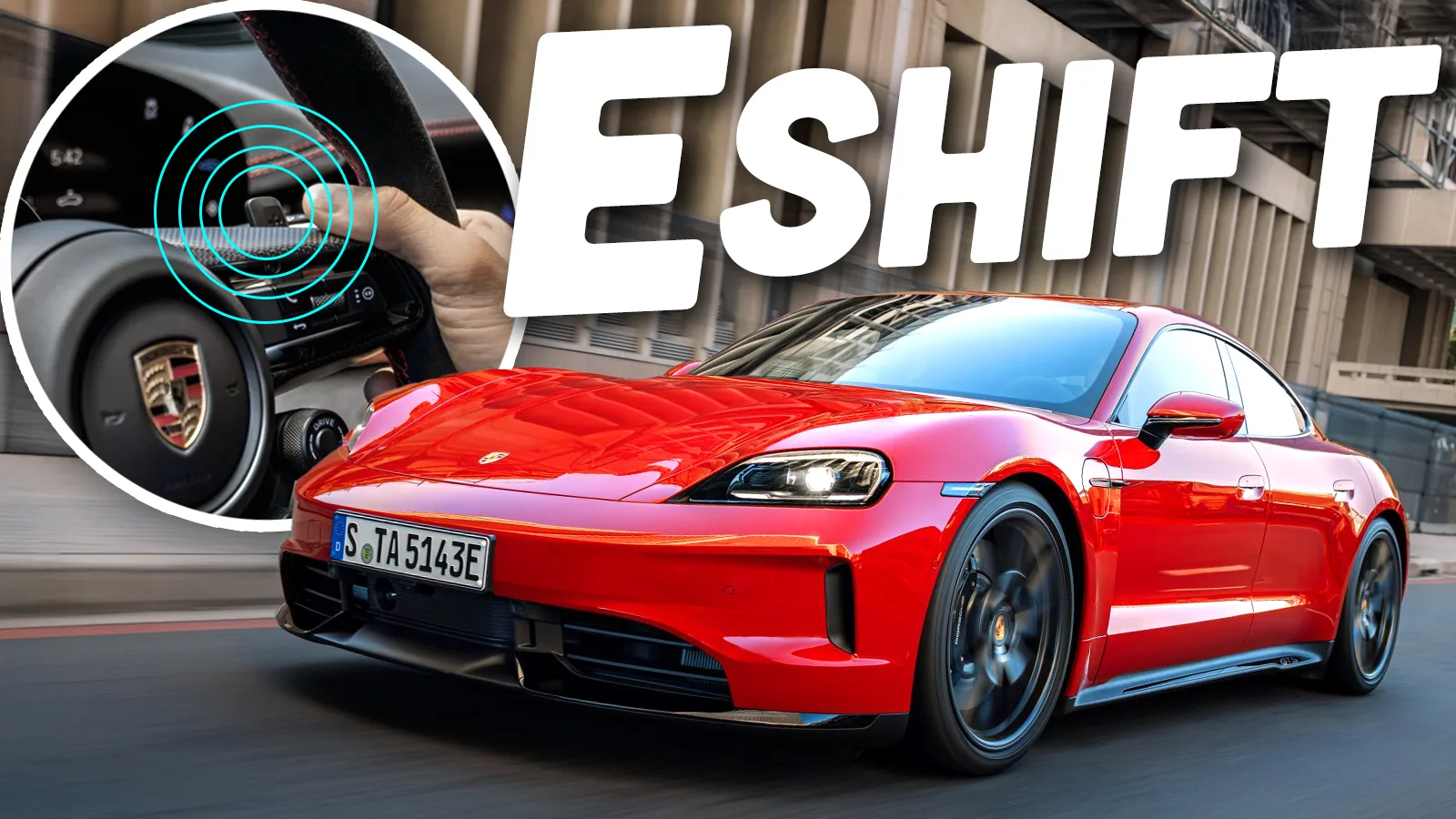
Porsche is adding simulated eight-speed gearshifts to the 2027 Taycan, a feature that will either delight driving enthusiasts or strike you as elaborate theater, depending on your philosophy about what electric cars should be.
That's the headline update. But buried in the same announcement is something that matters more to a lot of buyers: Porsche is killing the Taycan Sport Turismo, the wagon variant that carved out a genuine following among people who wanted performance without sacrificing cargo space. You can have the fake gearshifts. You cannot have the wagon.
The feature works by mimicking an eight-speed gearbox. The car doesn't actually have gears, obviously, but the system creates the sensation of shifting through them, adding a layer of engagement that pure EVs typically strip out. Porsche isn't the first to try this. The Hyundai Ioniq 5 N shipped with a similar system, and The Autopian notes that the Korean performance hatchback may have influenced Porsche's decision to go this route.
What's interesting here is that Porsche had previously been cool on the idea. The company's position has shifted, and the 2027 model year is when that shift becomes official hardware, or at least official software. The distinction matters: this is a simulated experience, not a mechanical one. From my time in hardware, I can tell you that simulating physical feedback through software is genuinely difficult to do convincingly. Whether Porsche has nailed it is something we won't know until journalists and owners get extended time with the car.
Cobertura relacionada
More in Autonomy
A startup called REO says it will sell a pickup truck for $21,500. The price is striking. The evidence for it is less so.
Aisha Patel · 24 Jun · 9 min
Researchers are patching the 'trajectory scoring gap' in sidewalk robots with VLMs and human attention modeling. The ideas are clever. The caveats are real.
Mark Kowalski · 20 Jun · 6 min
Two new papers tackle one of robotics' most stubborn problems: getting a robot to figure out its location using LiDAR, without needing to have visited the place before.
Sarah Williams · 19 Jun · 5 min
The defense tech startup is moving from drones to full autonomous fighters, and it raises questions about where the line between AI autonomy and human oversight actually sits.
The 2027 Taycan also brings a larger standard battery pack, updated infotainment, a native NACS port (finally), and a more powerful wireless smartphone charger. The battery upgrade is probably the most practically significant change for most buyers, though Porsche hasn't disclosed the exact capacity increase at this stage.
This is where reasonable people disagree, and I don't think there's a clean answer yet.
The case for: electric motors deliver torque in a fundamentally different way than combustion engines. The linear, instant surge can feel clinical after a while. Adding simulated shift points breaks up that linearity and gives the driver something to interact with, a rhythm. The Ioniq 5 N's version received generally positive reviews from people who tried it with an open mind.
The case against: it's artificial. You're paying for a computer to pretend your car has a transmission it doesn't have. Some drivers find that patronizing. Others find the whole premise of simulating something that doesn't exist philosophically incoherent for a brand that built its reputation on mechanical precision.
I've seen enough spec sheets to know that a feature like this reads very differently on paper versus in a 45-minute press drive. The real test is whether owners still use it six months in, or whether it becomes one of those settings that gets switched off and forgotten. It's too early to say which camp the Taycan's implementation will fall into.
This is the part of the announcement that deserves more attention than it's getting.
The Taycan Sport Turismo was the wagon version, and The Autopian's coverage frames it plainly: Porsche giveth, Porsche taketh away. The same model year that adds the simulated shift feature removes the body style that a meaningful subset of buyers specifically chose the Taycan to get.
Porsche hasn't offered a detailed public explanation for the discontinuation. Wagons are a tough sell in North America in terms of raw volume, and the Sport Turismo was never going to outsell the sedan. But it served a real purpose: it was a practical, fast, good-looking car that didn't require buyers to compromise on utility. The Cross Turismo (the raised, crossover-adjacent version) remains in the lineup, which suggests Porsche thinks the market wants the utility but with more ride height and SUV-adjacent aesthetics.
Whether that's the right read on customer demand remains unclear. The used market for Sport Turismos will be worth watching. If prices hold strong, that tells you something about unmet demand.
Look, Porsche is threading a needle here that gets more complicated with every model year. The Taycan has to compete with Tesla's performance variants, with the Ioniq 5 N and its successors, and eventually with whatever Audi, BMW, and Mercedes bring to the performance EV segment at full volume.
Adding simulated gearshifts is a direct response to that competitive pressure. It's Porsche saying: we hear you, driving enthusiasts, we're not going to let the EV transition strip out everything that made our cars feel like our cars. That's a defensible position.
But killing the Sport Turismo cuts against the idea that Porsche is expanding what the Taycan can be for different buyers. The sedan is a sports sedan. The Cross Turismo is a raised wagon that reads more like a compact SUV. There's now a gap where the traditional wagon used to be, and it's not obvious what fills it for someone who wanted exactly that.
The NACS port addition is table stakes at this point, not a differentiator. Every serious EV manufacturer is moving to NACS for North American market access to Tesla's Supercharger network. The wireless charger upgrade is nice but peripheral.
The battery capacity increase, once Porsche actually publishes the numbers, will matter more than any of the above for real-world usability. Range anxiety is still a real factor in purchase decisions, and a meaningful bump in the standard pack would be a genuine improvement rather than a feature designed to generate headlines.
If you're in the market for a Taycan and the wagon body style was on your list, the calculus just changed. Used Sport Turismo inventory exists now, and prices may soften as the 2027 announcement makes the discontinuation official. That's the window The Autopian is already pointing buyers toward, and it's not bad advice.
If you're drawn to the simulated shift feature, I'd genuinely wait for extended owner reviews rather than making a decision based on press materials. The feature is novel enough that it needs time in the real world before anyone can assess whether it adds lasting value or whether it's a novelty that wears off. This is based on limited data right now, since the 2027 model hasn't shipped at scale.
The NACS port is a legitimate practical upgrade if you're in North America and want Supercharger access without an adapter. That one's straightforward.
Overall, the 2027 Taycan looks like a car that's getting incrementally better in some ways while contracting in others. That's not unusual for a mid-cycle refresh, but the Sport Turismo discontinuation is a real subtraction, not just a shuffle of features. Porsche is betting that the market wants the Cross Turismo's raised stance more than the Sport Turismo's lower, cleaner wagon profile. They may be right. But buyers who disagreed with that bet are now shopping used.