NASA's Moon Base Plan Sounds Familiar, and That's Not Necessarily Bad
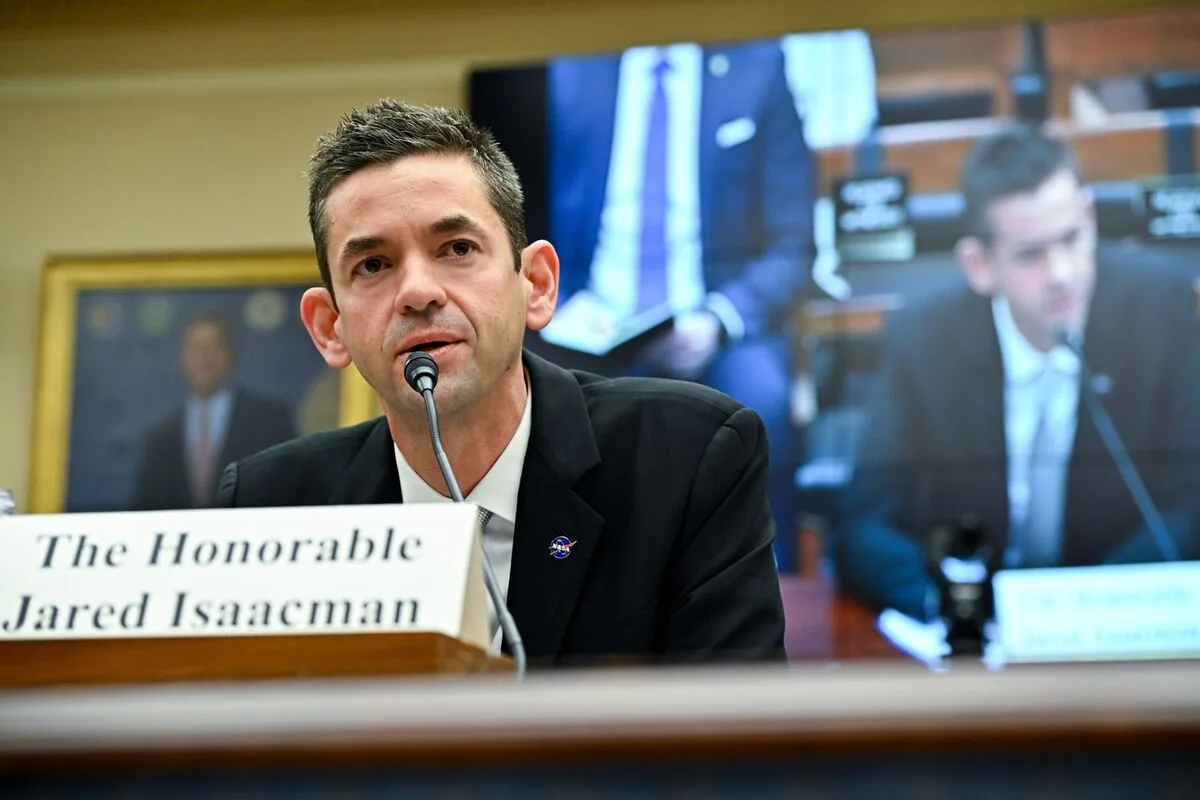
Jared Isaacman says we'll have astronauts living on the lunar surface by the early 2030s. I've heard versions of this promise before, but this time the details are different.
Crédito de imagen: Image via source article. Used under fair use for news commentary. · source
I've been covering tech long enough to remember when we were definitely, absolutely, no-question-about-it going back to the Moon by 2020. Then it was 2024. Then it was "sometime this decade." So when NASA Administrator Jared Isaacman announced last week that the agency expects to have a permanent lunar base operational in the early 2030s, my first instinct was to roll my eyes and mutter something about having seen this movie before.
But here's the thing, and call me old-fashioned for actually reading the details before being cynical, the specifics of what Isaacman laid out are genuinely different from the vaporware we've been fed for decades. According to Bloomberg, NASA is planning near-monthly robotic landings starting in 2027. Not crewed missions. Robots. Infrastructure first, humans second. That's not the Apollo playbook, and it's not the Constellation playbook that got cancelled, and it's not even the early Artemis playbook. It's something closer to how you'd actually build a permanent presence somewhere hostile.
The phased approach matters more than the timeline. Isaacman, who you might remember as the billionaire who flew SpaceX missions before taking the NASA job, described a plan where robotic systems will pre-position habitats, power systems, and supplies on the lunar surface before astronauts ever show up for extended stays. The 2028 crewed landing (which is itself a delay from earlier targets, let's be honest) would arrive to infrastructure that's already waiting. Astronauts could potentially stay for months at a time by the early 2030s, not the few days of Apollo or the week-ish visits originally planned for Artemis.
Cobertura relacionada
More in Autonomy
A startup called REO says it will sell a pickup truck for $21,500. The price is striking. The evidence for it is less so.
Aisha Patel · 24 Jun · 9 min
Researchers are patching the 'trajectory scoring gap' in sidewalk robots with VLMs and human attention modeling. The ideas are clever. The caveats are real.
Mark Kowalski · 20 Jun · 6 min
Two new papers tackle one of robotics' most stubborn problems: getting a robot to figure out its location using LiDAR, without needing to have visited the place before.
Sarah Williams · 19 Jun · 5 min
The defense tech startup is moving from drones to full autonomous fighters, and it raises questions about where the line between AI autonomy and human oversight actually sits.
This is, in a way, the self-driving car approach to space exploration. You don't put humans in the loop until you've proven the autonomous systems work. And look, I've been skeptical of the self-driving hype cycle for years, but the underlying logic of robots-first-humans-second is sound. It's just that execution is where these things always fall apart.
What we don't know yet is considerable. Isaacman didn't specify which companies would be handling all these robotic landers, though the obvious candidates are the usual suspects in NASA's Commercial Lunar Payload Services program. Intuitive Machines, Astrobotic, Firefly. Some of these companies have had, shall we say, mixed results getting payloads to the lunar surface intact. The near-monthly cadence Isaacman mentioned would require a dramatic increase in launch reliability and landing success rates. We're currently at maybe a few attempts per year, with a success rate that's not exactly inspiring confidence.
There's also the small matter of money. NASA's budget is perpetually a political football, and building a permanent Moon base isn't cheap! The agency didn't release cost estimates alongside this announcement, which is either because they're still working out the numbers or because the numbers are scary enough that they'd rather not lead with them. Probably both, if I'm being honest.
The robotics angle is what makes this interesting to me, professionally speaking. We're talking about autonomous construction, resource utilization (there's water ice at the lunar poles that everyone wants to extract), and maintenance systems that can operate for months without human intervention. The Moon is close enough that you can teleoperate some things with only a 2.5-second round-trip delay, but that's still too slow for anything requiring real-time reactions. These robots will need to be genuinely autonomous in ways that most terrestrial systems aren't.
I talked to a couple of engineers last week (not for attribution, they work for companies bidding on these contracts) and the consensus was that the robotics technology is actually closer to ready than the rocket availability. We know how to build robots that can operate in vacuum, handle lunar regolith, and survive temperature swings from 250°F in sunlight to minus 280°F in shadow. What we don't have is a proven track record of getting them there reliably and frequently enough to matter. The bottleneck isn't the robots, it's the rockets and landers.
There's a geopolitical dimension here that Isaacman didn't dwell on but everyone's thinking about. China has been making steady progress on its own lunar program, with plans for a crewed landing before 2030 and its own base ambitions. The Artemis Accords, which establish norms for lunar activity, have been signed by dozens of countries, but China isn't among them. Russia isn't either. We're potentially heading toward a situation where there are competing frameworks for who can do what on the Moon, and having actual infrastructure there gives you a stronger position in those arguments than having white papers and treaties.
I'm not saying this is a new space race, exactly. That framing is overused and usually wrong. But the strategic logic of establishing presence matters, and Isaacman, as a former private space entrepreneur, probably understands this better than some of his predecessors did.
So what do I actually think? I think the early 2030s timeline is optimistic by maybe 3-5 years, which would put us at a functional base around 2035-2037. That's still within my lifetime, probably, which is more than I could say for most Moon base promises over the past 30 years. The robots-first approach is the right strategy. The commercial partnerships are the right model. The question is whether NASA can maintain political support and funding consistency across what will inevitably be multiple presidential administrations.
The kids running these New Space companies, and I call them kids even though some of them are in their 40s now, have a different relationship with failure than the old NASA did. They iterate. They blow things up and learn from it. That cultural shift has already transformed launch economics, and it might actually work for lunar infrastructure too. But the Moon is harder than low Earth orbit, and the failure modes are more catastrophic, and there's a lot of room between "we have a plan" and "we have a base."
I want to believe this time is different. The details suggest it might be. But I've been burned before, and I'll believe it when I see robots actually building things on the lunar surface, not when I see PowerPoint slides about robots building things on the lunar surface. If you want to argue with me about this, my email's on the about page. I still check it more than Slack.