WingXpand's Backpack Drone Could Help First Responders Assess Disasters. Here's What We Know.
St. Louis-based WingXpand just joined a Verizon-backed accelerator focused on disaster resilience. The drone fits in a backpack. The questions are bigger than the hardware.
Image credit: Image via Dronelife. Used under fair use for news commentary. · source
One in three Americans lives in a county that was hit by a federally declared disaster in 2023. That number stopped me when I came across it. It reframes the whole conversation about emergency response tech, because this isn't a niche problem anymore.
This week, St. Louis-based aerospace company WingXpand announced it's joining the Verizon Community Disaster Resilience Innovation Accelerator, a program powered by MassChallenge that brings together emergency response teams and tech companies to explore new tools for disaster assessment. The partner here is Verizon Frontline, Verizon's public safety division, which has been pushing into emergency comms infrastructure for a few years now.
So what is WingXpand actually building? That's where it gets interesting.
The hardware
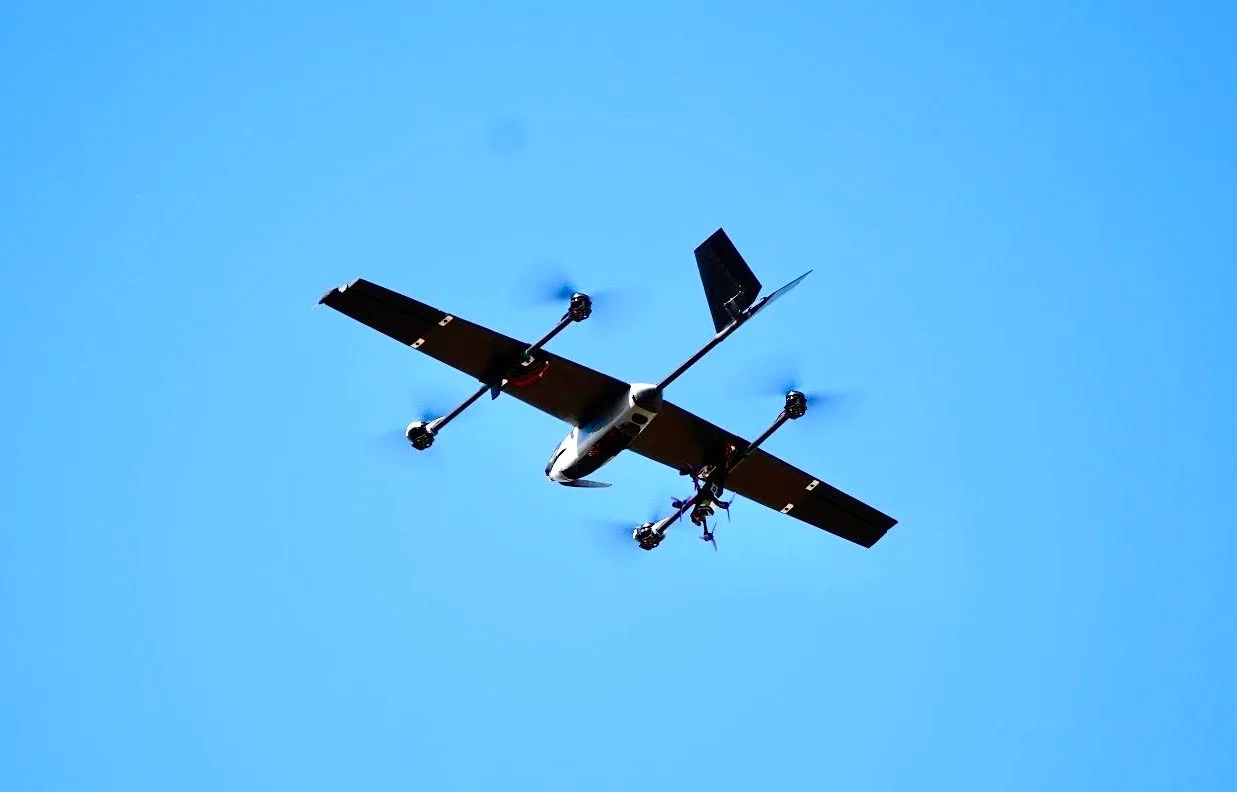
WingXpand makes something called the XRAI Smart Plane, which is, genuinely, a fixed-wing drone that folds up and fits inside a backpack. The whole thing deploys in under two minutes, according to the company. It can cover large areas quickly, which gives it a real advantage over quadcopters in post-disaster scenarios where you need to survey flood zones, downed infrastructure, or wildfire perimeters across miles, not meters.
Fixed-wing drones aren't new. But the backpack form factor matters a lot when you're talking about first responders who are already carrying gear, working in degraded conditions, and don't have time to set up a ground station. Portability is the actual value proposition here, not just the flight specs.
The company is also working on integration with Verizon's network infrastructure, which raises the obvious question of what happens when the network is down. Severe weather events have a habit of taking out cell towers. Honestly, I'm not sure this holds up as a full solution without some clarity on how the drone operates in connectivity-degraded environments. notes the accelerator program could help WingXpand grow its disaster response capabilities, but the specifics of how network dependency is handled remain unclear.
Related coverage
More in Drones
A pair of arXiv preprints tackle the same hard problem in drone control from very different angles. The results are promising, but the gap between 'outdoor experiment' and 'deployed system' remains large.
Aisha Patel · 25 Jun · 9 min
The Air 3S discount is real, but the urgency behind it has less to do with Amazon's sale and more to do with where DJI hardware might be headed.
Mark Kowalski · 23 Jun · 6 min
Procurement is the easy headline. Actually building enough drones, fast enough, with American parts, is the problem nobody's solved yet.
Mark Kowalski · 20 Jun · 7 min
The FCC just removed a narrow category of toy drones from its Covered List. It's a small move, but it tells you something about where the regulatory wind is blowing.