I've been covering tech long enough to develop a finely tuned BS detector, and my first instinct when I see headlines about "robots smaller than a grain of salt that can think" is to reach for the delete key. We've been here before! The nanobot revolution has been five years away for about thirty years now.
But here's the thing, and call me old-fashioned for actually reading the papers before forming an opinion, these two recent developments feel different. Not revolutionary, mind you (I hate that word), but genuinely interesting in ways that the usual press release fodder isn't.
Let me explain why my skepticism is, for once, taking a back seat.
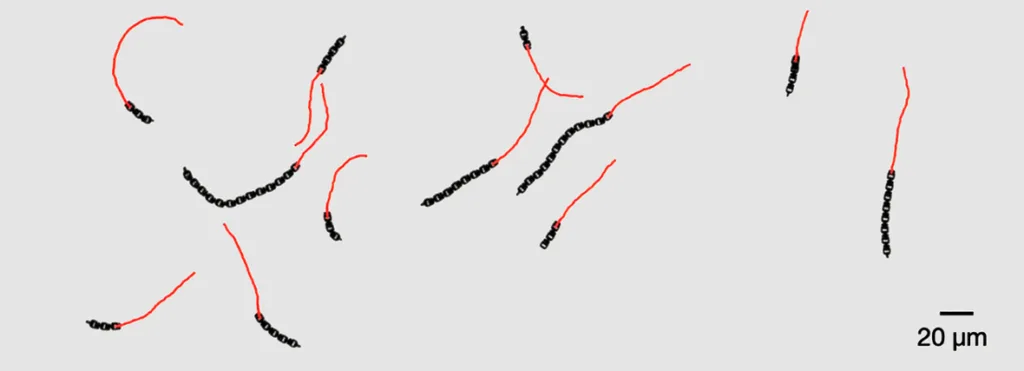
Two research teams, working independently, have cracked different pieces of the microrobot puzzle. At Leiden University, Professor Daniela Kraft and researcher Mengshi Wei have built microscopic robots that move and behave without any onboard electronics whatsoever. No sensors. No software. No external joystick. The robots' behaviour emerges entirely from their physical shape and how that shape interacts with the surrounding environment. It's elegant in a way that appeals to my preference for simple solutions, the kind of engineering that doesn't require a PhD in computer science to understand.
Meanwhile, a separate team (reported by Science Daily) has gone the opposite direction, cramming actual tiny computers into robots so small you'd need a microscope to see them. These things are powered by light, swim by manipulating electric fields rather than using moving parts, and can detect temperature changes, follow programmed paths, and coordinate in groups.
Now, I've seen this movie before with other technologies. Someone announces a breakthrough, the press goes wild, and then we spend the next decade learning why the lab demo doesn't scale to the real world. But what strikes me about these two approaches is that they're solving fundamentally different problems, and both solutions actually make sense for their intended applications.
The Leiden robots, as described by Robohub, are "active and flexible" in ways that don't require power sources that would be impossible to miniaturize. The American robots sacrifice that simplicity for genuine autonomy and decision-making capability. Neither team is claiming to have solved everything, which frankly is refreshing.
Here's what we actually know about these developments:
- The Leiden microrobots derive their behaviour from shape alone, meaning no batteries, no wireless signals, no failure points from electronic components
- The light-powered robots represent the first truly autonomous machines at microscopic scale, at least according to the researchers
- Both teams are targeting biomedical applications, though neither has demonstrated anything close to clinical use yet
- The swimming mechanism using electric field manipulation rather than moving parts could be significant for longevity inside the human body
- Group coordination has been demonstrated, though the complexity of that coordination remains unclear from available information
I want to be careful here because the details matter and I only have access to summaries rather than the full research papers. The claim of "first truly autonomous robots at this microscopic scale" is a big one, and I'd want to see how they're defining autonomous before I'd stake my reputation on it. Autonomous compared to what? Previous microrobots that required external magnetic fields to steer them? That's a meaningful advance. Autonomous in the sense that they can perform complex medical procedures without human oversight? We're nowhere close to that, and anyone who tells you otherwise is selling something.
What I find genuinely compelling is the convergence of two very different engineering philosophies arriving at workable solutions simultaneously. The Leiden approach reminds me of the early days of passive RFID, using environmental energy and clever physics rather than brute-force electronics. The American approach is more traditional, cramming more capability into smaller packages, Moore's Law applied to robotics. History suggests both approaches tend to find their niches.
The biomedical applications everyone keeps mentioning are obvious targets, drug delivery, microsurgery, diagnostic sensing. But if you want my honest assessment, we're probably a decade or more from seeing any of this in a hospital near you. The regulatory hurdles alone would make a young founder weep. And there are questions nobody's answering yet about how you get these things out of a patient's body once they've done their job, or what happens when they inevitably malfunction.
Still, I'm more optimistic about this than I've been about microrobotics in years. Not because the hype is believable (it never is), but because the underlying science seems sound and the researchers aren't overclaiming. That's rare enough to be noteworthy.
The kids working on this stuff are doing real engineering, not just chasing venture capital with fancy demos. And while I remain deeply skeptical that we'll see medical microrobots in widespread use before I retire, I'm willing to admit that the foundations being laid now look more solid than anything I've seen in previous cycles.
But what do I know. If you want to argue, my email's on the about page.