Two New Papers Push Control Barrier Functions Toward Real-World Robot Safety
Researchers at KAIST and UC Berkeley tackle the gap between theoretical safety guarantees and messy real-world dynamics, with mixed but promising results.
By
·27 May 2026·7 Min. Lesezeit
Two papers dropped on arXiv this week addressing the same fundamental problem: how do you make robots actually safe when your mathematical models don't perfectly match reality?
The question sounds academic, but it's not. Control barrier functions (CBFs) have become the go-to tool for enforcing safety constraints in robotics, the mathematical equivalent of guardrails that keep a system from entering dangerous states. The problem is that CBFs work beautifully in simulation and fall apart the moment you encounter model mismatch, tracking errors, or someone bumping into your robot.
To be precise, a control barrier function defines a "safe set" in state space and guarantees that if you start inside that set, you stay inside it. Joint limits, collision boundaries, workspace constraints: you encode them as CBFs, and the math handles the rest. It's elegant. It's also fragile.
The fragility comes from a mismatch between assumption and reality. CBFs assume you know your system dynamics. You don't, not exactly. They assume your lower-level controller tracks references perfectly. It doesn't. They assume no external disturbances. There are always disturbances.
This gap between theory and practice has been a known limitation for years. What's interesting about this week's papers is that they attack the problem from opposite directions: one starts with a known model and adds robustness margins, the other learns a model from data and bounds the approximation error.
The headlines are celebrating a $2.5B humanoid robotics deal. I'd pump the brakes a little.
Mark Kowalski · 25 Jun · 6 min
Sometimes the sources don't pan out. Here's what happened when I tried to write a humanoids story this week and ended up with Samsung deals instead.
Sarah Williams · 25 Jun · 3 min
Diffusion models are getting good at imagining robot movements, but 'imaginable' and 'physically possible' aren't the same thing. Researchers are starting to close that gap.
Sarah Williams · 25 Jun · 6 min
A batch of fresh robotics research tackles the same underlying problem from different angles: robots that can see but don't really understand where things are.
The first paper, from researchers at KAIST (arXiv), presents a whole-body control framework for humanoid robots using what they call input-to-state safe control barrier functions (ISSf-CBFs). The "input-to-state" part is the key innovation here: it's a way of quantifying how much disturbance the system can tolerate before safety guarantees break down.
The architecture has three layers. A kinematic whole-body controller generates nominal joint references from prioritized tasks (walk here, move arm there, keep balance). An ISSf-CBF safety filter modifies those references minimally to satisfy constraints. A dynamic whole-body controller then tracks the filtered references while handling contact forces and full-body dynamics.
What makes this work is the conservative tuning. The researchers impose safety constraints on a simplified kinematic model, then tune the ISSf-CBF parameters conservatively enough that the guarantees transfer to the full-order dynamics even under unknown disturbances. It's worth noting that "conservatively" here means accepting some performance loss in exchange for robustness. The robot moves more cautiously than it theoretically needs to.
The experimental validation is solid, actually, the research shows results on real hardware during locomotion, teleoperation, and single-leg balancing. The safety margins hold up under model mismatch. But I'd want to see more quantification of how much performance is sacrificed for that robustness. The paper demonstrates safety but doesn't deeply explore the tradeoff space.
The second paper, from UC Berkeley researchers (arXiv), takes a fundamentally different approach. Instead of starting with a physics-based model and adding robustness margins, they learn a Koopman predictor from data and construct CBF constraints in the learned representation.
Koopman operators are a way of lifting nonlinear dynamics into a higher-dimensional space where they become (approximately) linear. The appeal for safety filtering is that linear dynamics make the CBF constraints convex, which means you can solve them efficiently as a quadratic program.
The catch, and there's always a catch, is that finite-dimensional Koopman approximations introduce error. The learned model doesn't perfectly predict the true dynamics. To handle this, the researchers estimate a "projected residual margin" from held-out rollout data and tighten the CBF constraints accordingly. It's a practical workaround: you can't eliminate approximation error, but you can bound it and account for it.
The results are genuinely interesting but also genuinely mixed. On CartPole stabilization and tracking, the method achieves zero constraint violations while matching unconstrained performance. That's impressive. On Safety Gymnasium locomotion tasks, which involve higher-dimensional systems, the results are less clean. Violations are reduced in some settings but not eliminated.
I know I'm being picky here, but the paper is admirably honest about the limitations. First-order velocity barriers struggle with certain constraint geometries. Linear EDMD models (the specific Koopman approximation they use) have limited expressiveness for complex dynamics. The authors explicitly call for higher-order and multi-step extensions. This kind of clear-eyed assessment of what doesn't work is, frankly, refreshing.
Let me distinguish between incremental and genuinely novel contributions, because both papers contain both.
The KAIST work is incremental over prior ISSf-CBF theory but novel in its application to full humanoid whole-body control with real hardware validation. The three-layer architecture isn't new in concept, but the specific integration with ISSf-CBFs and the conservative tuning methodology is a genuine contribution. The real-robot experiments push beyond what most CBF papers demonstrate.
The Berkeley work is more novel in its core idea: using Koopman predictors to enable CBF-based safety filtering in model-free reinforcement learning. Combining learned dynamics with formal safety constraints is an active research area, but the specific approach of estimating residual margins from held-out data and using them to tighten constraints is, to my knowledge, new. The integration with soft actor-critic training is also thoughtfully done.
Neither paper solves the fundamental tension between formal safety guarantees and real-world uncertainty. Both papers make meaningful progress on it.
Several things remain unclear from these papers, and some of them are probably unanswerable with current methods.
First, how do these approaches compose? Real robots face multiple simultaneous constraints: joint limits, self-collision, obstacle avoidance, workspace boundaries, contact stability. Both papers demonstrate handling multiple constraints, but the computational cost scales with constraint count, and the interaction between constraints can create infeasible regions. It's too early to say how well these methods will scale to truly complex constraint sets.
Second, what happens when disturbances exceed the assumed bounds? Both papers make bounded disturbance assumptions. The KAIST paper tunes conservatively to handle "unknown" disturbances, but those disturbances are still implicitly bounded by the tuning. The Berkeley paper explicitly estimates residual margins, but those estimates come from training data. A sufficiently novel disturbance, something outside the training distribution, could still violate safety.
Third, how do you choose the right level of conservatism? The KAIST approach sacrifices performance for robustness. The Berkeley approach tightens constraints based on estimated error. In both cases, there's a dial you can turn between "safe but slow" and "fast but risky." Neither paper provides principled guidance on where to set that dial for a given application.
If I were reviewing follow-up work in this area, I'd be looking for a few things.
Comparative evaluation. These two papers appeared the same week but don't cite each other (they probably weren't aware of each other). A direct comparison on the same tasks would be valuable. When does model-based robustness outperform data-driven robustness? Are there problem classes where one approach clearly dominates?
Scaling studies. Both papers demonstrate results on specific systems. How do the methods scale to higher-dimensional state spaces, more complex constraint geometries, longer time horizons? The Berkeley paper's mixed results on Safety Gymnasium locomotion suggest scaling is nontrivial.
Failure mode analysis. When these methods fail, how do they fail? Gracefully or catastrophically? Can you detect impending failure before it happens? The safety guarantees are probabilistic in practice (despite the formal language), and understanding the failure distribution matters for deployment.
Integration with perception uncertainty. Both papers assume you know the current state accurately. Real robots have noisy sensors and imperfect state estimation. Propagating perception uncertainty through the safety filter is an open problem that neither paper addresses.
These papers are part of a larger trend toward bridging the gap between formal methods and learning-based robotics. The formal methods community has powerful tools for guaranteeing safety, but those tools assume accurate models. The learning community has powerful tools for handling model uncertainty, but those tools don't provide guarantees.
The synthesis is hard. You can't just bolt a safety filter onto a learned policy and call it safe. The filter needs to account for model error. The policy needs to be trained with the filter in the loop. The guarantees need to be probabilistic rather than absolute.
Both papers make real progress on this synthesis. Neither claims to have solved it. That honesty is appropriate. We're still in the phase of understanding what's possible, not deploying production systems.
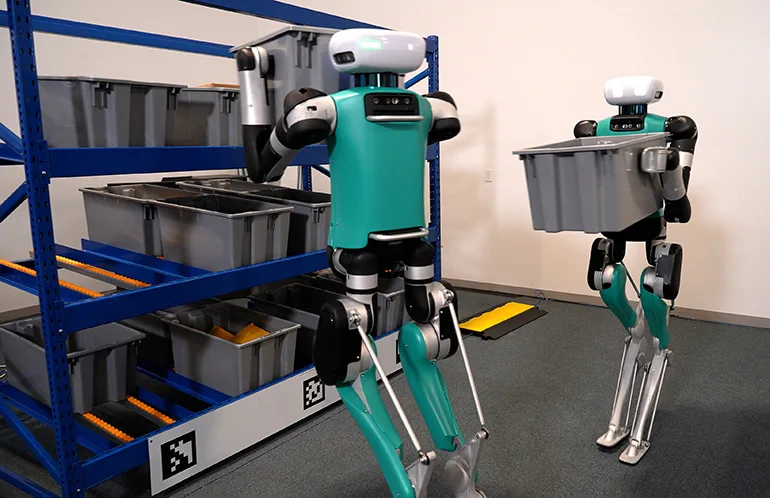
For humanoid robots in particular, which is where the KAIST work is focused, safety-critical control is going to be essential. You can't deploy a humanoid in a home or factory if it might violate joint limits and damage itself, or collide with people and damage them. The gap between simulation and deployment is exactly the gap these papers are trying to close.
Whether ISSf-CBFs or Koopman-CBFs or some future approach becomes the standard remains unclear. What's clear is that the problem is important, the progress is real, and the limitations are well understood. That's what good research looks like.