Kawasaki has announced its entry into humanoid robotics, becoming the third major Japanese manufacturer to launch such a programme in the past six months. The move represents a significant shift in how Japan's industrial heavyweights are approaching a category they once left largely to academic labs and startups.
Japan has long been synonymous with robotics, but its major manufacturers have historically focused on industrial arms and specialised automation rather than human-shaped machines. The rapid succession of announcements, as reported by Financial Times and confirmed by WSJ, suggests that calculation has changed.
Three programmes in six months is not coincidence. It reflects a coordinated recognition across Japan's manufacturing sector that humanoid robots may soon move from laboratory demonstrations to factory floors.
Several factors appear to be converging. Japan faces one of the world's most severe labour shortages, with an ageing population and declining workforce participation. At the same time, advances in AI and machine learning have made general-purpose robots more feasible than they were even five years ago.
There is also competitive pressure. American and Chinese companies have accelerated their humanoid programmes, and Japanese manufacturers risk ceding ground in a category where they might otherwise expect to lead.
Kawasaki's programme appears oriented toward factory applications from the outset. This is a practical choice. The company already has deep expertise in industrial automation and existing relationships with manufacturers who might deploy such systems.
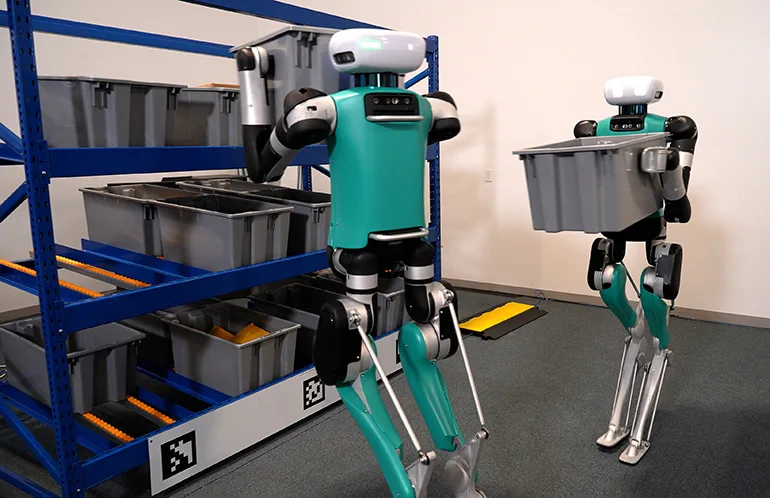
Rather than building a humanoid for general consumer use (a far harder problem), Kawasaki seems to be asking a narrower question: can a human-shaped robot perform tasks in environments already designed for human workers?
The immediate future likely involves pilot programmes in controlled factory settings. Japanese manufacturers tend to move deliberately, testing extensively before scaling production.
The longer-term question is whether these programmes will produce commercially viable products or remain expensive demonstrations. The answer will depend partly on continued progress in AI, partly on manufacturing costs, and partly on whether the labour shortage grows severe enough to justify the investment.
For now, the signal is clear: Japan's industrial establishment has decided humanoid robotics deserves serious attention.