Walmart and Wing Are Bringing Drone Delivery to Seven More Cities. Is This Finally the Real Thing?
Wing and Walmart just named Memphis, New Orleans, Philadelphia, Phoenix, San Diego, the Bay Area, and Salt Lake City as their next drone delivery markets. I've seen enough hype cycles to know when to be skeptical. This time, I'm not sure.
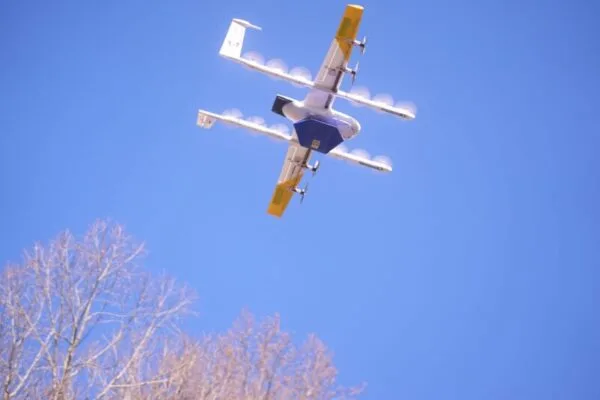
Bildnachweis: Image via Dronelife. Used under fair use for news commentary. · source
So you're wondering whether drone delivery is actually happening now, or whether this is just another round of press releases and concept videos that'll quietly disappear in eighteen months.
Fair question. I've been asking it since at least 2013.
This week, Wing and Walmart announced they're adding seven new major metro areas to their drone delivery network: Memphis, New Orleans, Philadelphia, Phoenix, San Diego, the San Francisco Bay Area, and Salt Lake City. According to The Drone Girl, this brings the total footprint to nearly 20 U.S. markets, which the companies are billing as the nation's largest drone delivery network. That's not nothing. That's actually a number worth paying attention to.
But I've seen this movie before. So let's slow down and ask the obvious questions.
Yes. Absolutely yes. And I say that not to be dismissive but because it matters for context.
Amazon announced Prime Air in 2013. It was on 60 Minutes. Jeff Bezos himself was on television talking about drones dropping packages on your doorstep within the decade. Google's Project Wing (now just Wing, a subsidiary of Alphabet) started testing around the same time. We've had a decade-plus of pilots, limited launches, regulatory battles, and a whole lot of "coming soon" energy that mostly fizzled into small suburban test zones and cautiously worded press releases.
Verwandte Beiträge
More in Drones
A pair of arXiv preprints tackle the same hard problem in drone control from very different angles. The results are promising, but the gap between 'outdoor experiment' and 'deployed system' remains large.
Aisha Patel · 25 Jun · 9 min
The Air 3S discount is real, but the urgency behind it has less to do with Amazon's sale and more to do with where DJI hardware might be headed.
Mark Kowalski · 23 Jun · 6 min
Procurement is the easy headline. Actually building enough drones, fast enough, with American parts, is the problem nobody's solved yet.
Mark Kowalski · 20 Jun · 7 min
The FCC just removed a narrow category of toy drones from its Covered List. It's a small move, but it tells you something about where the regulatory wind is blowing.
I covered the first wave of self-driving car hype the same way, and the parallels are uncomfortable. Big announcements. Impressive demos. Regulatory uncertainty that nobody wanted to talk about clearly. Then a long, grinding reality check where the actual deployment looked nothing like the original vision.
So when Wing and Walmart announce seven new cities, my default position is: show me the operations, not the map.
Here's where I'll grudgingly admit things look more serious than they did five years ago.
The scale of this expansion is notable. Seven cities in one announcement, including genuinely dense and logistically complicated metros like Philadelphia and the San Francisco Bay Area, isn't a cautious suburban pilot program. Those aren't easy markets. You don't commit to the Bay Area and Philly unless you've worked through at least some of the airspace and regulatory groundwork, because the FAA and local jurisdictions in those places are not known for waving things through quickly.
Dronelife framed this as part of an "ongoing rollout" rather than a fresh launch, which is the kind of language that suggests infrastructure is actually being built rather than announced. And The Robot Report noted Wing's plans specifically for each city, suggesting this isn't just a branding exercise.
Walmart's involvement is also worth taking seriously. These aren't two startups shaking hands at a conference. Walmart has the logistics infrastructure, the inventory density, and frankly the financial incentive to make last-mile delivery cheaper. If drone delivery actually reduces their cost per delivery in dense suburban and urban corridors, they have every reason to push it hard. The partnership isn't new either, it's been building, which means we're past the "let's try this" phase and into something that looks more like a real operating model.
Does that mean it'll work? It's too early to say. But the pieces are more credible than they were.
Let me be honest about what we don't know, because the press releases won't tell you.
First, airspace. Urban drone delivery at scale requires coordinating with the FAA's UTM (Unmanned Traffic Management) framework, and that system is still being built out in real time. Flying over suburbs in Texas is one thing. Flying over Philadelphia neighborhoods, near approach paths for PHL, near hospitals and stadiums, is a different problem entirely. The companies didn't disclose exactly how they've navigated the airspace approvals for each city, and that remains unclear.
Second, what exactly gets delivered. Drone delivery in its current form works best for small, light packages, think a phone charger, a bottle of Tylenol, a snack. It doesn't work for a 40-pound bag of dog food or a flat-screen TV. So the use case is real but narrow, and it's worth asking how much of Walmart's actual order volume fits the weight and size envelope that Wing's drones can handle. The companies haven't published that breakdown, at least not in anything I've found.
Third, community acceptance. This is the one that keeps getting underestimated. Drones are loud. Not deafeningly loud, but loud enough that a drone hovering over your backyard to drop off a package is going to annoy your neighbor, and your neighbor's neighbor, and eventually someone's going to complain to their city council member. We've seen this play out in other markets. Noise complaints and community pushback have slowed or paused drone delivery programs before, and New Orleans and Philadelphia are not cities known for residents who quietly accept new infrastructure without a fight.
None of these are necessarily deal-killers. But they're real friction, and the announcement doesn't address them.
Here's my honest take, for whatever it's worth from a guy who still uses email.
The Wing-Walmart expansion is the most credible large-scale drone delivery push I've seen. The geography is ambitious, the partnership has real operational history behind it, and nearly 20 markets is a footprint that starts to look like a business rather than a science project. The kids running these programs have clearly learned some things from the early failures, and I'll give credit where it's due.
But the history of this space is littered with announcements that looked serious and then quietly stalled. Regulatory friction, community resistance, unit economics that don't pencil out at scale, technical failures that get buried in the press cycle, these things have derailed drone delivery programs before and they could do it again. The self-driving car industry spent years announcing deployment timelines that kept sliding, and I'd argue drone delivery is on a similar trajectory, just slightly further along the maturity curve now.
What I'd want to see before I call this a genuine inflection point: actual operational data from the new markets six months after launch. Delivery completion rates. Noise complaint numbers. FAA incident reports. The stuff that doesn't show up in the press release.
Right now, all we have is the announcement and the map. The map looks bigger than it used to. That's genuinely something. Whether it's enough to finally make drone delivery a normal part of American life, that's the question that won't be answered by a press release, no matter how many cities are on the list.
I've been skeptical of this space for a long time. I'm still skeptical. But I'm watching more closely than I was last year, and that's probably the most honest thing I can tell you.
If you want to argue about it, my email's on the about page.