Modular drone payloads aren't new, but Tundra might finally be doing them right
Norway's Tundra Drone is bringing swap-and-go payloads to the UK through Coptrz, and I've got thoughts about why this matters more than the press release suggests.
Bildnachweis: Image via source article. Used under fair use for news commentary. · source
Look, I'll be honest with you: when I first saw the headline about Tundra Drone's modular payload system coming to the UK, my initial reaction was "here we go again." I've seen probably a dozen companies promise hot-swappable drone payloads over the past eight years, and most of them delivered products that were either too fiddly for field use or too expensive to justify the convenience.
But then I started digging into what Tundra's actually built, and I think this one might be different.
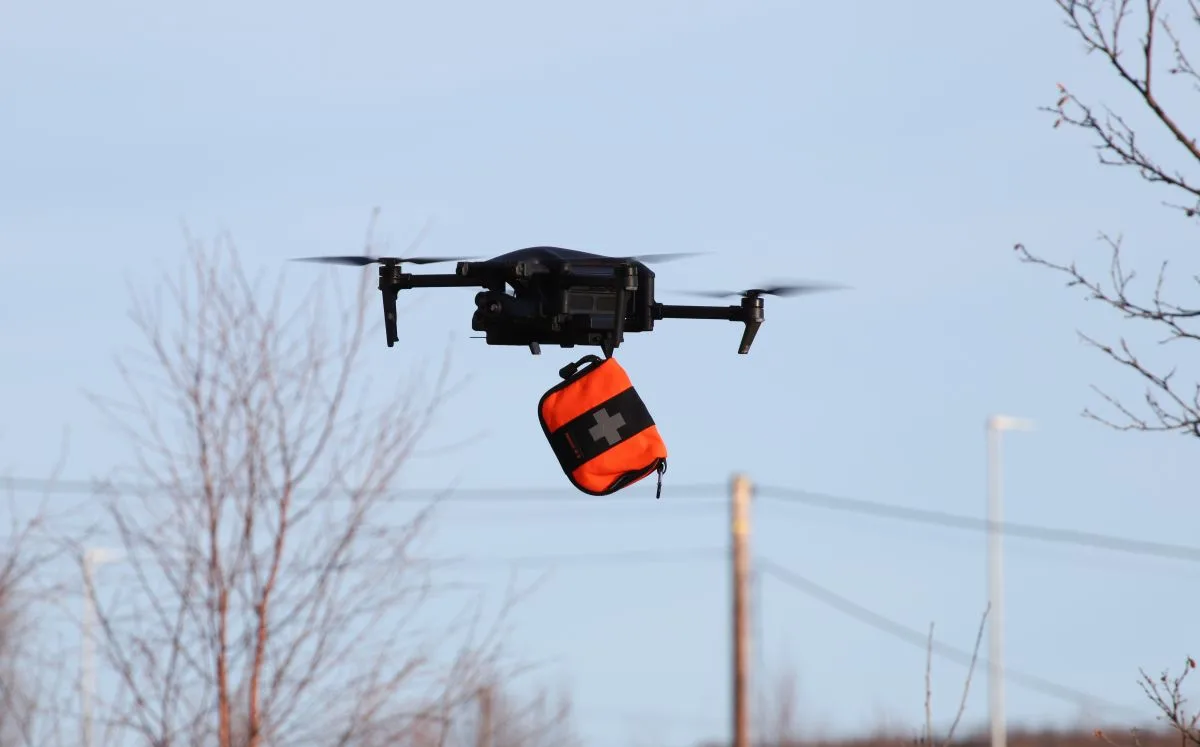
The basic pitch is straightforward. Norwegian company Tundra Drone has developed a payload system that lets operators swap between thermal cameras, multispectral sensors, LiDAR units, and other tools without any rewiring or recalibration. UK drone provider Coptrz has signed an exclusive deal to bring the system to British operators. So far, so press release.
What caught my attention is that they're building this around the Parrot ANAFI platform. Now, when I was at Kuka, we didn't do much with drones directly, but I worked alongside plenty of integration teams who did. The ANAFI line has always been solid kit, French-made, NATO-approved, and importantly, not Chinese. That last bit matters more than it used to, given the regulatory pressure on DJI gear in government and critical infrastructure applications.
Here's the thing about modular systems. The engineering challenge isn't making a connector that works. Any decent mechanical engineer can design a locking mechanism and a data interface. The hard part is making it work reliably in the field, in the cold, in the rain, with operators who are wearing gloves and don't have time to fiddle with alignment pins. I called my old colleague Stefan who spent three years on industrial sensor integration, and he said the same thing: "The connector is 10% of the problem. The other 90% is everything else."
Verwandte Beiträge
More in Drones
A pair of arXiv preprints tackle the same hard problem in drone control from very different angles. The results are promising, but the gap between 'outdoor experiment' and 'deployed system' remains large.
Aisha Patel · 25 Jun · 9 min
The Air 3S discount is real, but the urgency behind it has less to do with Amazon's sale and more to do with where DJI hardware might be headed.
Mark Kowalski · 23 Jun · 6 min
Procurement is the easy headline. Actually building enough drones, fast enough, with American parts, is the problem nobody's solved yet.
Mark Kowalski · 20 Jun · 7 min
The FCC just removed a narrow category of toy drones from its Covered List. It's a small move, but it tells you something about where the regulatory wind is blowing.