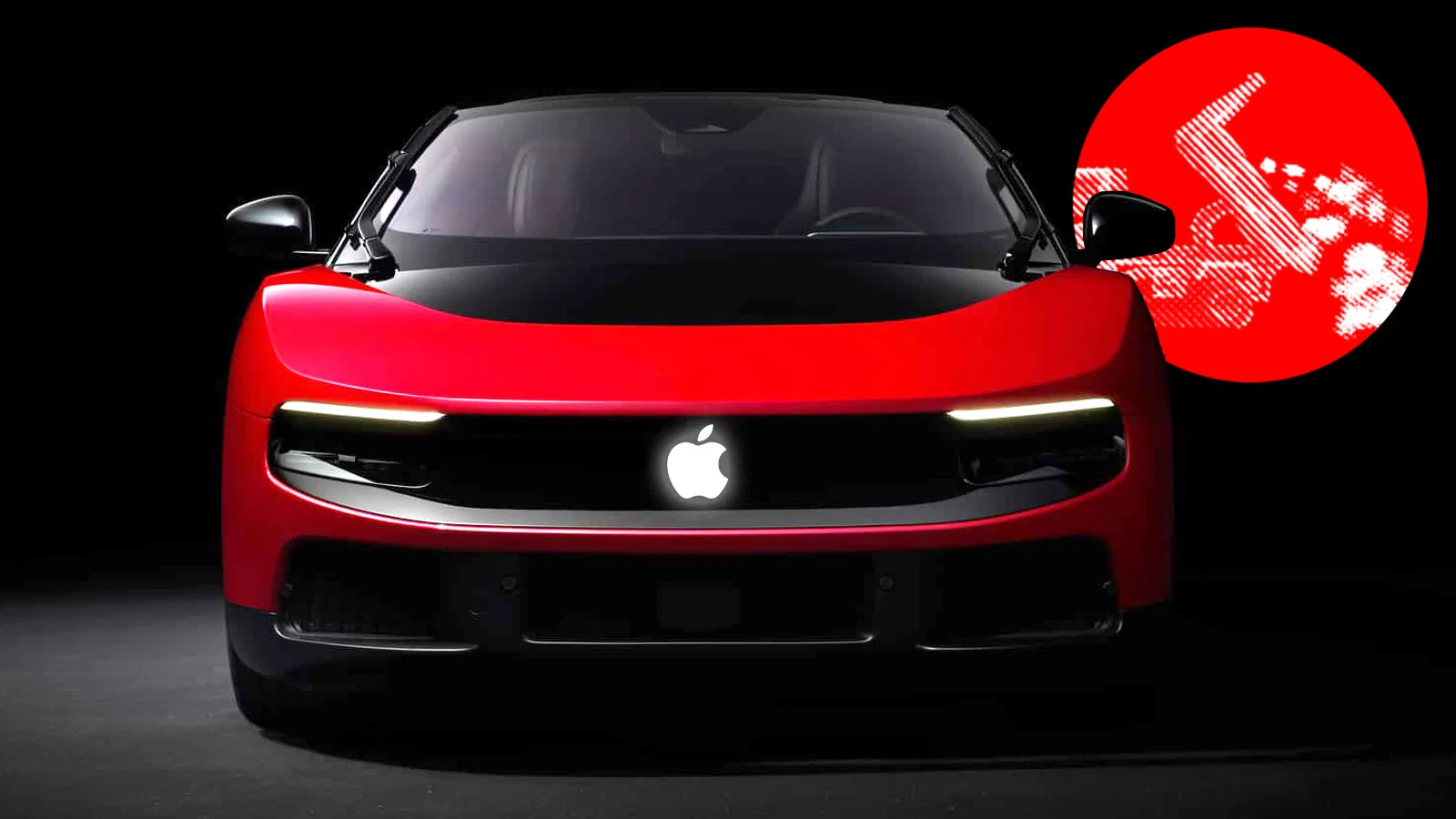
The Ferrari Luce Looks Like a Robot Designed It. That's the Problem.
When Apple's former design chief teams up with Ferrari on an electric car, you'd expect something revolutionary. Instead, we got a 4,982-pound lesson in what happens when design becomes too smooth.
Bildnachweis: Image via The Autopian — Autonomy. Used under fair use for news commentary. · source
Why does the Ferrari Luce make me feel... nothing?
I've been staring at photos of this thing for two days now, trying to figure out why a collaboration between Ferrari and Jony Ive (yes, that Jony Ive, the guy who made your iPhone look like it does) has produced something so aggressively forgettable. And honestly, I think I finally have an answer, but it's not the one I expected.
Let's start with what we know. Ferrari unveiled the Luce this week, an all-electric grand tourer designed in collaboration with Ive's design firm LoveFrom. The specs are, well, they're fine. It weighs 4,982 pounds, which is heavy but not unusual for an EV. The interior looks genuinely lovely, all minimalist and tactile in that Apple way.
But the exterior? The exterior is where things get weird.
Ferrari's stock dropped in Milan following the reveal, and the online reaction has been, to put it generously, mixed. The Autopian put it well when they noted that "it sure feels this morning like there was no way to design the electric Ferrari Luce that wouldn't have made people mad." Their readers have been absolutely roasting the thing, turning it into what the publication called "a new automotive punching bag."
I initially thought people were just being resistant to change. Ferrari purists mad about electrification, that sort of thing. But after looking at more reactions and sitting with my own discomfort, I think something else is going on.
Verwandte Beiträge
More in Consumer
Those cheap OBD2 boxes promising 20-35% fuel savings aren't just useless, they can actively damage your car's electronics. A look at why the hardware doesn't work.
James Chen · 24 Jun · 6 min
Not every Prime Day badge means a real deal. We looked at the price histories so you don't have to.
James Chen · 24 Jun · 4 min
Consumer ice makers are getting stress-tested in real kitchens, and the durability numbers are more interesting than the marketing suggests.
James Chen · 23 Jun · 3 min
Robot vacuums are everywhere this Prime Day, but not every deal is what it looks like. A quick guide to separating the real discounts from the noise.
You might be wondering what a car has to do with robotics. Bear with me.
There's a concept in robotics and AI called the uncanny valley. It's that creepy feeling you get when something looks almost human but not quite. Humanoid robots hit this all the time (it's sort of my whole beat). The closer they get to realistic, the more unsettling small imperfections become.
I think the Luce has stumbled into a design uncanny valley. Not because it looks human, obviously, but because it looks like what an AI would generate if you asked it for "luxury electric sports car." It's smooth where it should have tension. It's curved where it should have edge. It's pleasant in a way that becomes unpleasant the longer you look.
Tbh, I should know more about automotive design theory than I do. But I've spent enough time around robots to recognize when something has been optimized past the point of character.
The Ive Problem
Jony Ive's design philosophy worked brilliantly for consumer electronics. The iPhone is a smooth rectangle because that's what you want in your pocket. The AirPods are little white beans because they need to fit in your ears. Simplicity serves function.
But a Ferrari isn't supposed to be simple. A Ferrari is supposed to be excessive, emotional, maybe even a little irrational. It's supposed to make you feel something when you see it in traffic. The Luce makes me feel like I'm looking at a really expensive rendering.
The Autopian raised an interesting thought experiment: would we be this mad if the Luce had been revealed as the Apple Car instead? And I think the answer is no, we wouldn't. Because an Apple Car would be expected to look like a smooth, inoffensive transportation pod. That's the Apple aesthetic. But Ferrari? Ferrari is supposed to be the opposite of inoffensive.
Here's where I get to the part that actually relates to my beat.
We're entering an era where generative AI can produce infinite variations of any design. Want a car that looks sporty but approachable? Here are 10,000 options. Want a humanoid robot that looks friendly but professional? The algorithm will find the exact midpoint.
The problem is that the midpoint is often boring. It's the average of everything that came before, smoothed out to offend no one. And I think we're going to see more products that hit this design uncanny valley. Not bad, exactly. Just... empty.
The Luce isn't AI-generated (as far as I know, anyway). But it looks like it could be. And in 2025, that might be the worst thing a design can be.
The Character Problem
I've been covering humanoid robots for a while now, and one thing I've noticed is that the ones people actually connect with tend to have quirks. Boston Dynamics' robots move in ways that are slightly inefficient but visually interesting. Some research robots have faces that are deliberately stylized rather than realistic. Character comes from choices that aren't purely optimal.
The Luce feels like every choice was optimized. Every curve is there because some algorithm or focus group said it should be. There's no moment where a designer said "this is weird but I love it" and pushed it through anyway.
I don't know if that's actually what happened. I wasn't in the design meetings. But that's how it feels, and in design, feeling is kind of everything.
I think the Luce is a warning sign for anyone designing physical products in the AI age. Not because AI is bad at design (it's actually getting quite good), but because the temptation to smooth everything out is going to be overwhelming. When you can test infinite variations, you'll naturally converge on the safest option.
But safe isn't memorable. Safe isn't exciting. Safe doesn't make Ferrari's stock go up.
The companies that win the next decade of product design, whether that's cars or robots or consumer electronics, are going to be the ones that figure out how to preserve weirdness. How to make choices that feel human even when the tools are artificial.
I'm honestly not sure how you do that systematically. It might just come down to having designers with strong opinions and executives willing to let them be weird. Which, if I'm being real, is how it's always worked.
First, I don't know how much of the Luce's design was actually Ive's work versus Ferrari's in-house team. Collaborations are complicated, and blame (or credit) is hard to assign.
Second, it's too early to say whether the negative reaction will actually hurt sales. The people posting mean comments online are not necessarily the people buying $400,000 electric cars. Ferrari's customer base might love the thing.
Third, and this is the one that keeps nagging at me, I'm not sure my uncanny valley theory holds up under scrutiny. Maybe the Luce just has bad proportions and I'm overthinking it. That happens.
But I do think there's something here about the relationship between optimization and character. And I think we're going to be having this conversation a lot more as AI tools become standard in design workflows.
The Luce might just be the first high-profile example of a product that's too smooth for its own good. It won't be the last.