Snap's $2,195 Specs Are a Bet That Glasses Beat Phones. History Suggests Otherwise.
Snap launched AR glasses priced higher than a MacBook Air. The hardware is real, but so is the graveyard of smart glasses that came before it.
Bildnachweis: Image via Bloomberg — Technology. Used under fair use for news commentary. · source
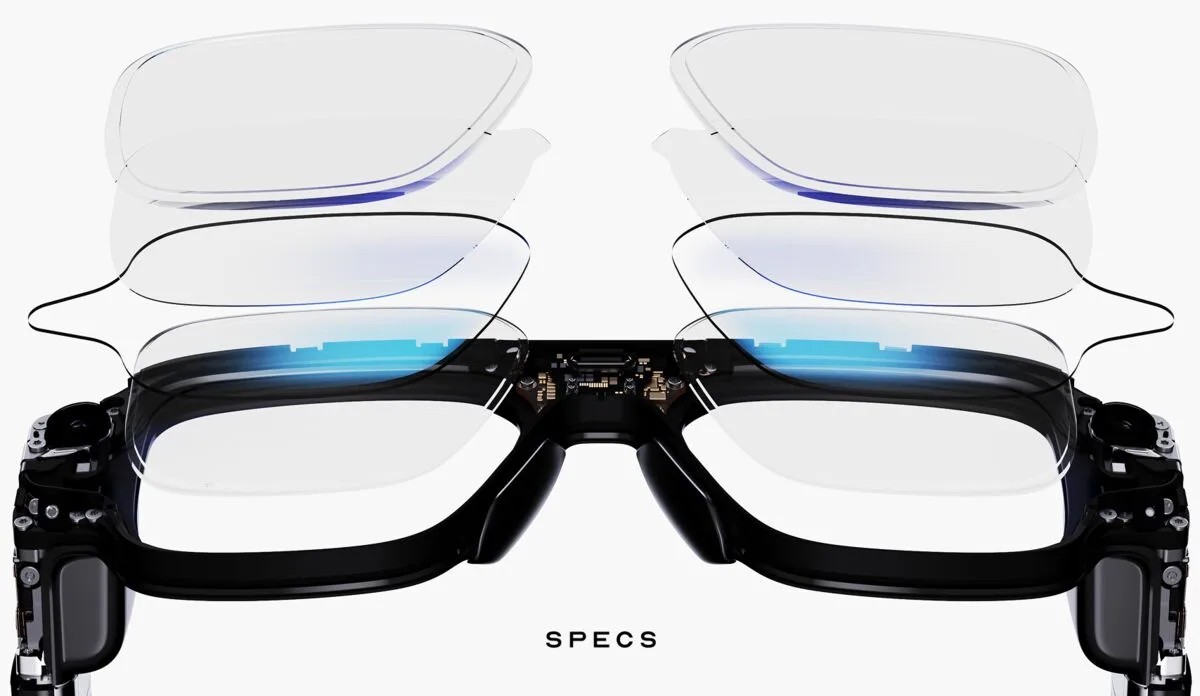
Google Glass launched in 2013 at $1,500 and was effectively dead as a consumer product within two years. Snap's new Specs cost $2,195 and are being positioned as "the computer of the future." That's an ambitious number, and an even more ambitious claim.
Snap CEO Evan Spiegel debuted the Specs on June 16th, describing them in a CNBC interview as the result of more than 12 years of development. The pitch is straightforward: people are tired of looking down at screens, and AR glasses can "bring computing into the world" and "make it more human." Spiegel wants the Specs to keep users more present, more connected to their surroundings, less buried in a phone.
It's a coherent vision. Whether the hardware can actually deliver it at scale is a different question entirely.
The numbers
$2,195 puts the Specs firmly in enterprise or early-adopter territory. For context, that's more than a base model MacBook Air, more than Meta's Ray-Ban smart glasses by a factor of roughly four, and well above what most consumers will spend on a wearable. I've seen enough spec sheets to know that price points like this rarely signal mass-market confidence from the manufacturer; they signal that yields are low, components are expensive, or both.
Snap hasn't disclosed production volume targets, unit sales projections, or supply chain details. The company also hasn't released a full technical spec sheet publicly, so it's too early to say how the display resolution, field of view, or battery life compare to competing AR hardware like Meta's upcoming mixed reality devices or Apple's Vision Pro, which sits at the far higher end at $3,499.
What we do know, reported by , is that Spiegel called this a "leapfrog advancement." The real test is production volume and whether developers build for the platform.
Verwandte Beiträge
More in Consumer
Those cheap OBD2 boxes promising 20-35% fuel savings aren't just useless, they can actively damage your car's electronics. A look at why the hardware doesn't work.
James Chen · 24 Jun · 6 min
Not every Prime Day badge means a real deal. We looked at the price histories so you don't have to.
James Chen · 24 Jun · 4 min
Consumer ice makers are getting stress-tested in real kitchens, and the durability numbers are more interesting than the marketing suggests.
James Chen · 23 Jun · 3 min
Robot vacuums are everywhere this Prime Day, but not every deal is what it looks like. A quick guide to separating the real discounts from the noise.