Bildnachweis: Image via Bloomberg — Technology. Used under fair use for news commentary. · source
Most of the coverage on Plaud this week focused on the headline number, $500 million in projected 2026 sales, and left it at that. A few outlets patted the startup on the back for shipping over 2 million AI notetakers. Fine. But nobody seems to want to ask the harder question, which is whether any of this is actually as durable as it looks right now.
I've seen this movie before. Not with AI notetakers specifically, but with every consumer hardware category that catches a wave of early adopter enthusiasm and then has to figure out what happens when the wave breaks. Bluetooth headsets. Smartwatches, before Apple basically had to reinvent the category twice. Action cameras. The list is long. Hardware is hard, and hardware tied to a software subscription model is harder still, because you're essentially betting that customers will keep paying after the novelty wears off.
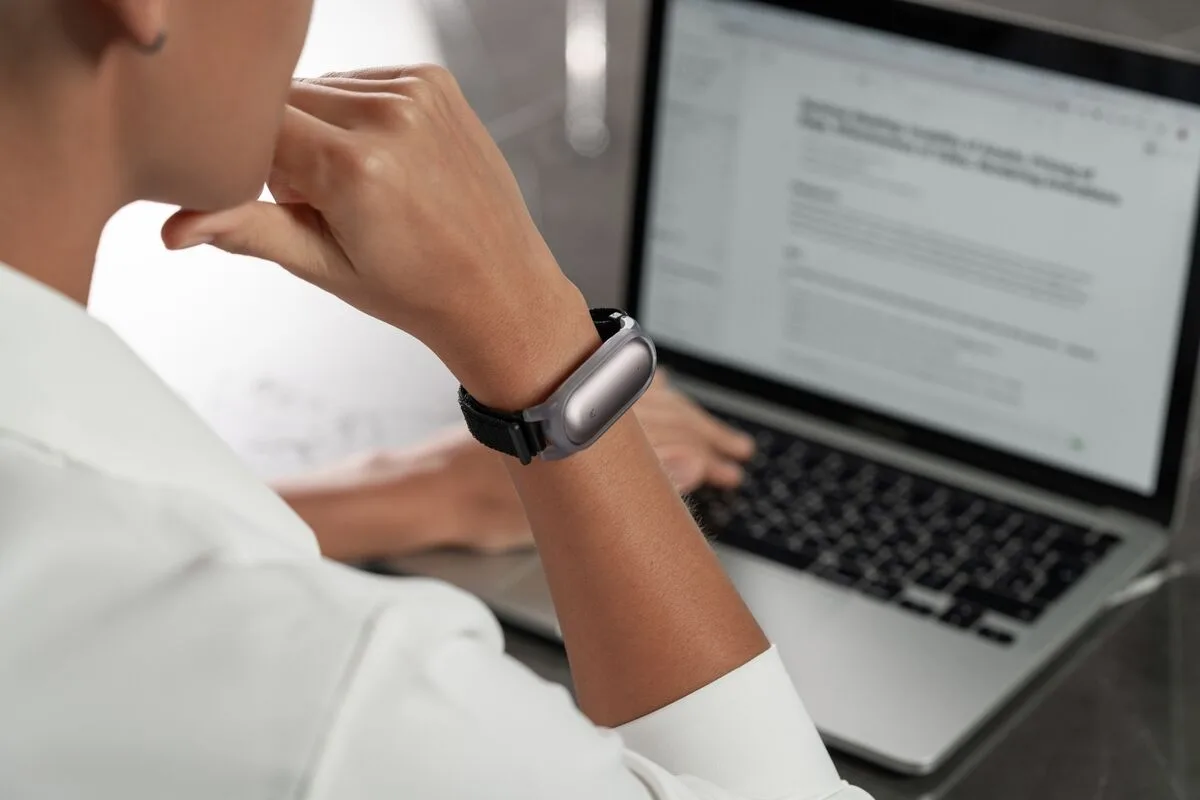
Plaud, for the uninitiated, makes small physical devices that record conversations and use AI to generate notes, summaries, and transcriptions. According to Bloomberg, the company is planning to release a new wearable device later this year that can work with AI agents, alongside that $500 million sales target. And TechCrunch reports the software side of the business has crossed $100 million in annual recurring revenue. Those are real numbers. I'm not dismissing them.
But I am asking what comes next, because that's the part nobody's writing about.
Verwandte Beiträge
More in Consumer
Those cheap OBD2 boxes promising 20-35% fuel savings aren't just useless, they can actively damage your car's electronics. A look at why the hardware doesn't work.
James Chen · 24 Jun · 6 min
Not every Prime Day badge means a real deal. We looked at the price histories so you don't have to.
James Chen · 24 Jun · 4 min
Consumer ice makers are getting stress-tested in real kitchens, and the durability numbers are more interesting than the marketing suggests.
James Chen · 23 Jun · 3 min
Robot vacuums are everywhere this Prime Day, but not every deal is what it looks like. A quick guide to separating the real discounts from the noise.
Here's the thing about AI-powered meeting notetakers: there are a lot of them. A lot. Otter.ai has been doing this for years. Fireflies, Fathom, Notion AI, Microsoft Copilot baked right into Teams, Google's own summary tools in Meet. The list goes on and Plaud is competing with all of it, plus the fact that most enterprise software buyers would rather add a feature to a tool they already pay for than onboard a new vendor.
Plaud's angle is the physical device, a dedicated piece of hardware you carry around that doesn't require your phone to be running or your laptop to be open. That's a real differentiator, at least for now. The 2 million units shipped is genuinely impressive for a category that didn't exist a few years ago. But it's too early to say whether those customers are sticking around, upgrading, and paying for subscriptions at the rate the $500 million projection implies.
The $100 million ARR figure is more interesting to me than the hardware sales number, frankly. ARR is sticky in a way that one-time device purchases aren't. If Plaud has built a software business that people keep paying for month after month, that's a real foundation. The question is whether the ratio holds as they scale, and whether the new wearable can expand the customer base or if it's mostly going to cannibalize their existing one.
We don't know the answer to that yet. The company didn't disclose retention rates, churn figures, or what percentage of device buyers actually convert to paying software subscribers. Those numbers would tell you a lot more than the topline projections.
The new wearable announcement is where I start raising an eyebrow, call me old-fashioned. Wearables are their own graveyard of good ideas. Google Glass. The original Snap Spectacles. An entire generation of fitness trackers that people wore for three months and then left in a drawer. The Humane AI Pin, which launched to enormous press attention last year and then landed with a thud so loud you could hear it from across the industry.
Now, Plaud is a different kind of product than Humane was. It's not trying to replace your phone or be a fashion statement. It's a focused tool for a specific workflow, capturing conversations and turning them into structured notes, and that narrowness might actually be a virtue here. Focused tools sometimes survive where Swiss Army knives don't.
But the move toward AI agents is worth watching carefully. The Bloomberg piece notes that the new wearable is designed to work with AI agents, which is the direction every AI hardware company is pointing right now. The idea is that your device doesn't just record and transcribe, it acts on information, schedules things, sends follow-ups, integrates into your workflow in a more active way. That's a compelling pitch. It's also a much harder engineering and product problem than recording audio and generating a summary, and it puts Plaud in competition with a whole different tier of players.
This raises questions about... well, multiple things. Whether the company has the engineering depth to pull off a genuinely useful agent integration, whether enterprise customers will trust a small startup with that level of access to their communications, and whether the timing is right given how early the AI agent ecosystem still is.
Look, I'm not here to say Plaud is going to fail. Two million devices shipped and $100 million in ARR is not nothing. These are kids (and I mean that with respect, mostly) who built something real in a noisy market and got people to actually pay for it. That's harder than it sounds.
What I'm pushing back on is the coverage that treats the $500 million projection as though it's already money in the bank. Projections are projections. I've covered enough tech cycles to know that the companies announcing their hockey stick in June aren't always the ones still standing in December. This is based on limited public information, because Plaud hasn't disclosed the underlying metrics that would let anyone independently validate where that number comes from.
The AI hardware space right now feels a lot like the wearables space circa 2014, everybody's excited, the early numbers look good, and it's genuinely unclear which companies have found a sustainable model and which ones are riding a wave that's going to flatten out. Some of them will be fine. Some won't. The difference usually comes down to retention, distribution, and whether the product keeps getting better fast enough to justify the subscription.
Plaud has a shot. The physical form factor is a real differentiator for certain users, the software revenue suggests at least some stickiness, and the new wearable could expand the market if it actually works as advertised. But the coverage it's getting right now is mostly cheerleading, and I think the company deserves more rigorous scrutiny than that, not because I want them to fail, but because that's how you figure out whether a business is actually built to last.
If you want to argue about it, my email's on the about page.