Bildnachweis: Image via Source article. Used under fair use for news commentary. · source
Most of the tech press coverage of NVIDIA's recent announcements has focused on the Microsoft partnership for "agentic AI deployment." Headlines emphasized the unified stack spanning Windows devices to Azure cloud. And yes, that's commercially significant. But if you're following robotics research, you probably noticed that the more substantive announcement came from CVPR, where NVIDIA unveiled what they're calling "physical AI agent skills" for autonomous vehicles, robots, and vision AI systems.
The framing matters here. To be precise, NVIDIA isn't announcing a single product or a breakthrough model. They're announcing infrastructure, a workflow layer that sits between raw research and deployable systems. Whether that infrastructure actually accelerates robotics research depends on details that weren't fully disclosed.
Let me separate the two announcements, because they're doing different things.
The Microsoft partnership is about deployment infrastructure for agentic AI broadly. The pitch is that agentic AI (systems that can take actions autonomously over extended periods) requires more than good models. It requires fast hardware, secure runtimes, a responsive data layer, and models optimized for long-running reasoning. NVIDIA and Microsoft are positioning themselves as providing that full stack across Windows devices, Azure cloud, and local deployments.
This is primarily an enterprise play. It's about making it easier for companies to deploy AI agents that can, say, manage customer service workflows or automate business processes. Relevant to robotics? Tangentially. The same infrastructure challenges exist when you're deploying robot control systems at scale. But the announcement itself doesn't say much about physical embodiment.
Verwandte Beiträge
More in AI Models
Chipmakers swung wildly this week, from a Tuesday 'chip-wreck' to a Micron-led surge after hours. What's actually going on with AI's hardware backbone?
Sarah Williams · 26 Jun · 5 min
The original Creator Studio was shut down in 2023. Now it's back, rebuilt around an AI assistant that promises to grow your audience and reply to comments in your voice.
Sarah Williams · 26 Jun · 5 min
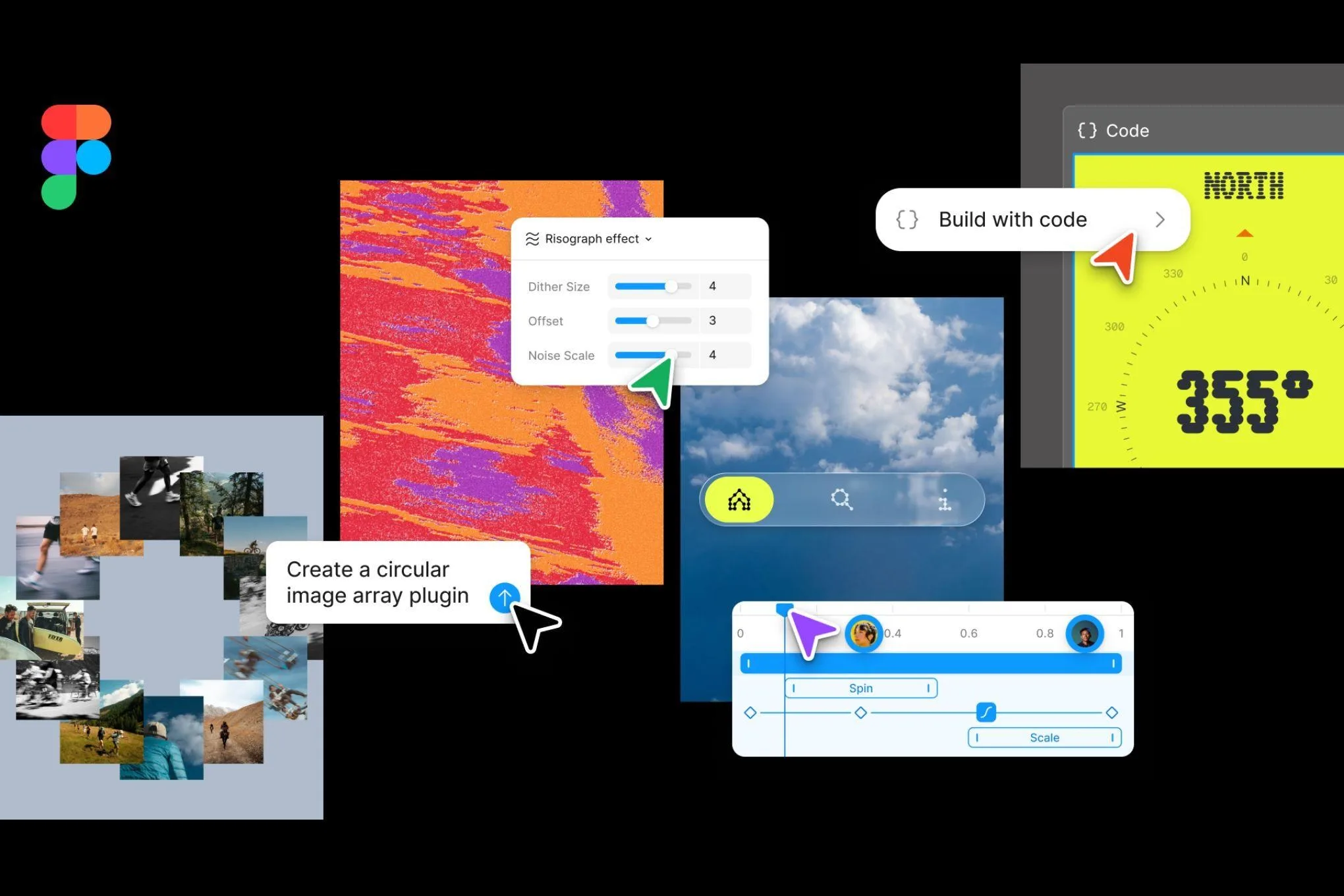
At its annual Config conference, Figma announced coding layers, AI-generated motion graphics, and a reimagined canvas that blurs the line between design and full-stack development.
Sarah Williams · 26 Jun · 5 min
Everyone talks about chips and models. The memory bottleneck is the part of the AI buildout that keeps getting underestimated, and Micron's latest earnings make that case hard to ignore.
The CVPR announcement is more directly relevant to robotics researchers. NVIDIA is releasing what they call "agent skills" designed to address what they identify as the core challenge in physical AI research: building a full workflow around models. Specifically, they're targeting three capabilities: reconstructing real-world scenes, generating edge-case scenarios, and training and evaluating policies.
This is, actually, a reasonable diagnosis of the problem. Anyone who has worked on robot learning knows that the model is often the easy part. The hard part is getting good training data, simulating realistic scenarios, and evaluating whether your policy will generalize to situations it hasn't seen.
Here's where I need to be somewhat pedantic, but I think it's important. The individual components NVIDIA is providing aren't new research contributions. Scene reconstruction, synthetic data generation, sim-to-real transfer: these are all active research areas with substantial prior work. NVIDIA isn't claiming to have solved these problems.
What they're claiming is that they've packaged these capabilities into a usable workflow. That's a different kind of contribution. It's engineering and integration rather than fundamental research. And honestly, that might be more valuable for many practitioners. If you're a robotics researcher at a university or a startup, you probably don't want to build your own scene reconstruction pipeline from scratch. You want something that works well enough so you can focus on your actual research questions.
The question I can't answer from the available information is how good these tools actually are. NVIDIA says they help researchers "speed the development" of autonomous systems, but they don't provide benchmarks or comparisons to existing alternatives. The sample size of real-world deployments using these tools is, as far as I can tell, zero or close to it. This hasn't been independently validated yet.
One of the claimed capabilities is generating edge-case scenarios for training. This is genuinely important. Robot policies trained only on common scenarios tend to fail catastrophically when they encounter unusual situations. A robot arm that has only seen objects in standard orientations might completely fail when an object is tilted at an unexpected angle.
But generating realistic edge cases is harder than it sounds. It's not enough to randomly perturb your simulation parameters. You need to generate scenarios that are both unusual and physically plausible. A robot needs to handle the case where someone places a coffee mug upside down, not the case where the mug is floating in mid-air.
NVIDIA's approach, based on the announcement, seems to leverage their existing simulation infrastructure (likely built on Isaac Sim) combined with generative techniques for creating diverse scenarios. It's worth noting that the company has been building toward this for years. Their Omniverse platform, their acquisition of simulation capabilities, their work on differentiable physics: these all feed into this kind of workflow.
Whether their edge-case generation actually produces scenarios that improve real-world robustness remains unclear. The research literature on this is mixed. Some studies show significant benefits from diverse synthetic training data. Others show that the sim-to-real gap can actually widen when you train on unrealistic edge cases. I'd want to see peer-reviewed evaluations before drawing strong conclusions.
The value proposition here varies significantly depending on who you are.
If you're an autonomous vehicle researcher, NVIDIA's tools are probably most mature in your domain. The company has been working on AV simulation for years, and they have substantial partnerships with automotive companies. The new agent skills are likely incremental improvements to an already capable toolkit.
If you're working on manipulation robotics, the situation is more uncertain. Manipulation involves contact-rich interactions that are notoriously difficult to simulate accurately. NVIDIA has made progress here (their work on differentiable simulation and GPU-accelerated physics is legitimately impressive), but the gap between simulation and reality remains significant for tasks involving deformable objects, liquids, or fine motor control.
If you're in academic robotics research, the value depends heavily on whether NVIDIA makes these tools accessible. Historically, NVIDIA's robotics tools have been available to researchers, but with licensing terms and hardware requirements that can be prohibitive for smaller labs. The announcement doesn't specify pricing or access models for the new capabilities.
It's worth stepping back to consider what NVIDIA is actually doing here. The company has positioned itself as the infrastructure provider for AI broadly, and they're extending that positioning into physical AI. The pitch is essentially: just as you use NVIDIA GPUs to train language models, you should use NVIDIA tools to develop robot policies.
This is a reasonable business strategy, but it's not without risks for the research community. When a single company controls the dominant infrastructure for a field, it can shape research directions in ways that aren't always beneficial. Researchers tend to work on problems that their tools make tractable. If NVIDIA's simulation tools work well for certain types of robots and poorly for others, we might see research cluster around the well-supported cases.
I'm not saying this is necessarily bad. Standardized tools can accelerate progress by reducing duplicated effort. The deep learning revolution was enabled in part by frameworks like TensorFlow and PyTorch that let researchers focus on models rather than implementation details. Something similar could happen in robotics.
But it's worth being aware of the tradeoffs. When I talk to robotics researchers, many express concerns about becoming too dependent on proprietary tools. Open-source alternatives exist (MuJoCo is now free, PyBullet is widely used, Isaac Gym has an academic license), but they often lag behind NVIDIA's offerings in terms of performance and features.
Several things remain unclear from the announcements, and I'd want to see them addressed before drawing strong conclusions:
First, what are the actual performance characteristics of the new agent skills? How much faster is scene reconstruction compared to existing methods? How diverse are the generated edge cases? How well do policies trained with these tools transfer to real robots? NVIDIA provided no quantitative benchmarks.
Second, what are the hardware requirements? NVIDIA's tools typically require their GPUs, which is unsurprising given their business model. But the specific requirements matter. Can a researcher with a single RTX 4090 use these tools effectively, or do they need access to a cluster of A100s?
Third, what's the licensing model for academic research? Some NVIDIA tools are freely available for non-commercial use. Others require expensive enterprise licenses. The announcement doesn't clarify where the new agent skills fall.
Fourth, how do these tools integrate with existing research workflows? Most robotics labs have their own simulation pipelines, data collection procedures, and evaluation protocols. Adopting new tools requires significant effort, and the benefits need to outweigh the switching costs.
If NVIDIA wants to demonstrate that these tools actually advance robotics research, here's what would be convincing:
Independent benchmarks. Have researchers outside NVIDIA evaluate the tools on standardized tasks and compare them to existing alternatives. The robotics community has benchmark suites for manipulation, locomotion, and navigation. Show how policies trained with NVIDIA's workflow perform on these benchmarks.
Real-world deployment studies. Simulation results are necessary but not sufficient. Show robots trained primarily in NVIDIA's simulation stack performing reliably in uncontrolled real-world environments. Ideally, show this across multiple robot platforms, not just NVIDIA's preferred hardware partners.
Transparency about limitations. Every tool has limitations. NVIDIA's announcement was, predictably, entirely positive. A more credible pitch would acknowledge where the tools work well and where they struggle. What types of tasks remain challenging? What are the known failure modes?
I know I'm being picky here, but this is how research progress actually happens. Bold claims need to be backed by evidence that can be scrutinized and replicated. NVIDIA has the resources to provide that evidence. Whether they will remains to be seen.
NVIDIA's announcements represent a continuation of their strategy to become the dominant infrastructure provider for physical AI. The Microsoft partnership is primarily about enterprise deployment of AI agents. The CVPR announcement about agent skills for robotics is more directly relevant to researchers, but the details remain thin.
The core value proposition, providing integrated tools for scene reconstruction, edge-case generation, and policy training, addresses real pain points in robotics research. Whether NVIDIA's specific implementation delivers on that promise is something we simply don't know yet. The tools haven't been independently evaluated, real-world deployment data wasn't provided, and access models for researchers weren't specified.
I'll be watching for peer-reviewed studies using these tools over the next year. That's when we'll actually learn whether this is a meaningful contribution to robotics research or primarily a marketing exercise. For now, cautious optimism seems appropriate, but only cautious.