Android 17 Arrives With Gemini Baked In, But the AI Features That Matter Are Still Months Away
Google's latest Android release ships with multitasking upgrades and new Pixel AI models, but the marquee Gemini features won't land until late summer at the earliest.
Bildnachweis: Image via Bloomberg — Technology. Used under fair use for news commentary. · source
Google released Android 17 on June 16, 2026, and the headline is not the features that shipped. It is the features that did not.
The update is real, the multitasking improvements are real, and the Wear OS 7 smartwatch upgrades are real. But Bloomberg reported the same morning that some of Android 17's marquee AI capabilities will not arrive for another few months, likely late summer 2026. For a release that has been framed, at least in part, around Google's Gemini expansion, that is a notable gap between announcement and delivery.
This is worth unpacking carefully, because the Android 17 launch actually contains two distinct things that are being discussed as one: a platform update with genuine multitasking and security improvements, and a rolling AI deployment that is, to be precise, still in progress.
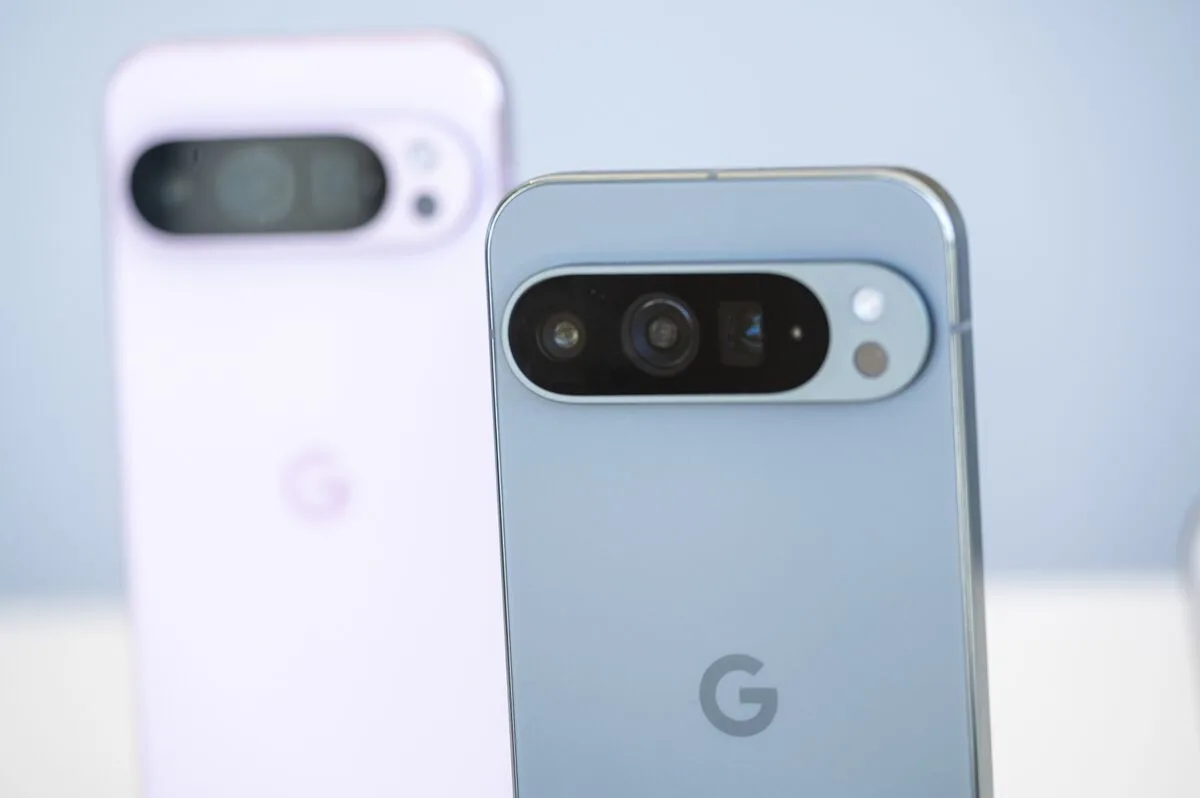
TechCrunch reported that the release includes new multitasking tools, enhanced parental controls, security features, and smartwatch upgrades via Wear OS 7. Google also issued a Pixel Drop alongside the OS update, bringing its latest AI models specifically to Pixel hardware.
The Pixel Drop is the more immediately interesting piece for anyone following AI model deployment on consumer devices. Google has been using Pixel hardware as its primary on-device AI testbed for several years now, and the pattern is consistent: new model capabilities arrive on Pixel first, then propagate to the broader Android ecosystem over subsequent months. Android 17 follows that pattern exactly.
Verwandte Beiträge
More in AI Models
Chipmakers swung wildly this week, from a Tuesday 'chip-wreck' to a Micron-led surge after hours. What's actually going on with AI's hardware backbone?
Sarah Williams · 26 Jun · 5 min
The original Creator Studio was shut down in 2023. Now it's back, rebuilt around an AI assistant that promises to grow your audience and reply to comments in your voice.
Sarah Williams · 26 Jun · 5 min
At its annual Config conference, Figma announced coding layers, AI-generated motion graphics, and a reimagined canvas that blurs the line between design and full-stack development.
Sarah Williams · 26 Jun · 5 min
Everyone talks about chips and models. The memory bottleneck is the part of the AI buildout that keeps getting underestimated, and Micron's latest earnings make that case hard to ignore.
The multitasking improvements are harder to evaluate without hands-on testing, but the category itself is not new. Android has been iterating on split-screen and windowing behaviour since Android 7.0 Nougat in 2016. Whether the Android 17 implementation represents a meaningful step forward or incremental polish over Android 16 remains unclear from the initial coverage, and I would want to see independent usability evaluations before drawing conclusions.
Parental controls and security tooling are similarly difficult to assess at launch. Google announces security improvements with essentially every major Android release. What matters is the implementation detail, and those details are not yet fully public.
The more substantive story here is Gemini's continued integration into Android as a platform-level capability rather than a standalone application.
Google has been repositioning Gemini from a chatbot interface into what it describes as an ambient AI layer: something that operates across apps, surfaces, and contexts rather than requiring explicit user invocation. Android 17 appears to be a significant step in that architectural direction, though it is worth noting that the full feature set is not yet live.
This raises questions about, well, multiple things. The first is what exactly the delayed Gemini features are. Bloomberg's reporting confirms they exist and that they are coming this summer, but the specific capabilities have not been fully enumerated in initial coverage. The second question is whether on-device versus cloud processing will govern those features, which has significant implications for both latency and privacy.
On-device AI inference on mobile hardware has advanced considerably since the introduction of dedicated neural processing units in flagship chips. Qualcomm's Snapdragon 8 Elite and Google's own Tensor G4 both include NPU configurations capable of running smaller language models locally. Whether Android 17's Gemini features lean on on-device inference or route through Google's cloud infrastructure is, as of this writing, not clearly specified in available sources.
It's worth noting that this distinction matters more than it might appear. On-device inference means lower latency, no data leaving the device, and functionality without a network connection. Cloud inference means access to larger, more capable models but with the associated privacy and connectivity trade-offs. Google has historically used a hybrid approach on Pixel devices, and Android 17 likely continues that pattern, but I only found two sources on this specific question and neither goes into sufficient technical depth.
The Wear OS 7 component of this release has received less attention than the Android 17 headline, which is probably appropriate given that the smartwatch market remains significantly smaller than the smartphone market. But it is not unimportant.
Smartwatch AI capabilities are genuinely constrained by hardware. The compute available in a wrist-worn device in 2026 is substantial compared to five years ago, but it remains orders of magnitude below what is available in a flagship phone. This means that any AI features in Wear OS 7 are almost certainly either heavily quantised on-device models, thin clients routing to phone or cloud compute, or both.
The health monitoring applications are probably the most consequential area. Continuous physiological sensing, anomaly detection in heart rate or blood oxygen, and longitudinal pattern recognition across sleep and activity data are all problems where AI models can add genuine value. Whether Wear OS 7 advances these capabilities in a meaningful way is something the initial coverage does not make clear.
Stepping back from the specific Android 17 feature list, the release reflects something broader happening in the AI landscape right now.
For the past several years, the most capable AI models have lived in data centres. The consumer experience of AI was mediated by API calls, network latency, and cloud subscription models. What is happening now, across Android, iOS, and dedicated AI hardware, is a gradual migration of meaningful AI capability onto the device itself.
This is genuinely new, in the sense that the combination of model compression techniques (quantisation, pruning, knowledge distillation), purpose-built NPU silicon, and software frameworks optimised for edge inference has reached a threshold where useful AI tasks can run locally. It is not new in the sense that researchers have been working toward this for years. Work on efficient neural network architectures, from MobileNet in 2017 through to more recent efforts on small language models, has been building toward exactly this kind of deployment.
What Android 17 represents is the mainstreaming of that research into a platform used by billions of people. That is significant even if the individual features seem incremental.
Actually, the research shows that platform-level AI integration tends to have larger downstream effects than any individual model capability, because it changes what developers can assume is available on user devices. When Gemini capabilities become a standard Android API rather than an optional add-on, the ecosystem of applications that can leverage those capabilities expands dramatically. This is the same dynamic that played out with GPS, cameras, and accelerometers: the hardware or capability existed before it was platform-integrated, but integration is what unlocked the application layer.
I want to be transparent about the limitations of what is knowable at this stage. The Android 17 coverage available at launch is primarily based on Google's own communications and initial hands-on impressions from journalists who received early access. Independent technical evaluation takes time.
The claims about AI capability improvements in particular deserve scrutiny. Benchmarks for on-device AI performance are not standardised in the way that, say, CPU or GPU benchmarks are. Google will publish numbers that favour its own implementation. Independent researchers will need time to run controlled evaluations across tasks, devices, and use cases before the performance picture becomes clear.
I know I am being picky here, but the framing of AI features in consumer product launches has a persistent problem: the marketing language ("smarter," "more capable," "understands context") is almost never accompanied by the kind of specific, reproducible claims that would allow meaningful evaluation. Android 17 is not unusual in this respect, but it is worth flagging.
What I would want to see next:
Specific benchmark results for on-device Gemini inference. Tokens per second, memory footprint, accuracy on standard tasks. Published, reproducible, comparable to prior releases and to competing implementations.
Clarity on the on-device versus cloud processing split. For each Gemini feature in Android 17, where does the compute actually happen? This should be disclosed clearly, not buried in privacy documentation.
Independent replication of the multitasking improvements. Usability claims are notoriously difficult to evaluate from press releases. Controlled studies with real users doing real tasks are the appropriate standard.
Longitudinal data on the delayed features. When the summer Gemini features arrive, how do they compare to what was promised in June? Vague future commitments are easy to make and easy to quietly revise.
Several things remain unclear as of the Android 17 launch.
The most immediate is what, specifically, the delayed Gemini features are and what is causing the delay. "A few months" could mean August or it could mean November. The difference matters for developers building applications that depend on those capabilities.
The second open question is competitive positioning. Apple has been advancing its on-device AI strategy through Apple Intelligence, and the comparison between what Google is deploying in Android 17 and what Apple shipped in iOS 18 and is continuing to develop for iOS 19 is one that the available coverage does not make clearly. Both companies are pursuing broadly similar architectural goals through somewhat different technical approaches, and the relative merits are not yet settled.
The third question is what Android 17's AI capabilities mean for the mid-range and budget device market. Pixel hardware is Google's showcase, but Android runs on a vastly more diverse hardware ecosystem than iOS. The Gemini features that work well on a Pixel 9 Pro may perform very differently on a device with a less capable NPU and less RAM. How Google handles this fragmentation problem will determine how broadly the AI capabilities actually reach users.
Android 17 is a real release with real improvements. Whether it is the AI milestone that Google's framing suggests depends on features that are not yet available, evaluated by benchmarks that have not yet been run, on a hardware ecosystem that is significantly more complex than the Pixel-first launch implies. That is not cynicism. It is just the appropriate level of precision for where things actually stand.