Image credit: Image via source article. Used under fair use for news commentary. · source
Have you noticed how every AI announcement lately comes with an asterisk? The asterisk is power.
I've been thinking about this a lot since watching CyrusOne CEO Eric Schwartz talk about the data center boom on Bloomberg last week. He described it as an "industrial arms race," which, honestly, might be underselling it. We're talking about trillion-dollar infrastructure bets on power grids that, in many places, already struggle to keep the lights on during a hot summer.
You might be wondering: how did we get here so fast? The short answer is that nobody planned for this. The longer answer is more interesting.
Here's what we know: Amazon, Meta, Microsoft, and others are pouring hundreds of billions into data centers and the advanced chips that go inside them. Most of those chips come from Nvidia, which has become the de facto gatekeeper of the AI revolution.
What we don't know, and this is frustrating, is exactly how much power all of this will require. Estimates vary wildly. I've seen projections suggesting AI data centers could consume anywhere from 3% to 9% of US electricity by 2030. That's a huge range, and it tells you something about how uncertain even the experts are.
I initially thought the power problem was mostly a US issue, something about our aging grid infrastructure and regulatory patchwork. But after reading more about Huawei's new chipmaking push, covered by , it's clear this is global. China is racing to build its own AI chip supply chain, which means they'll need their own massive power infrastructure too. The demand isn't going away; it's multiplying.
Related coverage
More in AI Models
Chipmakers swung wildly this week, from a Tuesday 'chip-wreck' to a Micron-led surge after hours. What's actually going on with AI's hardware backbone?
Sarah Williams · 26 Jun · 5 min
The original Creator Studio was shut down in 2023. Now it's back, rebuilt around an AI assistant that promises to grow your audience and reply to comments in your voice.
Sarah Williams · 26 Jun · 5 min
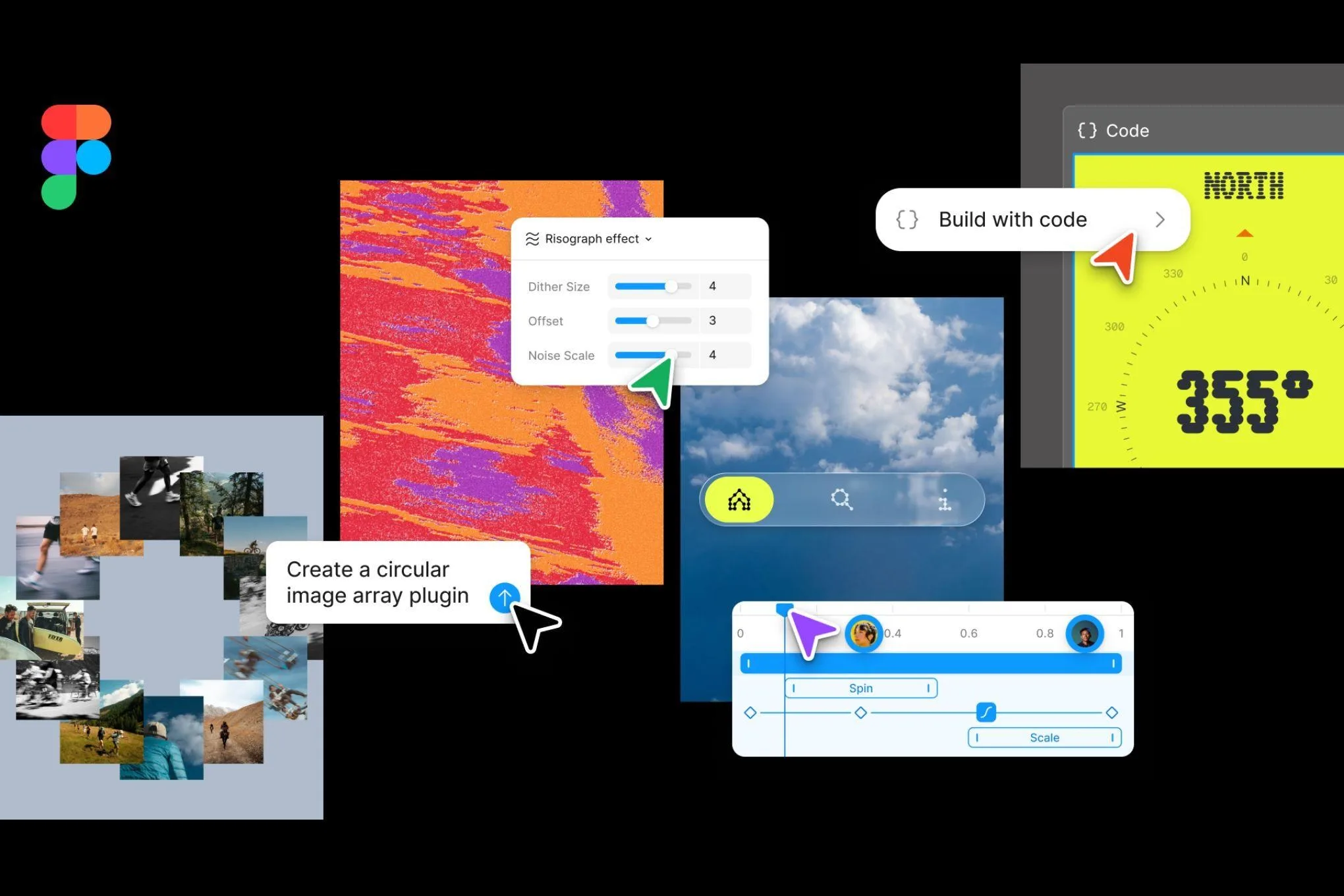
At its annual Config conference, Figma announced coding layers, AI-generated motion graphics, and a reimagined canvas that blurs the line between design and full-stack development.
Sarah Williams · 26 Jun · 5 min
Everyone talks about chips and models. The memory bottleneck is the part of the AI buildout that keeps getting underestimated, and Micron's latest earnings make that case hard to ignore.
Schwartz mentioned something that stuck with me: skilled labor is as much a bottleneck as power itself. You can't just throw money at a data center and expect it to materialize. You need electricians, HVAC specialists, construction crews who understand the peculiar demands of these facilities.
This creates a weird tension. On one hand, there's genuine fear that AI will eliminate jobs (more on that in a second). On the other hand, the physical infrastructure AI requires is creating urgent demand for very human, very hands-on work. The irony isn't lost on me.
Big banks are already shifting their hiring strategies. They're looking to bring in more AI specialists while shrinking traditional banking roles. That's according to Bloomberg's tech coverage from this week. So the jobs question isn't really "will AI eliminate jobs" but rather "which jobs, where, and who gets the new ones."
The uncomfortable truth: we don't have great mechanisms for making sure the new jobs go to the people losing the old ones. That's a policy problem, not a technology problem, but it's getting tangled up with the AI discourse in ways that make it harder to address either.
Simon Johnson, the MIT professor who won the Nobel, was at a UBS conference recently discussing this exact tension. His take, as covered by Bloomberg, focused on the gap between AI's productivity potential and how those gains get distributed.
I should know the economic literature on automation better than I do, tbh. But the gist seems to be this: technology can complement human work or replace it, and which one happens depends largely on corporate decisions and policy choices. AI isn't destiny. It's a tool, and tools get used by people with specific interests.
The US and China are both racing to adopt AI as fast as possible, which makes the "let's slow down and think about this carefully" crowd increasingly irrelevant. The geopolitical stakes are too high. China is even tightening travel restrictions on its top AI talent, apparently worried about brain drain or intellectual property leakage or both.
So what are people actually proposing? Here's where it gets, well, interesting.
Nuclear power keeps coming up. Small modular reactors, specifically, which promise cleaner energy without the massive footprint of traditional plants. The problem is timelines. These things take years to permit and build. AI companies need power now.
Natural gas is the stopgap everyone's quietly relying on. It's faster to deploy than renewables at scale, but it completely undermines any climate commitments these companies have made. I've seen some truly creative PR language trying to square this circle.
Efficiency gains in chips and data center design are real, but they're being outpaced by demand. It's like trying to bail out a sinking boat with a slightly better bucket.
Demand management is the wildcard. What if AI workloads could be shifted to times when renewable energy is abundant? What if data centers were built in places with excess power capacity? These ideas make sense on paper, but they require coordination that doesn't really exist yet.
Honestly, I'm not sure anyone has a good answer. The AI industry is building first and figuring out the power situation second, which is, in a way, how most technological revolutions have worked. Railroads didn't wait for perfect safety regulations. The internet didn't wait for robust cybersecurity frameworks.
But the scale here is different. We're talking about potentially reshaping entire power grids, retraining millions of workers, and renegotiating the relationship between technology and labor. All while two superpowers are racing each other and restricting the movement of their best minds.
The optimistic read is that necessity drives innovation. Maybe the power crisis will accelerate clean energy development in ways that wouldn't have happened otherwise. Maybe the labor disruption will finally force serious investment in worker retraining.
The pessimistic read is that we'll muddle through with natural gas, inequality will widen, and by the time we figure out the long-term consequences, it'll be too late to change course.
I think the reality will be somewhere in between, which is the most unsatisfying answer possible. But it's probably the honest one.
The asterisk on every AI announcement isn't going away. If anything, it's getting bigger. The question is whether we're paying attention to it.