Microsoft Scout: Is This Actually Different from Copilot?
Microsoft's new OpenClaw-based assistant promises to be a 'real personal assistant,' but I've heard that pitch before.
Image credit: Image via Source article. Used under fair use for news commentary. · source
So Microsoft launched another AI assistant. Scout, they're calling it. Built on OpenClaw, meant to be the thing that Copilot apparently wasn't. My first thought when I saw the announcement at Build was, wait, didn't we already do this?
Look, here's the thing. I've been watching enterprise software companies promise "personal assistants" since before most of today's product managers were out of college. When I was at Kuka, we had vendors pitching us AI scheduling tools in 2018 that were supposed to revolutionize how our engineering teams coordinated. They didn't. The calendar conflicts continued, the expense reports stayed messy, and eventually someone just hired another admin.
What's actually new
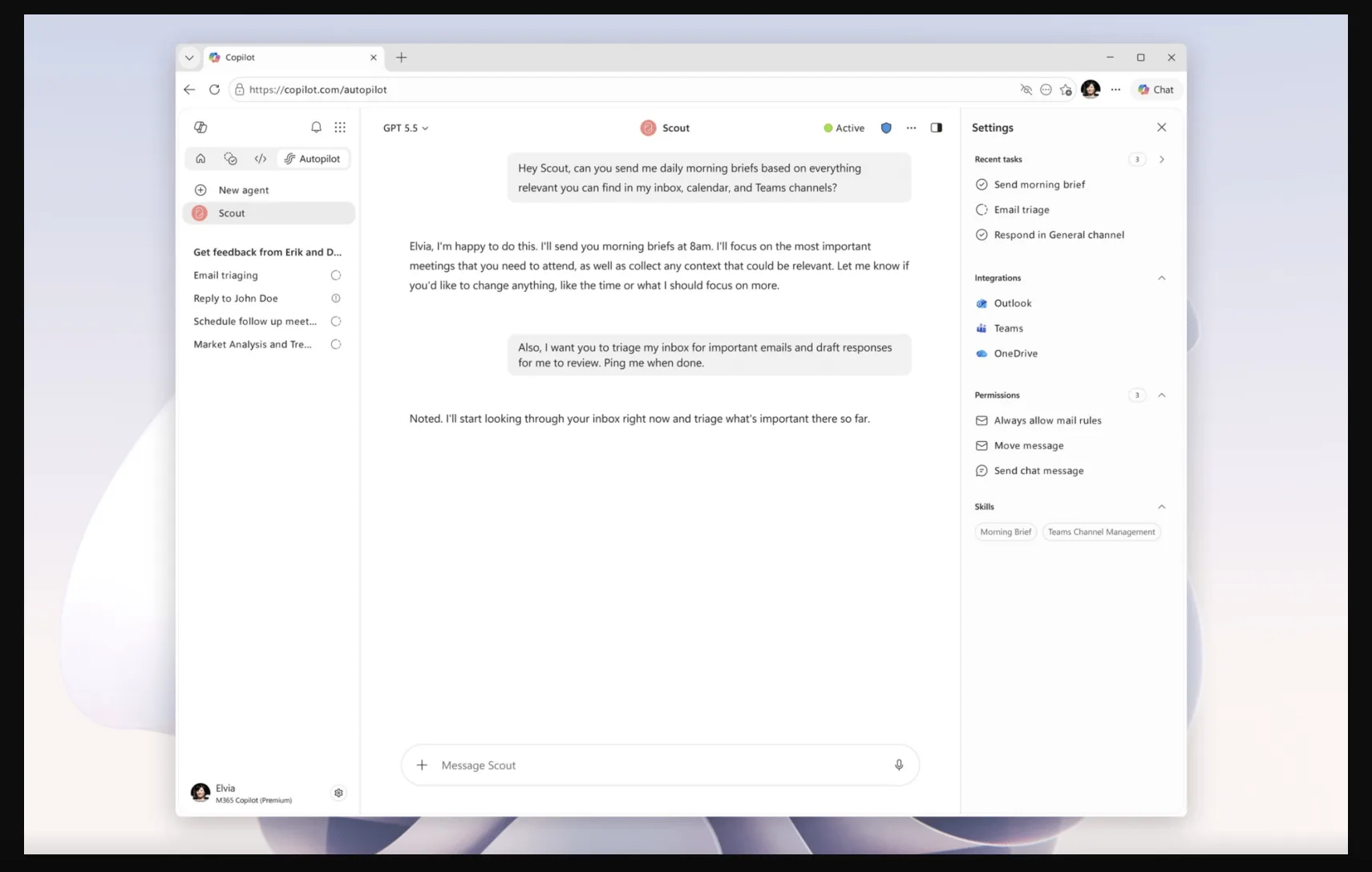
According to The Verge, Scout differs from Copilot in one key way: it can "see and do a lot more." It's not living inside individual Microsoft 365 apps anymore. Instead, it's an always-on assistant that reaches across Outlook, OneDrive, Teams, the whole stack.
"This is a personal assistant, it's the first real personal assistant we've offered customers," says Omar Shahine, corporate vice president of Microsoft Scout. That's a bold claim considering Microsoft has been selling Copilot as, well, basically that exact thing for two years now.
The integration list sounds useful enough. Calendar organization, expense reporting, email drafts. TechCrunch frames it as bringing "the power and flexibility of OpenClaw into the Microsoft 365 system," which I suppose is one way to describe what Google's been doing with their own version.
Related coverage
More in AI Models
Chipmakers swung wildly this week, from a Tuesday 'chip-wreck' to a Micron-led surge after hours. What's actually going on with AI's hardware backbone?
Sarah Williams · 26 Jun · 5 min
The original Creator Studio was shut down in 2023. Now it's back, rebuilt around an AI assistant that promises to grow your audience and reply to comments in your voice.
Sarah Williams · 26 Jun · 5 min
At its annual Config conference, Figma announced coding layers, AI-generated motion graphics, and a reimagined canvas that blurs the line between design and full-stack development.
Sarah Williams · 26 Jun · 5 min
Everyone talks about chips and models. The memory bottleneck is the part of the AI buildout that keeps getting underestimated, and Micron's latest earnings make that case hard to ignore.