Image credit: Image via Source article. Used under fair use for news commentary. · source
Zero. That's how many AI products Meta has charged businesses for until this week.
The company that's spent tens of billions on AI infrastructure, that's built one of the largest GPU clusters on the planet, that's released model after model for free, has finally decided it wants some of that money back. Bloomberg reports that Meta is now selling businesses access to an AI agent, marking its first commercial AI offering.
Look, this was inevitable. You don't burn through that kind of capex without eventually needing to show the accountants something. But what's more interesting than the business agent itself is where Meta's AI chief says the company is headed next: consumer health advice.
The details on the business agent are thin. Meta hasn't disclosed pricing, capability specifics, or how many customers have signed up. From my time building hardware, I've learned that companies tend to be vague about products that are still finding their footing. That's not necessarily a red flag, but it's worth noting.
What we do know is that this is an "AI agent," which in 2026 parlance means software that can take actions on behalf of users rather than just answering questions. Think booking, purchasing, scheduling, that sort of thing. The enterprise AI agent market has gotten crowded fast, with everyone from Microsoft to a dozen well-funded startups fighting for the same corporate budgets.
Meta's angle appears to be integration with its existing business tools. If you're already running ads through Meta, already managing customer service through WhatsApp Business, already using Workplace (if anyone still uses Workplace), the pitch is presumably that their agent slots right in.
Related coverage
More in AI Models
Chipmakers swung wildly this week, from a Tuesday 'chip-wreck' to a Micron-led surge after hours. What's actually going on with AI's hardware backbone?
Sarah Williams · 26 Jun · 5 min
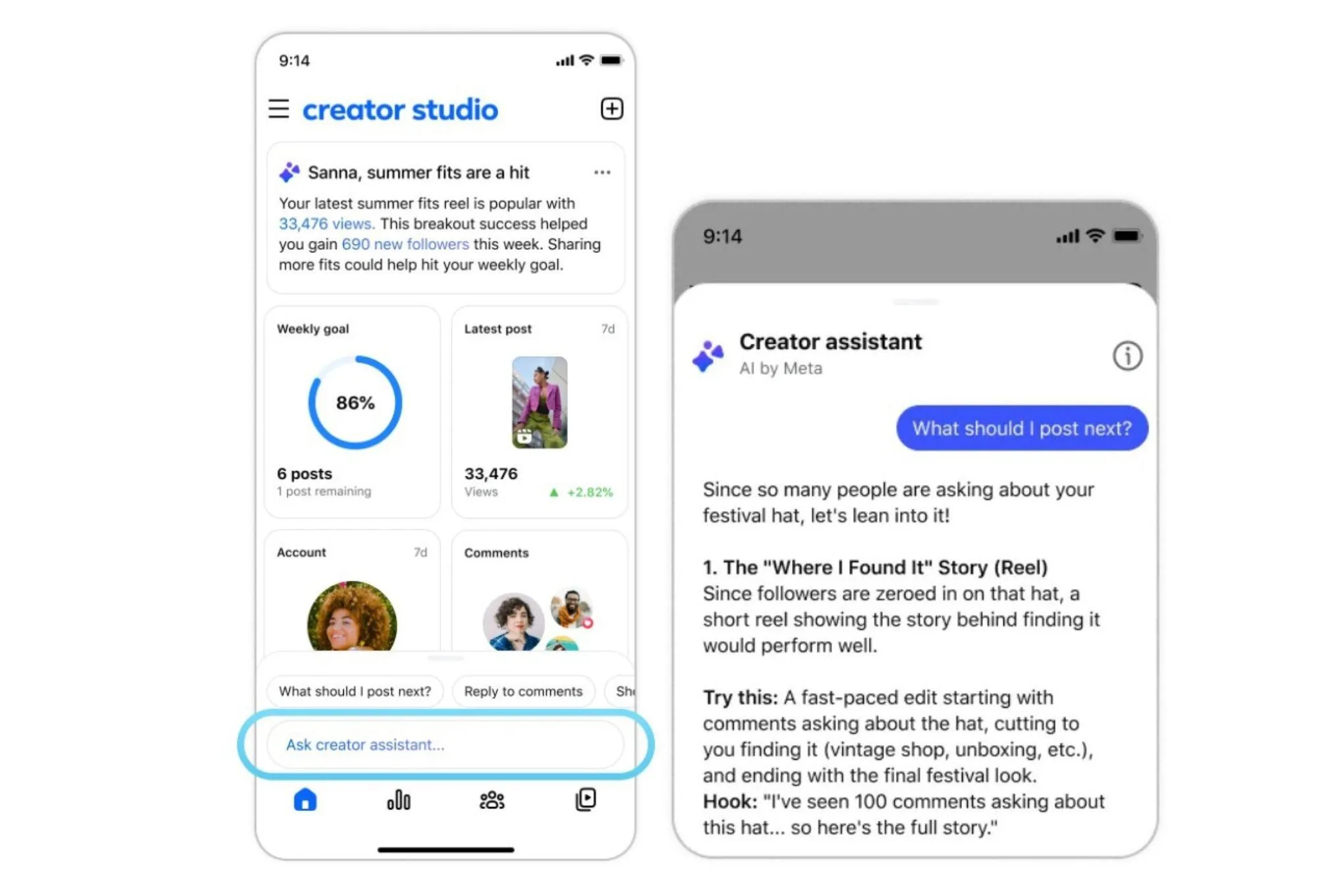
The original Creator Studio was shut down in 2023. Now it's back, rebuilt around an AI assistant that promises to grow your audience and reply to comments in your voice.
Sarah Williams · 26 Jun · 5 min
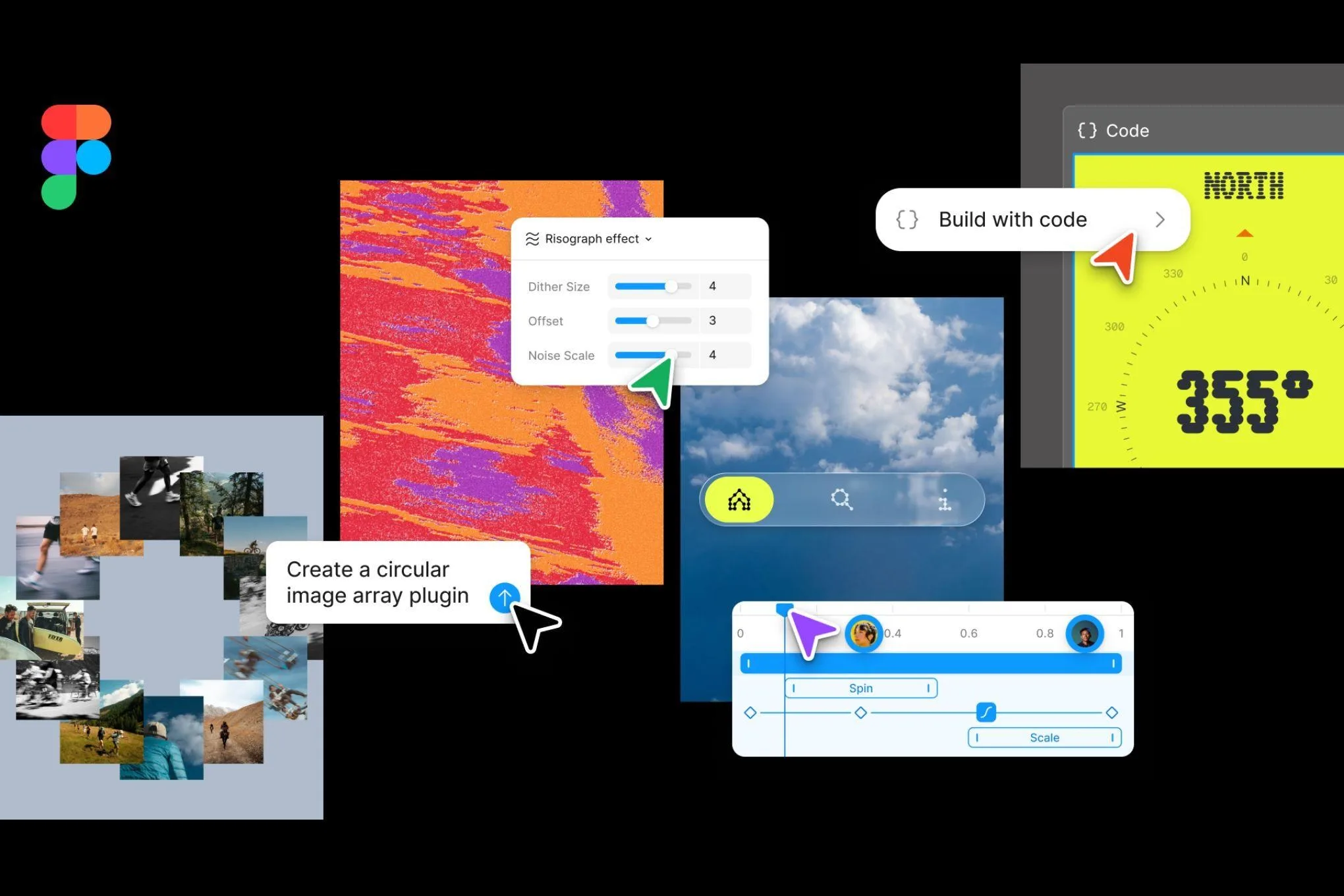
At its annual Config conference, Figma announced coding layers, AI-generated motion graphics, and a reimagined canvas that blurs the line between design and full-stack development.
Sarah Williams · 26 Jun · 5 min
Everyone talks about chips and models. The memory bottleneck is the part of the AI buildout that keeps getting underestimated, and Micron's latest earnings make that case hard to ignore.
That's an ambitious claim. The real test is whether the agent actually works reliably enough for businesses to trust it with customer-facing tasks. I've seen enough demos that fall apart in production to be skeptical until we see actual deployment numbers.
This is where things get genuinely interesting. In a separate Bloomberg report, Meta's Chief AI Officer Alexandr Wang said the company's future AI models will differentiate themselves through consumer health capabilities.
Let that sink in. Meta, a company whose core business is social media advertising, is positioning health advice as a key differentiator for its AI.
The logic, sort of, makes sense. Consumer AI is increasingly commoditized. ChatGPT, Claude, Gemini, Llama (Meta's own open-source models), they're all converging on similar capabilities for general tasks. If you want to stand out, you need a vertical where you can claim superiority.
Health is a massive vertical. Americans spend roughly $4.5 trillion annually on healthcare. Even capturing a tiny slice of that through AI-assisted tools would be significant revenue. And Meta has something its competitors largely lack: billions of daily active users already on its platforms.
The pitch writes itself. You're scrolling Instagram, you mention a headache, Meta AI offers to help you figure out if it's a migraine or something more serious. You're messaging a friend about a weird rash on WhatsApp, the AI suggests whether you should see a dermatologist.
Substantial. And I don't think Meta is being naive about them, but the company's track record on responsible deployment is, let's say, mixed.
First, the liability question. When an AI gives health advice and someone acts on it incorrectly, who's responsible? Meta will almost certainly disclaim any medical authority, but disclaimers don't always hold up when real harm occurs. The FDA has been increasingly interested in AI health tools, and it remains unclear how they'll treat something like this.
Second, the accuracy question. Current large language models hallucinate. They make things up. They state false information with complete confidence. This is manageable when you're asking for a recipe or help with an email. It's potentially dangerous when you're asking whether that chest pain is serious.
Third, the privacy question. Health data is among the most sensitive information that exists. Meta's business model is built on collecting and monetizing user data. Even if they promise not to use health conversations for advertising (and I haven't seen them make that promise), the perception issue alone could be a barrier to adoption.
Wang apparently addressed some of these concerns in his comments, though the specifics of what safeguards Meta plans to implement weren't detailed in the reporting.
Meta has been playing a different game than OpenAI or Anthropic. While those companies have focused on charging consumers and enterprises directly for AI access, Meta has largely given its models away for free. Llama is open-source. Meta AI is free to use across Facebook, Instagram, and WhatsApp.
The theory has been that AI is infrastructure, not product. You give it away to drive engagement on your platforms, which drives ad revenue, which pays for the AI development. It's the same playbook Meta used with mobile apps a decade ago.
But that theory only works if the AI actually drives meaningful engagement. And so far, it's not clear that it has. Users aren't spending dramatically more time on Instagram because of Meta AI. They're not clicking more ads because an AI helped them write a caption.
So now we're seeing Meta hedge. Keep the free consumer AI to drive engagement, but also start charging businesses directly. And position for health, where the value proposition (and willingness to pay) might be higher than generic AI assistance.
It's a reasonable strategy. Whether Meta can execute it is another question entirely.
Pricing details for the business agent. Meta hasn't disclosed numbers. When they do, compare them to Microsoft Copilot licensing (roughly $30 per user per month for enterprise) and standalone AI agent startups (typically $50-200 per seat depending on capabilities).
Regulatory response to health positioning. The FDA and FTC have both been active in AI oversight. Wang's comments may draw attention from both agencies.
Actual deployment numbers. Press releases about AI products are cheap. Customer counts and usage metrics are what matter. Meta is a public company, so we'll eventually see some indication of revenue contribution in earnings calls.
Technical details on health safety. If Meta is serious about health AI, they'll need to publish something about their approach to accuracy, hallucination prevention, and liability. Vague promises won't cut it.
The business agent launch is, in some ways, unremarkable. Every major tech company is selling AI agents to businesses now. It's table stakes.
But the health pivot is genuinely novel, and genuinely risky. Meta is betting that the opportunity is worth the liability exposure, the regulatory scrutiny, and the potential for very public failures.
From my time in hardware, I learned that the companies that win aren't always the ones with the best technology. They're the ones who understand their constraints and build within them. Meta's constraint has always been trust. Users don't trust Meta with their data. Regulators don't trust Meta to self-govern. Advertisers don't trust Meta's metrics.
Building a health AI on that foundation is, well, that's an ambitious bet. The real test is whether users will actually ask Meta AI about their symptoms when they could just Google it or, you know, call a doctor.
I don't know the answer yet. It's too early to say whether this is a genuine strategic pivot or another in a long line of Meta initiatives that get announced with fanfare and quietly shelved two years later. But I'll be watching the numbers.