Kingboard Laminates Is Up 570%. What Does a Circuit Board Maker Have to Do With AI?
A Hong Kong laminate supplier has become one of 2026's wildest stock stories, and it tells us something real about where the AI infrastructure bet is heading.
Image credit: Image via Bloomberg — Technology. Used under fair use for news commentary. · source
Is the AI investment wave finally reaching the unglamorous parts of the supply chain?
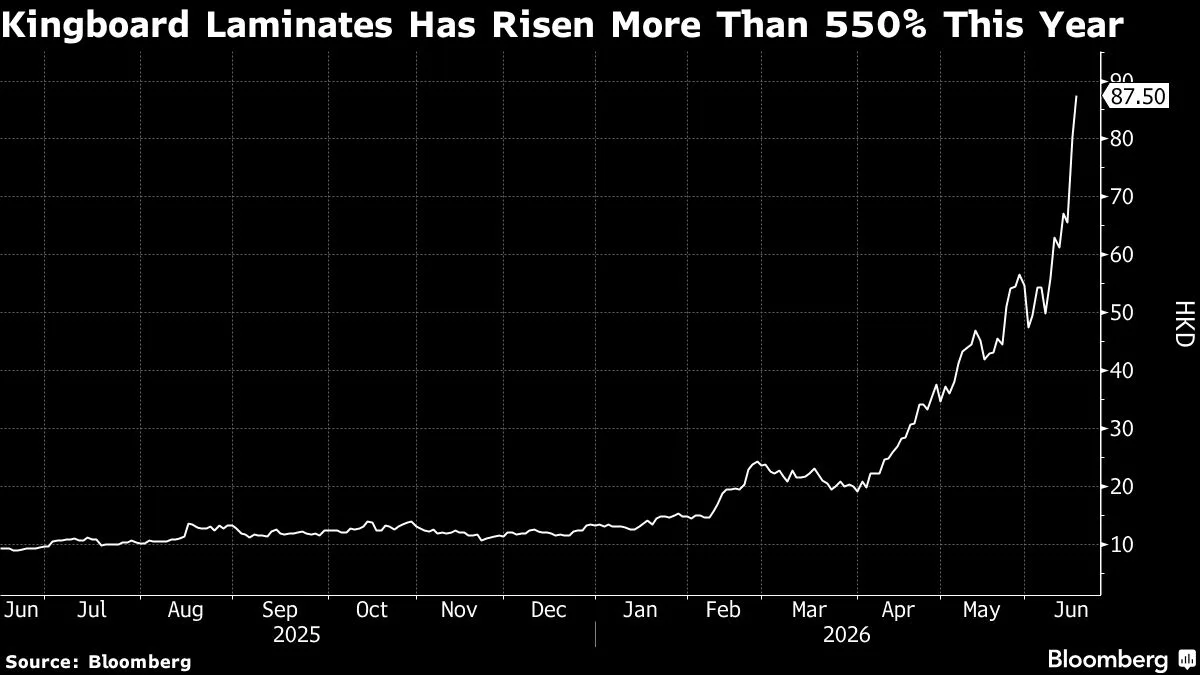
Because if Kingboard Laminates is any indication, the answer is a pretty emphatic yes. The Hong Kong-listed printed circuit board supplier has rallied more than 570% this year. Not a typo. Over fivefold. For a company that makes laminates.
I'll be honest: when I first saw this number, I assumed it was a data error or some kind of meme stock situation. But the more I read into it, the more it looks like something worth paying attention to, at least for anyone trying to understand how the AI buildout actually flows through the physical world.
So What Is Kingboard, Exactly?
Kingboard Laminates Holdings is a Chinese supplier to the printed circuit board industry. PCBs are the flat boards packed with components that sit inside basically every piece of computing hardware. AI infrastructure, whether we're talking about data centers, edge devices, or the chips inside humanoid robots, runs on these things.
According to Bloomberg, investors are betting Kingboard will emerge as a key beneficiary of the AI buildout. The logic isn't complicated: more AI compute means more servers, more servers means more PCBs, more PCBs means more demand for the laminates that go into them.
It's a picks-and-shovels argument. And picks-and-shovels arguments have a long history of being both correct and wildly overpriced at the same time.
Who's Actually Buying?
Related coverage
More in AI Models
Chipmakers swung wildly this week, from a Tuesday 'chip-wreck' to a Micron-led surge after hours. What's actually going on with AI's hardware backbone?
Sarah Williams · 26 Jun · 5 min
The original Creator Studio was shut down in 2023. Now it's back, rebuilt around an AI assistant that promises to grow your audience and reply to comments in your voice.
Sarah Williams · 26 Jun · 5 min
At its annual Config conference, Figma announced coding layers, AI-generated motion graphics, and a reimagined canvas that blurs the line between design and full-stack development.
Sarah Williams · 26 Jun · 5 min
Everyone talks about chips and models. The memory bottleneck is the part of the AI buildout that keeps getting underestimated, and Micron's latest earnings make that case hard to ignore.