Image credit: Image via Bloomberg — Technology. Used under fair use for news commentary. · source
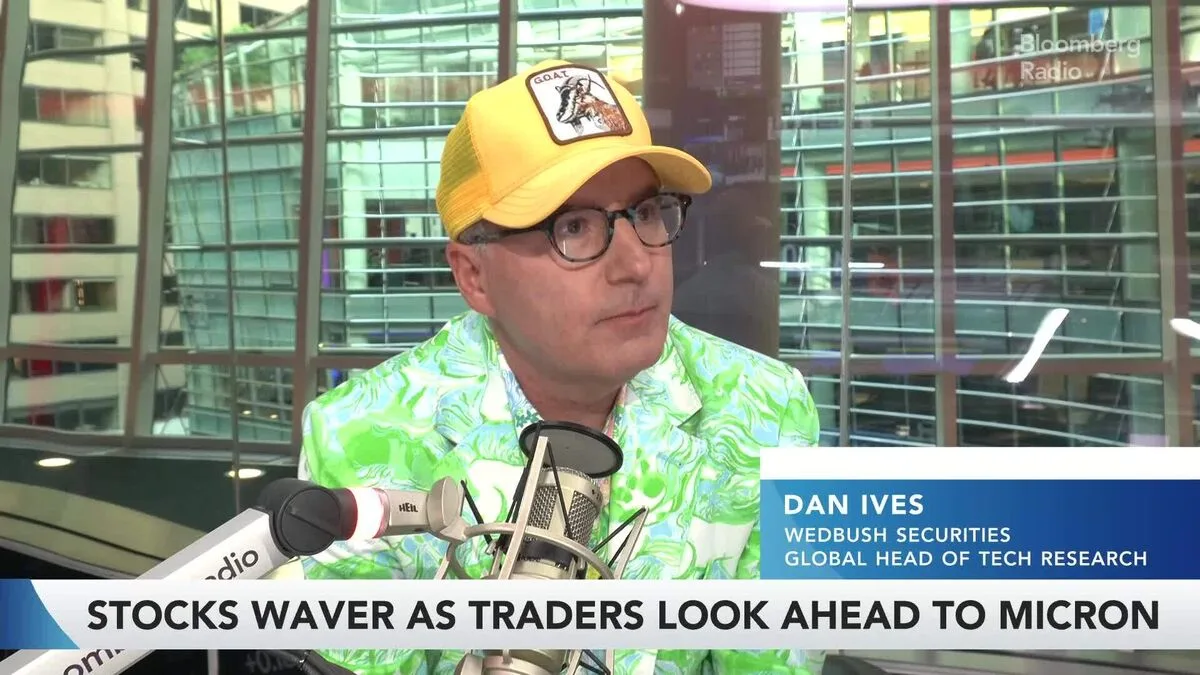
If you have followed the evolution of voice assistants from Siri's debut in 2011 to today's enterprise automation tools, you have witnessed a slow, often frustrating march toward genuine conversational AI. The announcement that IBM CEO Arvind Krishna appeared alongside Uniphore CEO Umesh Sachdev on Bloomberg's The Close last week suggests something worth examining: two companies with very different histories converging on what they believe is the next frontier of enterprise AI deployment.
To be precise, this is not a formal product launch or research paper. It is a signal, and in the enterprise AI space, signals from companies like IBM often precede substantial shifts in how corporations deploy automation. The appearance itself, during a segment focused on tech-led market movements, positions conversational AI agents as a serious infrastructure play rather than a consumer novelty.
The background here matters more than usual. IBM's trajectory in AI has been, to put it charitably, uneven. Watson's much-hyped debut gave way to years of underwhelming enterprise deployments and eventually a quiet pivot toward more focused automation tools. Uniphore, by contrast, has built its reputation on conversational AI specifically for customer service and sales automation, claiming deployments across financial services, healthcare, and telecommunications. The company raised substantial funding in recent years, though I should note that valuations in this space have been notoriously disconnected from actual technical capability.
What makes this pairing interesting is the complementary gap it addresses. IBM brings enterprise relationships and infrastructure credibility (whatever one thinks of Watson's legacy, IBM still has access to Fortune 500 IT departments that startups cannot easily replicate). Uniphore brings domain-specific conversational models that have apparently proven themselves in production environments. Actually, the research shows that domain-specific fine-tuning consistently outperforms general-purpose models for constrained enterprise tasks, so this combination makes technical sense even if the business rationale remains somewhat opaque.
Related coverage
More in AI Models
Chipmakers swung wildly this week, from a Tuesday 'chip-wreck' to a Micron-led surge after hours. What's actually going on with AI's hardware backbone?
Sarah Williams · 26 Jun · 5 min
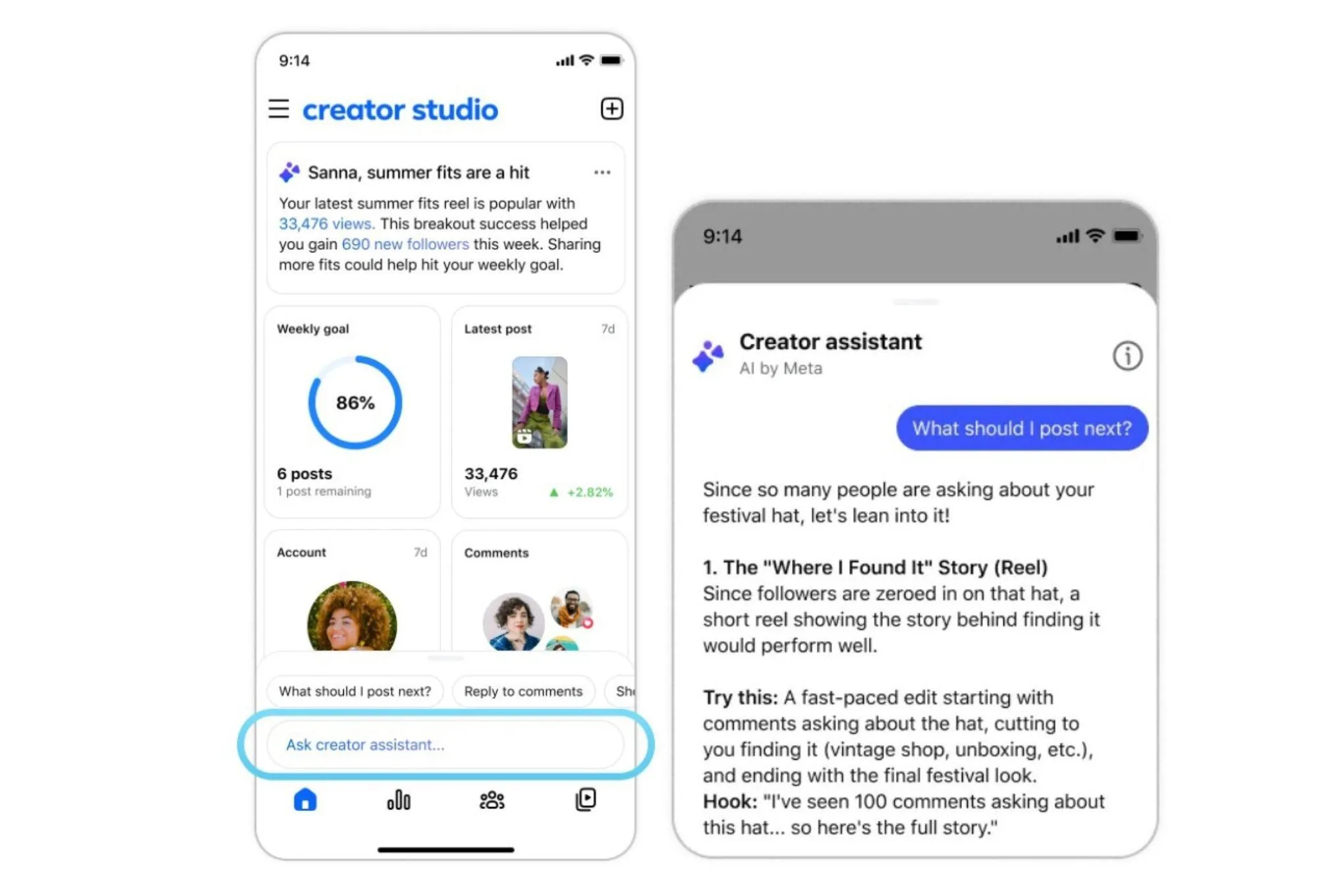
The original Creator Studio was shut down in 2023. Now it's back, rebuilt around an AI assistant that promises to grow your audience and reply to comments in your voice.
Sarah Williams · 26 Jun · 5 min
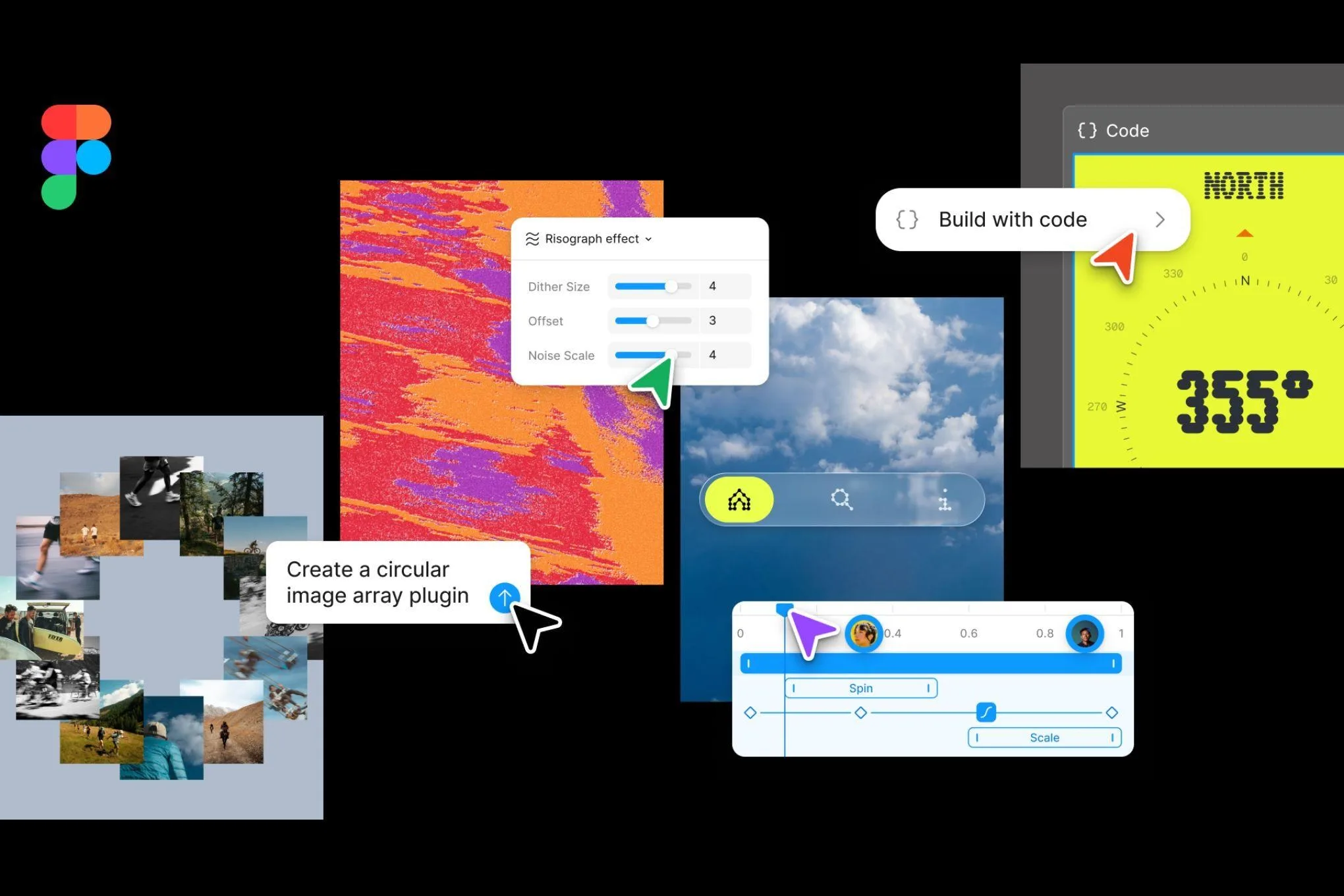
At its annual Config conference, Figma announced coding layers, AI-generated motion graphics, and a reimagined canvas that blurs the line between design and full-stack development.
Sarah Williams · 26 Jun · 5 min
Everyone talks about chips and models. The memory bottleneck is the part of the AI buildout that keeps getting underestimated, and Micron's latest earnings make that case hard to ignore.
What is genuinely new versus incremental here? This is where I find myself frustrated by the lack of technical detail. The Bloomberg appearance did not include discussion of specific architectures, training approaches, or benchmark comparisons. We do not know whether this collaboration involves joint model development, API integration, or simply co-marketing existing products. The distinction matters enormously for evaluating actual technical progress.
If I am being generous, the timing suggests this is more than a marketing exercise. The segment aired during a period of significant market rotation away from pure-play tech, which would be an odd moment to announce vaporware. Enterprise buyers have become notably more skeptical of AI promises following several high-profile deployment failures, so IBM and Uniphore presumably have something concrete to show potential customers.
It is worth noting that Dag Kittlaus, the Siri co-founder and former CEO, appeared on Bloomberg just one day earlier on June 8th. I know I am being picky here, but the proximity of these appearances, with Kittlaus representing the previous generation of voice AI and Krishna representing the current enterprise push, feels deliberately staged. Whether by Bloomberg's producers or the companies themselves, the narrative arc being constructed is obvious: conversational AI has matured from consumer curiosity to enterprise necessity.
The methodology concerns are substantial. When evaluating conversational AI claims, I typically look for three things: published benchmarks against established datasets, third-party validation of production deployments, and clear documentation of failure modes. We have none of these from the IBM-Uniphore collaboration so far. The sample size of publicly available information is, well, essentially zero beyond the television appearance itself.
This is not unusual for enterprise AI announcements, which tend to prioritize customer testimonials over technical documentation. But it does mean we should treat any capability claims with appropriate skepticism until more information emerges. The enterprise AI space has a long history of demos that work perfectly in controlled settings and fail spectacularly when exposed to real-world variation.
Why this matters for robotics and embodied AI is perhaps the most interesting angle to consider. Conversational interfaces are increasingly seen as the bridge between human operators and robotic systems. A warehouse worker does not want to learn a specialized control interface; they want to tell a robot what to do in natural language and have it figure out the execution details. The same logic applies to manufacturing, healthcare, and logistics deployments.
IBM's manufacturing and supply chain relationships could, in theory, provide a pathway for conversational AI agents to become the control layer for industrial automation. This is speculative, I should emphasize, but it aligns with broader industry trends toward natural language interfaces for complex systems. The research on language-conditioned robot policies has shown promising results in academic settings, though production deployments remain limited.
The market context adds another dimension. Bloomberg's coverage noted that the tech-led market drop on June 9th coincided with what analysts described as a rotation gaining speed. Investors appear to be distinguishing between AI companies with clear enterprise revenue paths and those still searching for sustainable business models. IBM, whatever its recent struggles, has enterprise revenue. Uniphore claims enterprise deployments. The combination positions both companies on the side of that divide that investors currently favor.
I am skeptical of reading too much into single-day market movements, but the broader pattern is clear. Enterprise AI is being treated as a more defensible investment thesis than consumer AI, at least for now. This creates incentives for companies to emphasize enterprise applications even when their technology might have broader potential.
Open questions remain numerous. What specific technical capabilities does this collaboration actually enable? How do the combined systems perform on standard conversational AI benchmarks? What are the failure modes, and how are they handled in production? What data is being used for training, and what privacy guarantees exist for enterprise customers? None of these questions were addressed in the Bloomberg appearance, and I could not find substantive answers in either company's recent public communications.
The involvement of other speakers in the same Bloomberg segment, including FIS President and CEO Stephanie Ferris and Lumentum Holdings CEO Michael Hurlston, suggests a broader theme around enterprise technology infrastructure. Financial services and optical communications are both sectors where AI automation is being actively deployed, so the segment's composition was not accidental.
What I would want to see next is straightforward: published technical documentation, benchmark comparisons against existing conversational AI systems, and case studies from actual enterprise deployments with specific metrics. The bar for taking enterprise AI claims seriously has risen substantially over the past two years, and companies that want credibility need to provide evidence beyond executive television appearances.
The comparison to Siri's evolution is instructive here. Kittlaus and his team built something genuinely novel in 2011, but the technology took years to mature into anything approaching reliable utility. Enterprise conversational AI may be following a similar trajectory, with current capabilities representing useful but limited tools rather than the transformative systems often promised in marketing materials.
I remain cautiously interested in this space. The technical foundations for effective conversational AI agents exist, and the enterprise demand is clearly real. Whether IBM and Uniphore have built something that meets that demand is a question we cannot answer with the information currently available. The appearance on Bloomberg tells us that both companies believe they have something worth promoting. It does not tell us whether they are right.