Gemini 2.5 Deep Think Scores Gold-Medal Level at ICPC World Finals, But What Does That Actually Mean?
Google DeepMind's latest reasoning model solved problems that stump elite programmers, though the real test is whether this translates to anything beyond competition math.
Image credit: Image via Google DeepMind. Used under fair use for news commentary. · source
Google DeepMind announced this week that Gemini 2.5 Deep Think, an experimental reasoning mode for its flagship model, achieved gold-medal level performance at the International Collegiate Programming Contest World Finals. The ICPC is, to be precise, the most prestigious algorithmic programming competition in the world, drawing thousands of university teams annually with only around 140 making it to the finals.
This is a genuinely significant result. It's also one that requires careful unpacking.
The ICPC World Finals presents teams with a set of algorithmic problems (typically 10-12) over five hours. These aren't coding exercises in the conventional sense. They're mathematical puzzles that require contestants to recognize underlying structures, devise efficient algorithms, and implement them correctly under time pressure. Problems range from graph theory and dynamic programming to geometry and number theory. The competition rewards both insight and speed.
What makes this benchmark interesting for AI systems is that the problems are novel. Unlike many coding benchmarks where models might have seen similar problems (or the exact problems) during training, ICPC finals problems are created fresh each year and kept confidential until the competition. This reduces, though doesn't eliminate, concerns about data contamination.
DeepMind reports that Gemini 2.5 Deep Think solved enough problems to place at gold-medal level. To put this in context, gold medals at ICPC typically go to the top 4 teams out of roughly 140 finalists, who themselves represent the best from over 50,000 contestants worldwide. These are genuinely elite problem solvers.
Related coverage
More in AI Models
Chipmakers swung wildly this week, from a Tuesday 'chip-wreck' to a Micron-led surge after hours. What's actually going on with AI's hardware backbone?
Sarah Williams · 26 Jun · 5 min
The original Creator Studio was shut down in 2023. Now it's back, rebuilt around an AI assistant that promises to grow your audience and reply to comments in your voice.
Sarah Williams · 26 Jun · 5 min
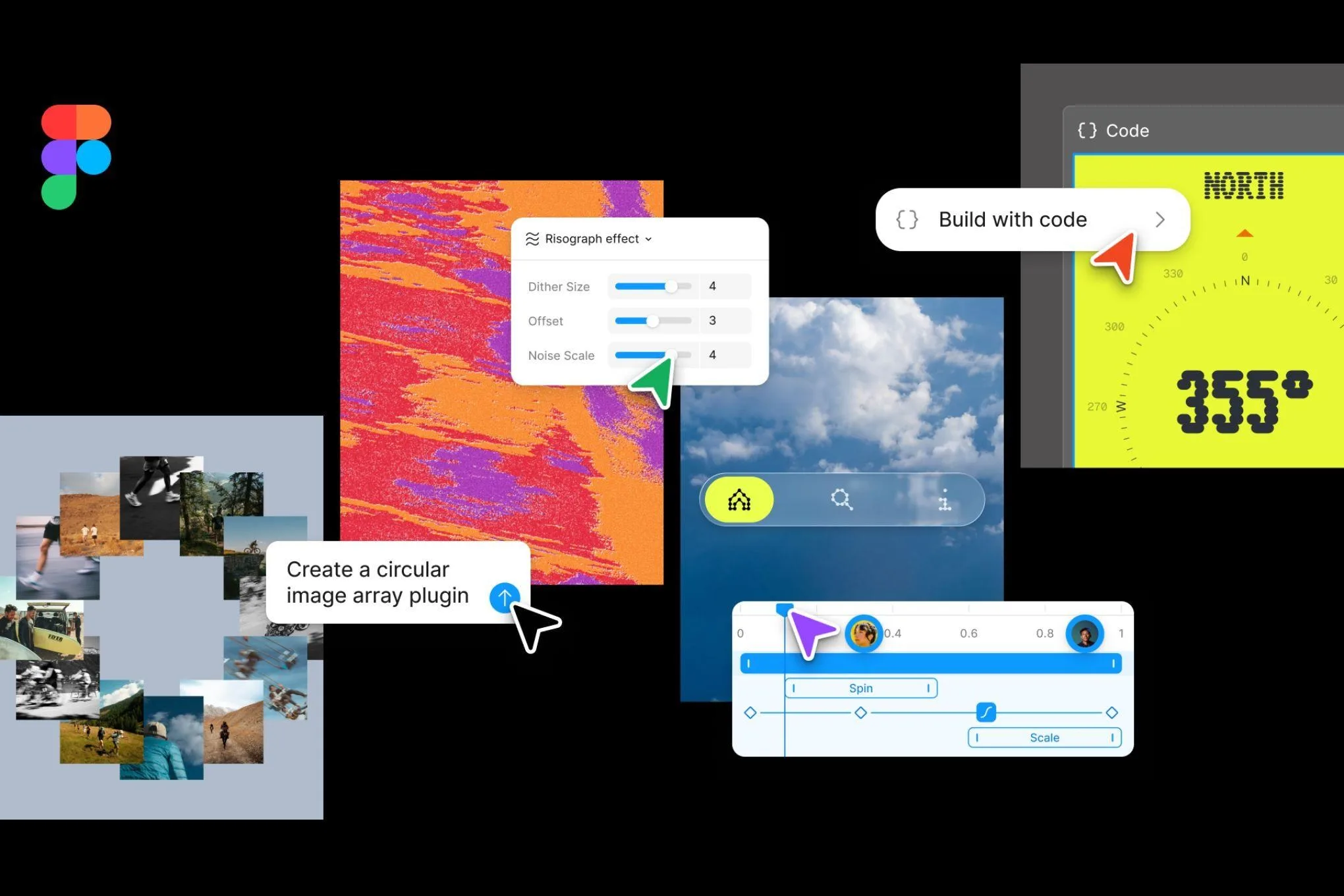
At its annual Config conference, Figma announced coding layers, AI-generated motion graphics, and a reimagined canvas that blurs the line between design and full-stack development.
Sarah Williams · 26 Jun · 5 min
Everyone talks about chips and models. The memory bottleneck is the part of the AI buildout that keeps getting underestimated, and Micron's latest earnings make that case hard to ignore.
DeepMind hasn't published a full technical paper on Deep Think yet, which makes it difficult to assess exactly what's happening under the hood. From their blog post, we know it's described as an "enhanced reasoning mode" that uses extended inference time computation. This is consistent with the broader trend in AI research toward test-time compute scaling, where models spend more computational resources during inference rather than relying solely on capabilities baked in during training.
The approach appears similar in spirit to what we've seen from OpenAI's o1 and o3 models, though the specific implementation details differ. DeepMind emphasizes that Deep Think engages in longer chains of reasoning before producing outputs. It's worth noting that this isn't a separate model but rather a mode that can be enabled for Gemini 2.5 Pro.
I'd want to see the actual paper before making strong claims about novelty here. The test-time compute paradigm has been explored extensively in recent literature, and without methodological details, it's hard to know whether Deep Think represents a meaningful architectural innovation or a well-executed implementation of established techniques.
DeepMind also highlighted that Deep Think achieved gold-medal level performance at the International Mathematical Olympiad, which they announced separately. The IMO result is arguably more impressive from a pure reasoning standpoint, as mathematical olympiad problems require formal proofs rather than code that can be verified through test cases.
The company is making the full Deep Think model available to select mathematicians for evaluation, which is a welcome move toward external validation. Too often, AI capabilities are announced through carefully controlled demonstrations without independent verification. I know I'm being picky here, but the history of AI benchmarking is littered with results that didn't replicate or generalize.
That said, the ICPC benchmark has some advantages over synthetic benchmarks. The problems are created by humans for humans, not designed with AI systems in mind. The difficulty calibration is well understood (we know what human gold-medal performance means). And the competitive format means there's a clear, externally validated standard.
Here's where I have to temper the enthusiasm somewhat.
First, competition programming is a narrow domain. The skills tested (algorithmic insight, mathematical reasoning, clean implementation) are valuable, but they represent a small slice of what programmers actually do. Most software engineering involves understanding ambiguous requirements, working with large existing codebases, debugging complex systems, and collaborating with humans. It remains unclear whether excellence at ICPC-style problems translates to these messier, more practical tasks.
Second, we don't know the computational cost. Deep Think explicitly trades compute for capability. How much longer does it take to solve these problems compared to baseline Gemini 2.5? How much does it cost per query? DeepMind hasn't disclosed these figures, and they matter enormously for practical applications. A model that takes 10 minutes and costs $50 to solve an ICPC problem is a very different proposition from one that does it in 30 seconds for $0.10.
Third, the sample size is small. ICPC finals have 10-12 problems. IMO has 6. These are high-signal benchmarks, but they're not large-n evaluations. We should be cautious about drawing broad conclusions from performance on a handful of problems, however difficult those problems may be.
Readers of this publication might reasonably ask: what does competitive programming have to do with robotics?
Actually, the research shows a potentially significant connection. Many robotics problems, particularly in motion planning and task sequencing, reduce to algorithmic challenges similar to those tested at ICPC. Path planning is fundamentally a graph search problem. Bin packing and palletization involve combinatorial optimization. Multi-robot coordination requires solving constraint satisfaction problems.
If models like Deep Think can reliably solve these underlying algorithmic problems, they could serve as planning modules within larger robotic systems. Rather than hand-coding planners for specific scenarios, you might be able to specify the problem constraints and let the model derive an efficient solution.
This is speculative, to be clear. The gap between solving a clean algorithmic problem on a competition and integrating that capability into a real-time robotic system is substantial. Real-world problems are noisy, partially observable, and often don't have clean mathematical formulations. But the capability demonstrated here is at least a necessary precondition for certain types of robotic intelligence.
DeepMind's announcement comes amid intensifying competition in reasoning-focused AI models. OpenAI's o3 model, announced late last year, achieved similarly impressive results on mathematical and coding benchmarks. Anthropic has been notably quieter on this front, though their Claude models have shown strong performance on more practical coding tasks.
What's emerging is a bifurcation in the model landscape. On one hand, you have general-purpose models optimized for broad capability and fast inference (Gemini 2.5 Flash, GPT-4o, Claude 3.5 Sonnet). On the other, you have reasoning-specialized modes that trade speed for depth (Deep Think, o3). The question for practitioners is which use cases justify the additional latency and cost of the reasoning modes.
For robotics applications specifically, the latency question is particularly acute. A robot making real-time decisions can't wait minutes for a response. But for offline planning, design optimization, or complex task decomposition, extended reasoning times might be acceptable.
DeepMind is rolling out Deep Think through the Gemini app for Google AI Ultra subscribers, according to their announcement. The full capability, as demonstrated in the ICPC and IMO evaluations, is currently available only to select researchers.
This tiered access approach is common in AI releases, but it does make independent evaluation difficult. We're largely taking DeepMind's word for the benchmark results until external researchers can verify them. The company's decision to give mathematicians access to the IMO-capable version is a positive step, but I'd want to see similar access for computer scientists to evaluate the ICPC claims.
Gemini 2.5 Pro itself continues to be available through Google's API and has been well-received by developers for coding tasks. The update announcement notes improvements to 2.5 Flash as well, though these appear to be incremental over the previous version rather than the step-change represented by Deep Think.
Several open questions would help contextualize this result:
Computational cost analysis: How does Deep Think's performance scale with inference time? Is there a smooth capability curve, or are there threshold effects?
Failure mode characterization: On the problems Deep Think didn't solve, what went wrong? Were these near-misses or fundamental capability gaps?
Transfer to practical tasks: Can the reasoning capabilities demonstrated on competition problems transfer to real software engineering tasks? This hasn't been replicated yet in any systematic way.
Comparison with specialized systems: How does Deep Think compare to competition programming systems built specifically for this task, like AlphaCode? The comparison to human competitors is valuable, but the comparison to other AI approaches would be informative.
Robustness testing: Do small perturbations to problem statements cause failures? Competition problems are precisely specified, but real-world problems are often ambiguous.
What we're seeing with Deep Think, and the broader trend toward reasoning-focused models, is an expansion of the capability frontier in a specific direction. These systems are getting remarkably good at problems that have clear solutions, can be verified automatically, and reward sustained logical reasoning.
This is valuable. It's also limited.
The problems that matter most in robotics and AI, broadly construed, often don't have these properties. They involve uncertainty, partial information, and objectives that can't be cleanly specified. They require common sense, physical intuition, and the ability to operate in open-ended environments.
I don't want to diminish what DeepMind has achieved here. Gold-medal performance at ICPC is genuinely impressive, and it represents real progress in AI capabilities. But it's progress along one axis of a multi-dimensional space. The question for the field is whether these reasoning capabilities can be integrated with the perceptual and physical capabilities needed for robots to actually operate in the world.
That integration remains, well, an open problem. One that probably won't be solved by any single benchmark result, however impressive.