DeepMind Is Using AlphaFold to Climate-Proof Crops, and It Might Actually Work
Five years after AlphaFold solved protein folding, researchers are engineering heat-tolerant plants by redesigning photosynthesis itself.
By
·25 May 2026·5 min read
Google DeepMind is using AlphaFold to redesign a critical photosynthesis enzyme, aiming to create crops that can survive rising global temperatures. It's a quiet announcement buried in a blog post, but honestly, this might be one of the most consequential applications of the protein-folding AI yet.
Okay, so here's the thing. Photosynthesis depends on an enzyme called Rubisco. It's arguably the most important protein on Earth (every calorie you've ever eaten traces back to it), and it has a problem: it gets worse at its job as temperatures rise.
Rubisco's job is to grab carbon dioxide from the air and turn it into sugar. But when it gets hot, Rubisco starts making mistakes. It grabs oxygen instead of CO2, which creates toxic byproducts the plant has to spend energy cleaning up. This is called photorespiration, and it can reduce crop yields by 20-50% in hot conditions.
So DeepMind's researchers are trying to engineer a better Rubisco. One that stays accurate even when temperatures climb. And they're using AlphaFold to figure out how.
This is where I initially got skeptical. Rubisco has been around for billions of years. If evolution couldn't optimize it for heat tolerance, what makes us think we can?
But after reading more about it, I think the answer is actually pretty interesting. Evolution optimizes for survival in existing conditions, not future ones. Plants with heat-tolerant Rubisco didn't have a selective advantage until recently (like, the last few decades recently). Evolution works on much longer timescales.
Related coverage
More in AI Models
Chipmakers swung wildly this week, from a Tuesday 'chip-wreck' to a Micron-led surge after hours. What's actually going on with AI's hardware backbone?
Sarah Williams · 26 Jun · 5 min
The original Creator Studio was shut down in 2023. Now it's back, rebuilt around an AI assistant that promises to grow your audience and reply to comments in your voice.
Sarah Williams · 26 Jun · 5 min
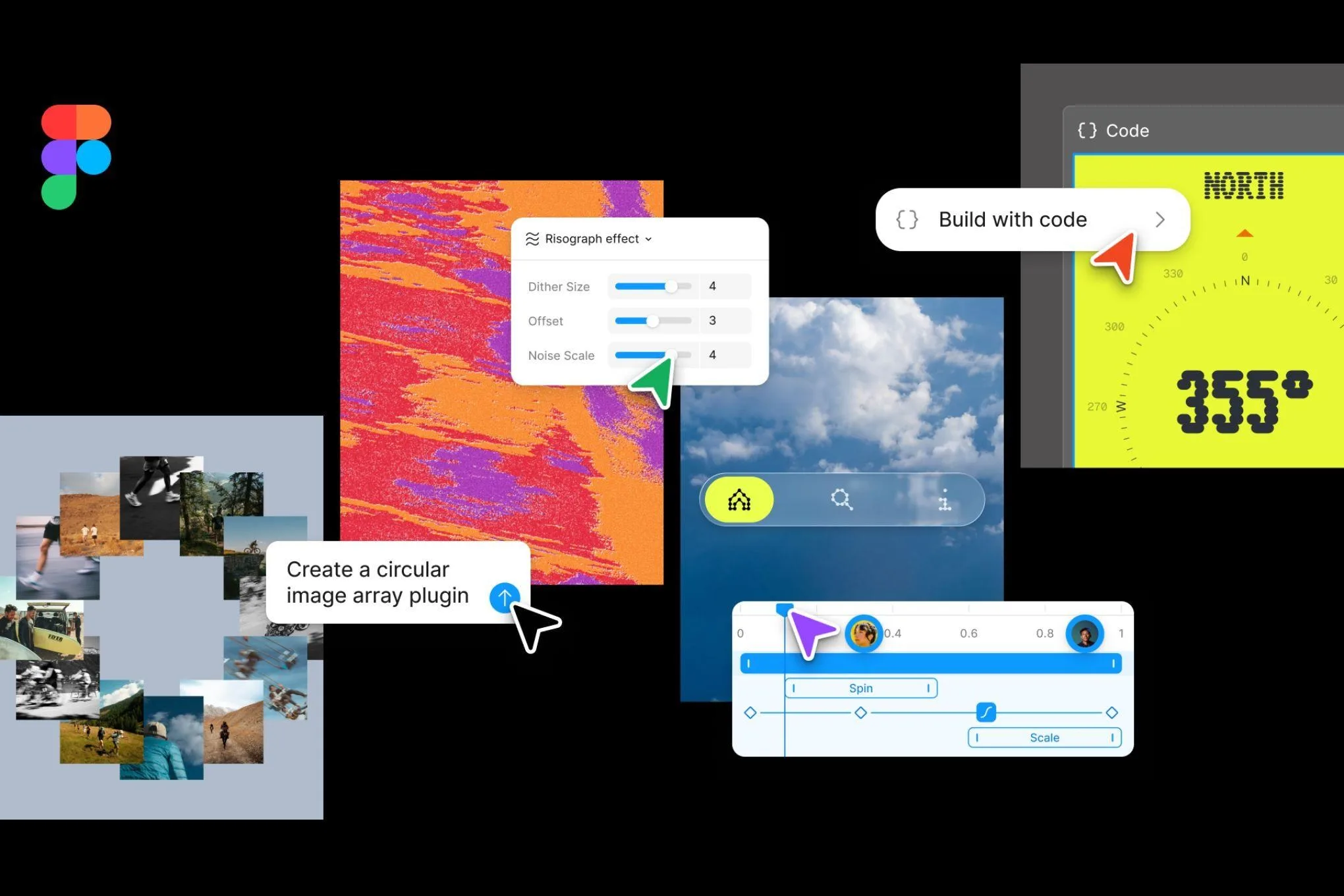
At its annual Config conference, Figma announced coding layers, AI-generated motion graphics, and a reimagined canvas that blurs the line between design and full-stack development.
Sarah Williams · 26 Jun · 5 min
Everyone talks about chips and models. The memory bottleneck is the part of the AI buildout that keeps getting underestimated, and Micron's latest earnings make that case hard to ignore.
AlphaFold lets researchers test thousands of potential protein modifications computationally before ever touching a plant. You can model how a tweaked enzyme would fold, whether it would stay stable at higher temperatures, whether it would still function. The blog post doesn't give specifics on how many variants they've tested, which is frustrating. I'd love to know the actual numbers here.
This is the part where I have to be honest: we don't know yet.
DeepMind's announcement is light on details about real-world testing. They're clearly still in early stages. Designing a better enzyme on a computer is one thing. Getting it to work inside a living plant, which then has to grow normally, reproduce, and produce edible food, that's a completely different challenge.
There's also the question of how you'd actually deploy this. Are we talking GMO crops? Gene-edited varieties? The regulatory pathways for those are wildly different depending on where you are in the world. The EU basically doesn't allow GMOs. The US is more permissive but still complicated. DeepMind's blog doesn't address any of this, which suggests they're focused on the science and leaving the implementation questions for later.
Tbh, that's probably the right call for now. But it means we're years away from seeing this in actual fields.
DeepMind also published a retrospective on AlphaFold's first five years, and the numbers are kind of staggering. Over 2 million researchers have used the AlphaFold Protein Structure Database. The tool has been cited in more than 25,000 scientific papers.
But here's what struck me: the applications are incredibly diverse. Drug discovery, obviously. But also understanding diseases, developing new materials, and now agricultural resilience. Google DeepMind frames this as a "global wave of biological discovery," which sounds like marketing speak but... might actually be accurate?
I think the crop engineering work is particularly notable because it's not about treating disease or making money (at least not directly). It's about food security. About making sure we can still grow rice and wheat and corn as the planet heats up. That feels different from a lot of AI applications I cover.
First, Rubisco isn't the only factor in crop heat tolerance. Plants also need to manage water loss, deal with heat stress in their cellular machinery, and handle changes in pest and disease pressure. A better Rubisco helps, but it's not a complete solution.
Second, I couldn't find details on which specific crops DeepMind is targeting. Rice? Wheat? Corn? Each has different Rubisco variants and different agricultural contexts. The approach that works for one might not work for another.
Third (and this is something I should probably understand better), there's the question of how you get a redesigned enzyme into a crop variety that farmers actually want to grow. You can't just swap out Rubisco and call it done. You need to integrate it into existing breeding programs, test it across different growing conditions, make sure it doesn't break anything else.
The timeline for all this is probably measured in decades, not years. Climate change isn't waiting around.
The science here is genuinely impressive. Using computational protein design to address one of agriculture's fundamental bottlenecks is exactly the kind of application that justifies all the hype around AI in biology. And DeepMind has the resources and the track record to actually push this forward.
But I've seen enough promising agricultural research fizzle out to know that the path from lab to field is long and full of surprises. Regulatory hurdles, farmer adoption, unintended consequences, economic viability. All of these can kill a technology that works perfectly in controlled conditions.
What I find genuinely hopeful is that someone with DeepMind's capabilities is working on this at all. Food security isn't as sexy as drug discovery or AI assistants. It doesn't generate the same headlines. But it might matter more.
You might be wondering if this is the kind of thing that could actually scale in time to help. Honestly, I don't know. But five years ago, we didn't have AlphaFold at all. Now we're using it to redesign photosynthesis. That's not nothing.