Image credit: Image via The Verge — AI. Used under fair use for news commentary. · source
Think of it like the early smartphone era. Adoption curves shot upward while consumer trust lagged behind, and the gap between people using the technology and people feeling good about it persisted for years. Something similar appears to be happening with AI chatbots right now, except the trust deficit seems sharper and the adoption curve steeper than anything we saw with mobile.
Two data points, published within days of each other, together paint a picture that is worth sitting with for a moment. TechCrunch reported this week that ChatGPT's global market share has slipped below 50% for the first time since the product launched. Separately, The Verge covered the latest Pew Research poll, which found that 49% of Americans now use chatbots at least occasionally, up from 33% in 2024, while 63% believe the technology is advancing too quickly. Only 16% expect AI to have a positive impact on society.
These are not contradictory findings. They are, actually, the research shows, entirely consistent with how people adopt technologies they do not fully trust.
What the market share numbers actually tell us
ChatGPT remains the most-used AI assistant in the world by a significant margin. OpenAI's product reports over 1.1 billion monthly users. For context, that is more than four times the population of the United States using a single chatbot product every month. Gemini sits in second place with 662 million monthly users, and Anthropic's Claude follows with 245 million. These are large numbers. The market is not collapsing.
Related coverage
More in AI Models
Chipmakers swung wildly this week, from a Tuesday 'chip-wreck' to a Micron-led surge after hours. What's actually going on with AI's hardware backbone?
Sarah Williams · 26 Jun · 5 min
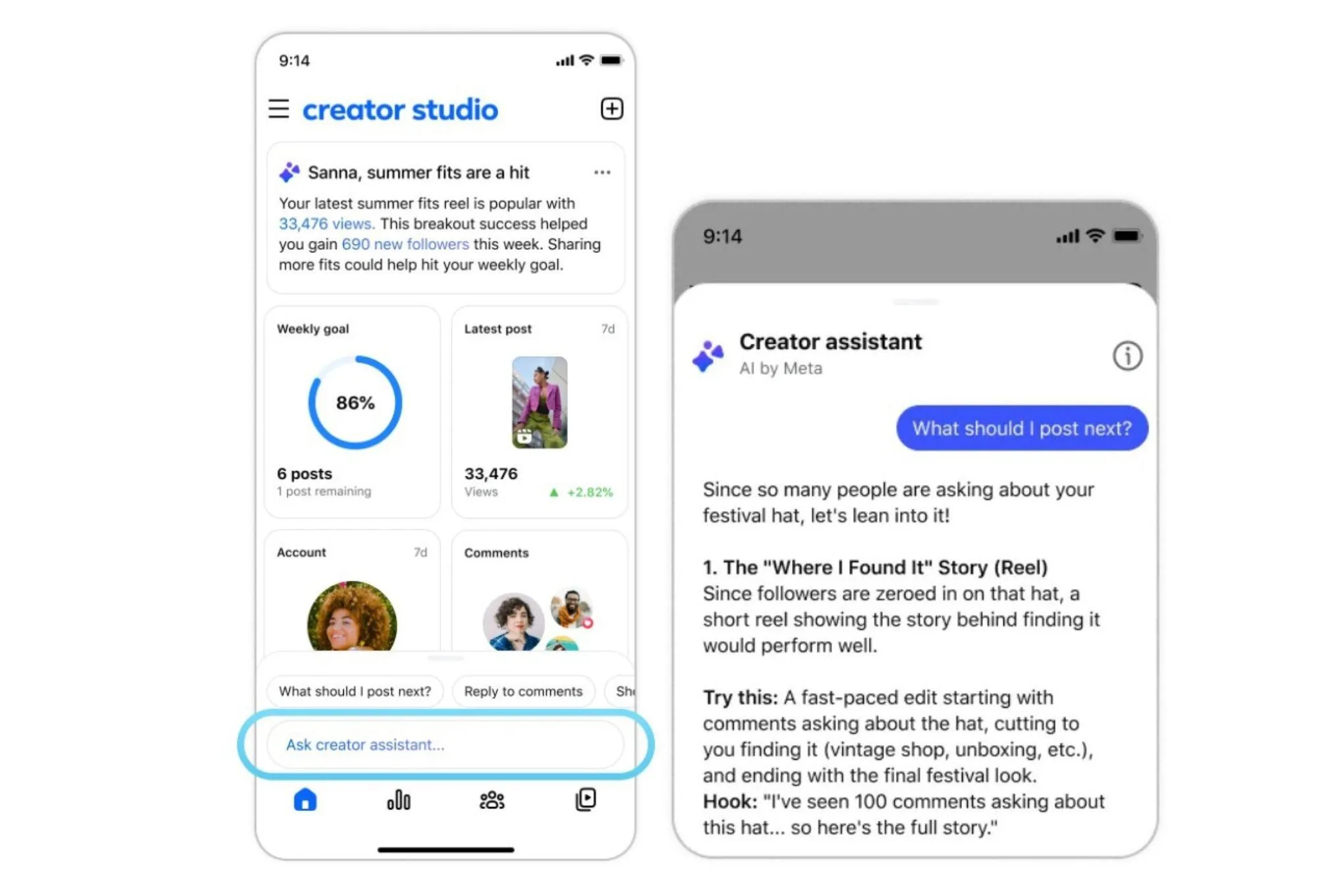
The original Creator Studio was shut down in 2023. Now it's back, rebuilt around an AI assistant that promises to grow your audience and reply to comments in your voice.
Sarah Williams · 26 Jun · 5 min
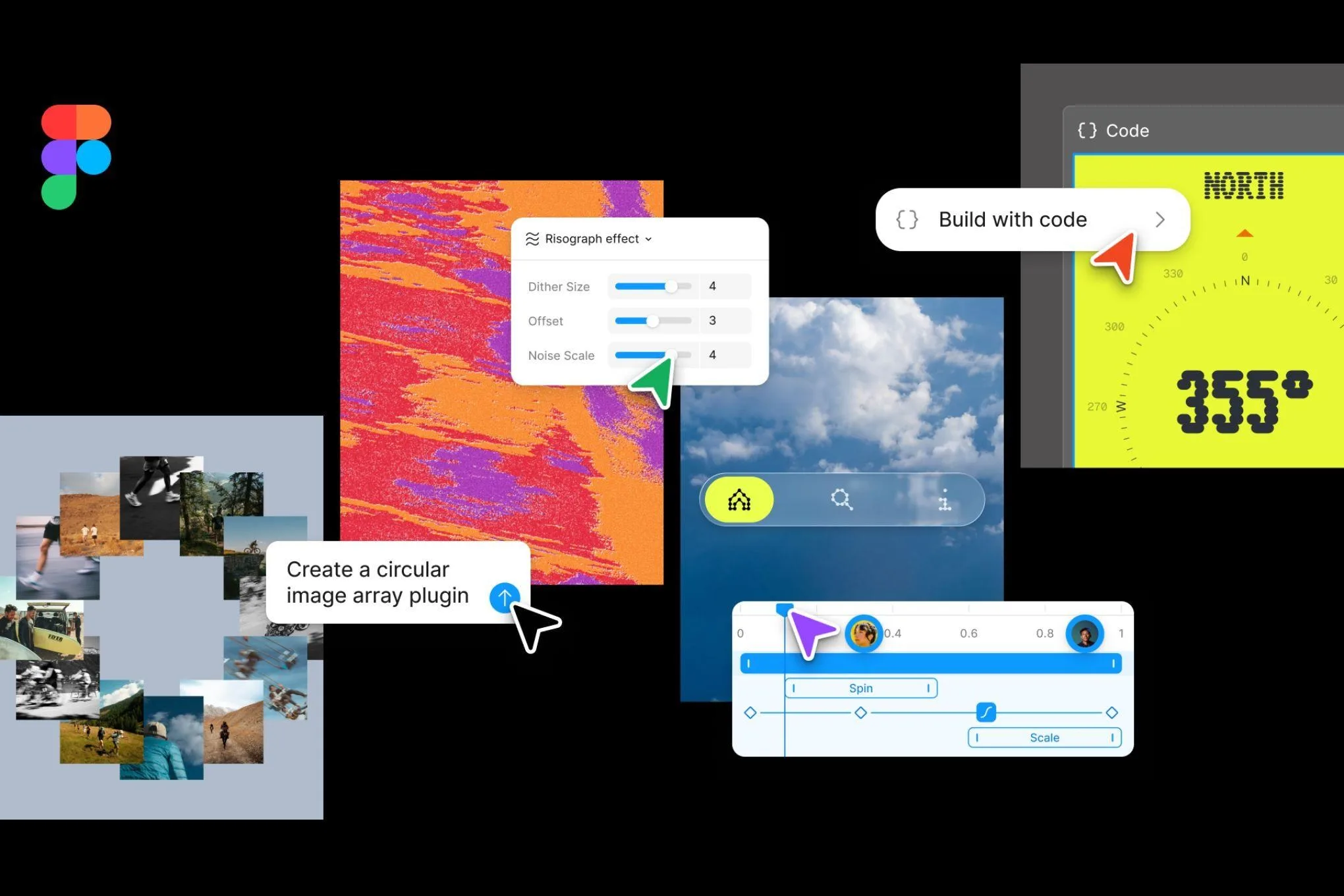
At its annual Config conference, Figma announced coding layers, AI-generated motion graphics, and a reimagined canvas that blurs the line between design and full-stack development.
Sarah Williams · 26 Jun · 5 min
Everyone talks about chips and models. The memory bottleneck is the part of the AI buildout that keeps getting underestimated, and Micron's latest earnings make that case hard to ignore.
But the sub-50% market share figure is symbolically meaningful, even if the practical implications are less dramatic than the headline suggests. When a single product defines a category so completely that it becomes the generic term for that category, as happened with Xerox and Google before it, losing majority share is a signal that the market has genuinely pluralized. Competitors are not just nipping at the edges. They are capturing meaningful portions of new demand.
It is worth noting that market share and user count can move in opposite directions simultaneously. ChatGPT can lose share while still growing in absolute terms if the overall market is expanding faster than OpenAI's user base. That appears to be exactly what is happening. The chatbot market is growing quickly enough that Gemini and Claude can each add hundreds of millions of users without necessarily pulling those users away from OpenAI. New users are entering the market and distributing across multiple products rather than defaulting to ChatGPT the way early adopters did.
This is incremental over the competitive dynamics we already understood. Google has distribution advantages through Android and Search that make Gemini the path of least resistance for enormous numbers of users. Anthropic has carved out a defensible position among enterprise and developer segments where Claude's reputation for careful outputs matters. Neither of these competitive pressures is new. What is new is that the numbers now confirm the pluralization is happening at scale.
The Pew data deserves more attention than it is getting
The market share story is the easier one to write about. The Pew Research findings are, to be precise, more complicated and more interesting.
Adoption has roughly doubled in a short window. In 2024, 33% of Americans reported using chatbots at least occasionally. That figure is now 49%. ChatGPT specifically has doubled its reported usage since 2023, with 44% of survey respondents saying they have used it. By any reasonable measure, this is rapid diffusion for a technology that did not exist in its current form three years ago.
And yet 63% of Americans think the technology is advancing too quickly. Only 16% expect it to have a positive societal impact.
The demographic breakdown is the part that should give researchers and policymakers pause. Younger generations, the cohorts with the highest adoption rates, are also the most pessimistic. This runs counter to the assumption, common in technology commentary, that skepticism is primarily a feature of unfamiliarity. People who use these tools regularly are not, on average, more reassured by that experience. (I know I am being picky here, but I think this distinction matters enormously for how we model public trust in AI systems, and it tends to get flattened in coverage that treats adoption and acceptance as equivalent.)
The sample size and methodology details for this Pew poll are not fully described in the available reporting, so I am working with limited data on the confidence intervals and weighting. That caveat aside, Pew's polling methodology is generally rigorous, and the directional findings are consistent with prior waves of their AI research.
Why the trust gap is not a communications problem
There is a temptation, especially among people who work in the industry, to read a trust gap like this as a communications failure. If only people understood the technology better, the thinking goes, they would be less anxious about it. This framing is not supported by the data. The Pew findings suggest that people who use AI chatbots regularly are not significantly more optimistic about AI's societal impact than those who do not. Familiarity is not closing the trust gap.
This makes sense if you think carefully about what chatbot usage actually teaches users. Most people use these tools for discrete tasks: drafting emails, summarizing documents, answering factual questions. That experience tells you something about the product's utility for those tasks. It tells you relatively little about how AI systems are trained, what data was used, whether the outputs are reliable in high-stakes contexts, how these systems affect labor markets, or what the energy and resource costs of running them at scale actually are. The things people are worried about are largely invisible to the end-user experience.
There is also a reasonable argument, and I think it is the stronger one, that the pessimism reflects genuine information rather than ignorance. We have seen high-profile failures of AI systems in medical, legal, and journalistic contexts. We have seen credible researchers publish work on hallucination rates, bias in training data, and the difficulty of alignment at scale. A person who reads the news carefully and concludes that this technology is advancing faster than our ability to govern it is not being irrational. They are responding to evidence.
What this means for the research agenda
For those of us who follow the research side of AI development, these adoption and trust numbers have direct implications for what questions matter most right now.
The reliability problem is not solved. Hallucination in large language models remains an active research area without a clean solution. Papers from groups at DeepMind, MIT, and elsewhere have made progress on detection and mitigation, but the fundamental issue, that these systems generate plausible-sounding text that may not be accurate, has not been resolved. At 1.1 billion monthly users, the scale of potential harm from unreliable outputs is not a theoretical concern.
The evaluation problem is also not solved, and it is actually the upstream issue. We do not have agreed-upon benchmarks that reliably predict real-world performance across the domains where people are actually using these tools. This hasn't been replicated yet in any consistent way across the field: a model that performs well on standard academic benchmarks may still produce unreliable outputs in clinical or legal contexts. Users have no good way to calibrate their trust because the field has not yet produced the tools to help them do so.
The governance gap is real and widening. Adoption is outpacing policy in every jurisdiction I am aware of. The EU AI Act is the most developed regulatory framework, and it is still being implemented. In the United States, the regulatory picture remains unclear. At 49% adoption and rising, we are well past the point where these are niche products used by early adopters who can be expected to understand the risks.
What I would want to see next
Longitudinally tracked trust data, ideally linked to specific use cases rather than general sentiment. The Pew polling is valuable but it treats "AI" as a single thing. A person's trust in a chatbot for recipe suggestions is probably not the same as their trust in an AI system making hiring decisions or medical recommendations. Disaggregating those would give us a much more useful picture.
I would also want to see more research on the relationship between heavy use and calibrated trust. It remains unclear whether people who use chatbots daily develop more accurate mental models of their limitations, or whether heavy use actually increases over-reliance and miscalibration. There is some preliminary work on this in the human-computer interaction literature, but it is early and the sample sizes are small.
Finally, and this is the researcher in me talking, the market share data needs more granularity. Aggregate monthly active user counts tell us something, but they do not tell us how those users are distributed across use cases, geographies, or demographic groups. A product with 245 million users concentrated in enterprise software development is a very different competitive and social phenomenon than one with the same number of users distributed across consumer applications. We do not have that breakdown publicly.
The headline story is that ChatGPT is no longer a monopoly in its own category, and that more Americans than ever are using AI chatbots while trusting them less than ever. Both of those things are true and both matter. But the more interesting story, and the one that will shape how this technology develops over the next several years, is the trust gap. A technology that half the population uses and most of the population is anxious about is not a stable equilibrium. Something will have to give, and it is too early to say whether that will be the technology improving enough to earn broader trust, or the public becoming more resistant to further adoption.